Monday, March 25, 2013

In Review: Aparisyon


Directed By: Vincent Sandoval
Stars: Jodie Sta. Maria, Mylene Dizon, Raquel Villavicencio, Fides Cuyugan-Asensio

What I Liked
Great performances from its cast, beautiful cinematography, scenes that are difficult to watch are executed with great skill

What I Disliked

Editing is dissatisfying and makes narration more confusing, dotty execution of tension--could have benefited from more tension

Gist
Mainly a social commentary about religion's role and its limitations in the face of actual danger (or more likely an allegory of the role of the Church during the period of civil unrest), Aparisyon lags a bit on some spots but is otherwise a brilliant showcase for its talents.

Sister Lourdes (Sta. Maria) is new in her cloister. Trying to find her place in the monastery run by the serene but austere Sister Ruth (Cuyugan-Asensio), she decides to accompany Sister Remy (Dizon) on her extern duties to town, selling herbal medicines the nuns make. One night on their way back, they were attacked by bandits. This event leaves the nuns rattled and stirs trouble in the convent.

Aparisyon is set on the tumultuous parts of the Marcos era when the dictator was readying the declaration of Martial law. The setting is in a very secluded convent which automatically eradicates the need of the production team to recreate the events during the Marcos era. The props team recreated some radio news and newspapers but other than those, the Marcos regime is very much like a background noise over the daily convent life. I feel like this is a missed opportunity that Sandoval could have exploited to create more tension in the convent, but instead, we are given a very serene set up, dotted by some pinches of tension which never really seem to tighten. For good or bad, this puts much focus on the convent where most of the story is taking place anyway. To my mind, this was done to bolster the idea that the convent is a safe place for its inhabitants. It also struck me as an allegory of the Church wanting to keep itself separate from politics during the early stages of the Marcos era unrest to keep itself safe from the outside world.

Something I noticed immediately at the start of the movie that put me off was the editing. There were scenes that were cut off a bit too soon, while towards the end there were scenes that lingered a bit too long. In fact there were too many cut scenes that you didn't know where the story is going. This is a shame because the cinematography is actually beautiful and the editing at times lessens the efficacy of these images if the scene takes too long or too short to transition. Eventually, this editing problem fixes itself towards the end, particularly in the revelation scene.

Sandoval however was able to extract a lot from his cast. Cuyugan-Asensio who played the haciendera-turned-rape victim Inday Lorenzo in Peque Gallaga's masterpiece Oro Plata Mata found herself transfigured into Sister Ruth, a quiet mother superior whose black garb and paper-white complexion denotes her capacity to be austere and strict. Cuyugan-Asensio's execution is beyond reproach. One would believe that she has been a nun for a long time, a role she performs with authority. At times, she is frightening and too quiet to figure out. Villavicencio, on the other hand, who plays an even more stern and direct Sister Vera, the convent's second fiddle to Sister Ruth, was equally terrific particularly with her scenes of contrition and on the revelation scene. There is something with Villavicencio's voice that sounds so motherly and strict and perfect for the role she played. Plus points for having her hair cut to a certain length (albeit too long still and too salon perfect for a nun's--or was that a wig?).

Naturally, the leads, Jodi Sta. Maria and Mylene Dizon needed to be as good and they managed to be. Dizon puts her signature pragmatic, resistent, and stern school of acting without needing to sound mean or antagonistic, which is necessary for her role as Sister Remy, an extern nun. Dizon though might be overusing this stern "character" in her work, and may need to pick up lighter roles or roles that would not necessarily ask her to be "Mylene Dizon." She remains a brilliant actress, convincing, and powerful, but I feel like I've seen too much of this Mylene and whether it's the nice or evil Mylene, the lines are starting to blur to look as if Mylene Dizon is portraying herself on-screen. Sta. Maria on the other hand sheds the innocent goody-two-shoes of her mainstream hit of a character Maya to don the habit of Sister Lourdes. Initially, she is kind, innocent, eager, but towards the end, Sta. Maria has her character transform into a miserable train wreck, a task she executes with great dexterity. And how I wish her fans get to see this movie in case they forget how great an actress she can be, given the material. Not to disparage her mainstream work though, but I'd say that partly the reason of "Be Careful with My Heart's" success is her capacity as an actress and ability to extend with her co-leads and create chemistry with them, something she managed to do with Dizon and the older nuns, too.

Sound editing is sparse on this production but when they do come they are a welcome addition. I have to note the use of Latin prayer hymns. The dead language being sung actually provides a healthy addition of fear, mortification, and solemnity.

Aparisyon in its whole feels like a social commentary on religion's chosen role and its limitations in the face of actual danger. Yes it does lag on some spots but Sandoval's hand makes the performers deliver an otherwise brilliant showcase. It may feel like a chamber piece at times (but isn't it?) but the skill of its execution (performance, cinematography) belie the budget. By Sister Ruth's stern declaration and forbidding of Remy to do anything outside the convent that falls outside their conventional duties feels feel like an allegory of how the Church wants to stay out of the government's business during those tumultuous times--at least until they couldn't anymore, which is also analogized by Sister Remy leaving the convent and joining activists.

It may also feel like an allegory of Marcos's rule. I thought that Sister Ruth represents Marcos in that she was suppressing the real events that took place, eventually sending Sister Remy (a possible allegory of Ninoy Aquino) who knows what is happening really. Sister Ruth's insistence that the convent is safe (when in fact it is not, as evidenced by the stolen chicken and the assault) seems to liken it to Marcos's disguising of the Philippines with his New Society propaganda--until it couldn't be hidden anymore and even his closest affiliates break (in this case Sister Vera represents Marcos's allies who jumped ship). Sister Marcia (the old mother superior) seems to represent the Filipino community who at first thinks Marcos is practically the good Lord (as evidenced by Marcia mistaking Ruth for the virgin Mary). Then at some point things go awry and Marcia says Ruth is the devil himself, the same way the Filipino community unmasked Marcos. If Sandoval was in fact doing this, then his work is so subtle and skillfully executed. It's so brilliant to think it that way. Then again, I could be looking into it too much and finding analogies when there are none.

A number of scenes I would like to note before I close this review.

Spoilers Start Here

First: the several confrontation scenes between Dizon and Fides-Asensio. There was no explosion or what not, but when there were, they were quietly tense ones--lending some credence to the tranquility that nuns should be exhibiting. Remy, the pragmatic one, wants social justice and for the church to intervene other than praying. But Sister Ruth wants them to fulfill their duties and just continue praying. In the end, Remy's prayers were proven to be nothing more than desires unfulfilled. Perhaps Sister Ruth has forgotten what "Ora et Labora" means and was too scared to break the silence in their convent. Remy was the one aware that prayers without work amount to nothing and sadly, in the end, she would always have herself to blame for things she thinks she could've done something with.

Second: the confrontation scene between Sta. Maria and Dizon was powerful. But I find fault in that it took forever to build up and when it was happening, it was taking too long that it was starting to dilute itself. There is a presence of pain and sadness and helplessness and of being trapped and as soon as Sta. Maria was breaking down on Dizon, the camera pans out and the tension is released, but man did it take forever.

Third: the revelation scene is my favorite scene. For most of the movie, they have been dropping hints, but the execution of this scene is so pained, so conflicted, so helpless. The execution didn't paint the older nuns as cowards but as helpless women who are as helpless in the face of danger. And the worse part here is that they try to cover this up by telling themselves that this is the will of God, when in fact they could have done something and continue to do nothing for months until they could not have it anymore. Villavicencio shines the  most in this scene. Her pain is so felt, so real, so helpless and her contrition later on shows her to be the better person. But was it ever enough? Is contrition ever enough for something one could have prevented. Sandoval doesn't answer this and leaves the question to its audience. Is it ever enough to just say that it's God's plan when possibly we know we are the ones who enact that plan.

Spoilers End Here

If anything, I am now feeling bad that I missed Cinemalaya last year and resolve to make sure I get to catch it this year. My disappoint from watching this film is that this is what should be mainstream. That intelligent movies should not be independent film watched by like 4 people. When I was watching this at the moviehouse, there's like 15 of us at the most, and this is more heartbreaking than the movie itself. Years ago, epic films were made with big studio backing and grand marketing. Now, we have to wait till Cinemalaya to watch this sort of films from local talents and outside your film buff friends, nobody knows this movie. Nobody understands how good it is. This is sad and frustrating. Films like Bwakaw, Lilia Cuntapay, etc from last year had to bargain with movie houses, plead, just to have their movies screened to mass audiences who prefers the latest installment of Twilight or that rehashed Kathryn Bernardo - Daniel Padilla starrer. Truly, this breaks my heart.

Now do I recommend this film? Yes. This is exactly the film you need to watch because like its Cinemalaya brethren, it makes you think. We need more of these kinds of films. We need filmmakers to regain the trust that when they attempt something bold, we the people will respond. That an indie film doesn't need to have Eugene Domingo to be watched. That it doesn't need to be directed by Brillante Mendoza to be spectacular (not a fan here tbh). Yes this film is good. And local movies should be at the very least like this. But what we keep getting are rehashed stories with over-the-top script / unlicensed adaptations of foreign movies that changes nothing in a person.

Judgment: 3.9 out of 5 stars

For this movie, I'm willing to pay, 170 to 190 pesos. I paid 175 pesos.

Thursday, March 14, 2013

In Review: Stoker


Directed By: Chan-wook Park
Stars: Mia Wasikowska, Nicole Kidman, Matthew Goode

What I Liked
Beautiful cinematography with pronounced, haunting imagery, great performance by its cast


What I Disliked

Unlikable / unrelatable central character, screenplay makes for an unnecessary length that makes the film feel slow with little to nothing happening.

Gist
Miller's screenplay allows for Park to practice beautiful cinematography punctured with haunting images, but it's a double-edged sword that hurts the film with turtle-paced storytelling that dillydallies too much to deliver imagery over story.

India Stoker is a privileged young lady who prefers hunting fowl over shopping. She also has a peculiar ability to hear the softest of whispers and see clearly even things faraway. On the day of her 18th birthday, her father died in a car accident of unspecified causes. Following her father's funeral, her father's only brother, Charlie, arranges to live with her and her mother. And while her mother finds Charlie an enigmatic and delightful company, India has nothing but suspicions that Uncle Charlie is up to no good.

Mia Wasikowska didn't exactly shoot to international renown after her major box office hit of a Disney movie, Alice in Wonderland last 2010. She has often chosen to do indie movies (The Kids are All Right) or movies that don't get released in this side of the globe (Albert Nobbs, Jane Eyre). Nevertheless, she starred in 5 movies more or less since. In Stoker, we find that Wasikowska is just as disturbed as someone who just came out of Wonderland. Mia's "India" is a sociopath who with an affinity for keeping herself looking vintage. Later on, this sociopath blooms completely to a psychopath, but I am getting ahead of myself.

The film is based on Wentworth Miller's script that made it to the list of best screenplays written in 2012. In a nutshell, it was based on Hitchcock's Shadow of a Doubt, with Miller stating that it starts off similarly and goes a separate path. Spoiler alert: it goes full away to the direction that the Hitchcock film didn't take. This is braver, to be honest. But in such a case, the execution needs to be done extra carefully because you might end up having an unlikable lead, something that rubbed off to me. I don't like India Stoker and I don't understand her. Sure, her character was written to spawn mystery (was she in love with her dad? Were they having an incestuous affair? Why didn't she just finish off what she did in the end earlier, what's the difference between the stairs and the mother's bedroom anyways?). She just wasn't written in a way that would make one curious enough to know / dig deeper for the answers. And with that said, I think the vision was good but the execution was forced. 

Adding to that, the screenplay / editing felt gimmicky, lending a contrived vibe throughout the short playing time, as if forcing some sense of mystery to its audience. And in that attempt it made the movie feel longer than it is with little to nothing happening. Though to the screenplay / editing's credit, it allowed for Park's haunting cinematography which is one of the things that the movie has going for it.

On top of my mind, there is one scene among many that was filmed so well that it etched itself to my memory: The piano scene. In this scene, India starts playing the piano and was soon joined by an uninvited Uncle Charlie. For most of the scene, India is unwelcoming but Charlie is persistent. Eventually, India gives in and kept on going to the point that she was on the verge of a dry orgasm only to find the seat finally vacated. This scene: Amazing.

Anyways, I couldn't find fault with the acting as there was nothing explosive going on. If ever I would have any complaints with the characters, it is with how they were written not how they were performed.

Overall, It's an OK movie. There are pros and cons and I find it hard to feel that the pros outdo the cons or vice versa. I remember myself getting bored for a lot of the running time and I actually couldn't relate to any of the characters that I soon feel that I was disengaging from the movie if not for the beautiful cinematography. Miller's screenplay allows for Park to practice beautiful cinematography punctured with haunting images, but it's a double-edged sword that hurts the film with turtle-paced storytelling that dillydallies too much to deliver imagery over story. Would it have been better otherwise? I am not sure because the cinematography might get affected so maybe the only thing that can be fixed is the way characters were written. Maybe let the audience in on what they're thinking because from this point of view, I felt so blocked and eventually disengaged, watching pretty pictures.

Judgment: 3.3 out of 5 stars

For this movie, I'm willing to pay, 150 to 170 pesos. I paid 190 pesos.

Wednesday, March 13, 2013

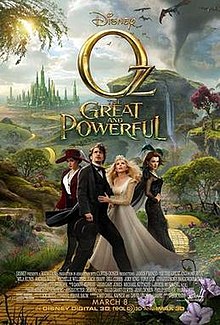
In Review: Oz: The Great and Powerful

Directed By: Sam Raimi
Stars: James Franco, Mila Kunis, Michelle Williams, Rachel Weisz

What I Liked
Clever, witty, respects source material, grounded on the wizard's humanity than the witches' or The Land of Oz's magic

What I Disliked

CGI wasn't completely to my liking 

Gist
Imaginative, entertaining, respectful of its source, and grounded on humanity, Oz: The Great and Powerful's magic is derived from the flawed humanity core of its story and a strong supporting cast that's half-human and half-CGI. It's a movie about sticking to your own faults and making the most out of them, something the movie did well as an example.

Oscar Diggs is a traveling magician, performing in two-bit towns to a half-filled tent audience. But he's also a con man, and a loveless / friendless philanderer who thinks that his ways will lead him to greatness. But one day, after his performance in Kansas, a strongman running amok sends him flying on a hot air balloon that got caught up in a tornado. Where he lands, however, is not a place known to men--a place ruled by witches, filled with magic and flying monkeys.

When the movie first came out, critics have criticized the casting of James Franco and Mila Kunis, with Franco's performance being particularly described as wooden and forced. Then there was also the frequent complaint that the movie doesn't have any sort of magic that the 1939 predecessor that it prequels to. All those said, my expectations for this movie has been tapered. I was really gonna be seeing it just for Michelle Williams. I was ready to pass on the movie. But that wouldn't be fair and I gave it a watch anyway. So was my surprise.

First, I would like to address the thing with Franco. I am not a big fan of him. In fact, I find his voice, as well as his little brother's, annoying. And to be honest, I haven't really seen much of his movie. I mean other than Spiderman and Rise of the Planet of the Apes (which I didn't enjoy much, and I actively avoided 127 Hours because I don't like the whole premise), I haven't seen much of Franco in the movies. I am also aware that a great deal of critics hate him deeply and actually take good care to nourish that hate (of him and his arrogance). Anyways, those said, I think most of the hate affected their enjoyment because to be honest, I think Franco did well. Sure, he's no Robert Downey Jr., who was Disney's primary choice (and oh what magic would that make) but that would be boring already. Downey would take the role and do it so effortlessly that already I am no longer interested seeing it. Don't get me wrong, I love him, but it seems like the role of Oz would not challenge him, or would simply present itself as another iteration of him or of Tony Stark or of Sherlock Holmes. It will be so predictable how he would tackle it.

Going back to Franco, I think he is Oz. I mean the way Oscar Diggs was written was practically based on his personality. Oz can be a bit of an arrogant, self-serving asshole. And yes, with what I've read about Franco, that's him. But he's also got a heart and goodness, something he's not very good at displaying. Again, James Franco. Oz was a guy in need of redemption and maybe so does Franco. Those said, I actually enjoyed his performance. Sure, his smile is reminiscent of the Cheshire Cat's and is often more menacing than sincere, but he has so many redeeming scenes in the movie where he brought forward the humanity out of the big CGI fog.

And speaking of CGI, I don't really understand why Disney had to make it such an Alice in Wonderland Party. While it's pared down and more simplistic than the mess of Wonderland, it's still a bit cartoonish, something that's aspiring to be Avatar but only manages to be Smurf. Though plus points to the CGI team that made Finley and the Little China Girl. Those two scene-stealers provide much of the movie's heart and are the conscience-steerers for Oz.

Of the three witches, Kunis was the looniest. I'm fine with her performance, to be honest. It wasn't career-defining, but it wasn't movie-breaking either. In fact, I don't find any fault in her performance. She was angry mist of the times anyway, and probably that was for the better. Weisz was good, but not completely detestable. She's so svelte and composed and rarely dips into her villainy. But when she does, you still couldn't hate her enough. Best performance of the three, and of the movie, however, belongs to Michelle Williams, whose royally blonde portrayal of Glinda managed to combine desperation, feist, hopefulness, and elegance in equal measures. Her Glinda matches the atmosphere of Oz under the Wicked Witch's control: Desperate yet hopefully jovial and put together. It's a close tie between her and the China Doll, though.

But what I like most about the movie is how clear it puts its morals: sticking to your own nature and finding redemption in it. Oz was a con man who wants to be a great person. He know his nature and for a reason, he thinks that there's no redeeming him. But the things he has gone through in Oz makes him realize how he could turn the tides and find the good in his ways. Disney managed to do this in a clever way. The dialog was written well, particularly the exchanges between Williams and Franco at Kansas then near the end at Oz. It is at the end too that Franco's Oz shows his heart and matures into wisdom.

The overall tone of Oz is imaginative, entertaining, respectful of its source, and grounded on humanity. Its not as loony or magical as, say, its studio kin Alice in Wonderland. Its magic is derived from the flawed humanity core of its story bolstered by the strong supporting characters adding more volumes into the story. It's a movie about sticking to your own faults and making the most out of them, something the movie did well as an example.

Judgment: 4.3 out of 5 stars

For this movie, I'm willing to pay, 200 to 250 pesos. Paid 300 for 3D. Not sure the 3D matters.

Wednesday, February 20, 2013

To Rave About: GIRLS Season 2, Episode 6


While I am still trying to finish my To Rave About for a movie that managed to land itself on to my most favorite movie list of all time, I am completely raving about this week's episode of GIRLS.

This isn't the first time I blogged about GIRLS. I did mention it before in a post, but the mention is very minimal. And given that I rarely blog about TV shows, I guess it should be telling that I am taking this time off to blog about Girls. 

Girls, in case you haven't seen the series yet (and you should), is produced by Judd Apatow's Apatow Productions and airs in HBO. Written and directed by the very young (and very talented) Lena Dunham, GIRLS premiered to polarizing online community opinion--deriving criticism for its portrayal of young women: unlikable, self-absorbed, twenty-somethings doing unlikable things. But to encapsulate Girls in that view is limiting oneself to traditional TV and its norms of having a strong likeable lead. On the show's defense, the online community has praised Dunham's for its eerily accurate portrayal of the millenial generation. Often described as self-absorbed, vain, always online, tech-savvy, and almost always broke, Millenials in Dunham's GIRLS paints with all courage today's youth, tomorrows upcoming leaders or broke bums.

After last week's episode's straying into Louie (weird and surreal TV show from FX, another one you should try) territory, not my favorite episode to be honest, GIRLS comes back strong with this week's series-defining episode. The mini film of an episode managed to squeeze in several banters while dishing out emotional punishment to its cast and its audience that are in the same age bracket, experiencing the same struggles, all the while explaining what each character represents to this generation. It's an amazing episode that compares and contrasts seemingly different and seemingly similar personalities to prove otherwise--what seems similar is dissimilar and vice versa.

SPOILERS START HERE

What separates this episode apart from the other episodes so far is that this one dissects the different character's insecurities and the youth they represent in real life. The series has progressed in such a way that we are  now familiar with each character and we know how they behave. But this episode, entitled Boys, penned by Claudia Weill and directed by Murray Miller, takes the focus from Hannah (who's been all over season 2) and puts it on these characters' interaction and their deep-seated insecurities, with a centerpiece on the oddest pairing in the series so far: Ray and Adam.

Initially, Ray and Adam share tons of similarity


This pairing, brought about by Hannah leaving Ray's copy of Little Women in Adam's apartment, brought a lot of banter and male perspective normally absent in the series. While on the boat ride to Staten Island to return the dog that Adam stole, Adam and Ray discuss a few things about the women they've been with. Initially, we are made to believe that Ray and Adam are very similar. By dialog, both seem intellectual. They both haven't achieved much. And both live on the kindness of women (Ray on Shoshanna's and Adam on her grandma's). This similarity is further bolstered by the duo's affable conversation on the barge and agreements on women. And as Adam admits, "we're both kind of weird-looking." But this is later smashed as Ray tried to chime in on Adam's dislike of Hannah.

The sudden turn of events from cordial to sour puts into the perspective the differences of Ray and Adam. Adam, who almost always appear as dumb until he speaks something deep, is acutely aware of his problems and his difficult behavior ("Everyone's a difficult person. She was accepting of my brand of difficult.") and in a way, has accepted his failures and learned to live with them.

Adam represents the youth comfortable with their own inadequacies. He lives on his grandma's money, aware that he doesn't have a job and does not feel bad about it. He's so comfortable with his living conditions that it is impossible to talk him into cleaning his apartment simply because he'll probably give a good reason why he shouldn't. Adam is the sort of stubborn youth who doesn't mind what people think simply because he's so sure of his convictions (contrast this with Jessa later). Adam likes work (theater) but he wouldn't do it unless he's really into it, unless it gels with his convictions. He is rarely affected by others' opinion (not even Hannah) and could usually do without much care for what is being said or done to him.

Ray on the other hand couldn't.

A crying Ray with the stolen dog

At 33, Ray feels like he missed the ship (the last shot where he sits with the dog as the barge blows its horn for its last trip is a very nice metaphor for how Ray feels). Ray represents the youth who hide their own shortcomings brought forth by their own choosing of the easy way out (as Adam points out that his relationship with Shoshanna seems confirming of this behavior). He is smart enough for Hannah to ask advice for with her writing, but unlike Hannah, Ray is easily discouraged and wouldn't pursue a job that taxes his intellect.

Meanwhile, Marnie and Hannah take their turns. Hannah has been offered to write an e-book by the editor of PUMPED magazine due in a month (!!!), while Marnie basks in the glory of being reigning queen of Booth Jonathan's art kingdom. While Hannah's focused on her career, Marnie's focused on her lovelife. Both have once obsessed to have what they have now. Marnie to have Booth as her boyfriend, and Hannah to be a writer. The contrast is that while Marnie who's once upon a time curating art in New York while enjoying a relationship with Mr. Right Charlie is now settling for hosting restaurants, Hannah seems to be on the rise, being recognized as a voice of her generation, at least by the feedback she's been getting from her employers, after being let go in her former internship in favor of the girl who knows Photoshop.

The scenes at the party relate to how insecure and how driven both women are in hiding these insecurities--flaunting to each other things that are conveniently disguised to be nice. The phone call that happened after is one of the saddest moments of this season--both women unable to admit just how much they are failing--a common trait among today's millenials. Today's generation would rather tweet it than to relate it to a close friend who's doing well in fear of being judged, fear brought about by their own vanity. They represent the struggling millenials who still has the drive to finish what they set out but are too proud to admit their missteps.

Anyways on to the other characters:

Shoshanna, who's only present for a short time in this episode, represents the complete opposite of Ray. As most millenials graduate college, they are optimistic and idealists. They have a naive idea about the corporate world, work, and success. These new millenials have little insecurities given how naive they are or are only insecure because older people tell them to be.

Jessa on the other hand, for the short screen time she had, represents the negative version of Adam's failure-accepting character. While Adam is comfortable of his shortcomings and openly does not value other people's opinion of him, Jessa secretly desires approval and is uncomfortable with her own failure. She pretends to be cool to hide her own discomfort with her screw-ups (but she doesn't realize all of this until she breaks up with her husband 2 episodes ago) and wishes everyone to feel the sadness she feels. Jessa has accepted failure not because it's comfortable but because she can't do anything about it and she wishes no one sees it.

Booth represents the millenials who have it made but feels as if they don't or insecure that they people might notice that they haven't really got it made. Booth is afraid of being idealized because, for some reason, it might not chime in with his person and he might fail to meet those expectations. He hates everyone that adores him because it's another expectation to meet. Perhaps he also finds people calling him a hack (like Marnie did) irresistible because it's easier to prove people right by failing than to prove people wrong by not meeting their expectations. In other words, some people find it less scary to prove they're a failure to people who dislikes you than to fail the people who believe in you.

Hannah's sad smile as she hears how happy Marnie is.


What ultimately links this episode to each of the subplots going on is that all these people have insecurities they deal with. And the way insecurities were portrayed is painfully real (genuinely human without feeling overly pathetic), with almost all characters closing the episode with sadness or tears to a sad score. It is the sensitivity and vulnerability of this episode that marked very well. One of 2013 TV's finest 30 minutes.

Friday, February 15, 2013

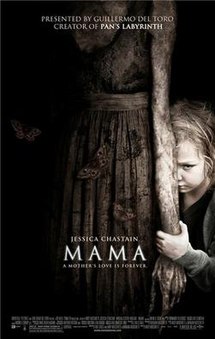
In Review: Mama


Directed By: Andres Muschietti
Stars: Jessica Chastain, Nikolaj Coster-Waldau, a CGI poltergeist

What I Liked
Cinematography by Antonio Riestra provides a creepy atmosphere full of scares and surprises

What I Disliked
Pedestrian resolution, throws a bunch of potentials that it never fully develops

Gist
It's a frightfest executed with creepy visual style, but Mama is flush of potentials that it never fully develops--giving itself to a rather pedestrian idea of an ending.

After being left to fend for themselves for five years, the Desange sisters were found alone in a cabin in the woods. They were remote from human: feral, savage, and running on all fours. Their uncle, a spitting image of their father, and his girlfriend, claims them and fends for them. But a shadowy, jealous guardian that they call Mama has followed them to their new home, unable to let go and ever wanting to whisk them away from their new family.

There is little doubt after one look at Chastain's wig that this film would be scary. If you guessed like I did, you're more than right. Mama is indeed scary. Not in The Hills Have Eyes or Texas Chainsaw Massacre scary, but in an Insidious, The Grudge, or The Eye (original Asians versions of the latter two) scary. But who is this Andres Muschietti? To most of us, he is a first time director, and the probable reason you are watching this film is because 1.) you heard Guillermo del Toro is producing (or in my case, I thought he was directing), 2.) you like either Chastain or Coster-Waldau or 3.) You have no idea who those people are and you just heard from your friends that this movie is nuts (actually, del Toro directed Pan's Labyrinth and Hellboy, Chastain is Zero Dark Thirty's Maya, and Coster-Waldau is Game of Thrones' Jamie Lannister, but you probably know that anyway). Anyways, Muschietti.

Andres Muschietti created in 2011 a short film called Mama, stress on the last a, that caught del Toro's imagination. Below is that video where del Toro justifies why he produced Mama as well as the full short film itself (actually 3 minutes long only but is way scarier than the full-length film itself). The scene has an identical in the movie. So, if you haven't seen the movie, I would advise against watching it just yet.


If your reason is number 3, then your friends are right. Mama is crazy nuts scary, one that would work better on the cinemas as a sort of a communal screaming event. The cinematography invites a certain atmosphere of creepiness in a suburban setting that unsettles. Hands down also to the acting of the two little girls, Charpentier and Nelisse were very good at portraying nature-raised jungle children, hostile to any modern form of social interaction. The score also contributed to the largely creep-out feel of the film. Of course, there was a lot of CGI use. Mama is full-on CGI and everytime she appears, CG artists get paid.

At the start of the film, you would think that this is going to be a largely psychological horror movie, with most scares coming from the psychological terror of an unknown house intruder inflicted upon its cast, and it attempted this to good effect. Eventually, though, this idea is dispelled as Muschietti's monster become ever more visible. The more the Desange orphans feel human, the more monstrous Mama is, and the more abandoned the psychological terror is, making it clear that this is a creature feature rather than a psychological purveying of any sorts.


Some day, Chastain would look at this wig and think it was
all worth it.
Chastain's character, a rocker chick who you'd think would guest star on an episode of Jackass just for the hell of it, slowly develops maternal instincts just because. There's no explanation how she'd acquire the parental skills required to rear two jungle rats other than the fact that she was with them for days on her own (and probably for the love of her boyfriend). It's just hard to imagine how a woman on her late 20s (or early 30s) who'd praise the Lord for getting negative on a pregnancy test wouldn't immediately run and return these children to foster care. I mean it's not really that bad, but come on, we can do with some depth in the character development.

Anyway, all that lack of depth in character development makes the movie feel faster than it should be, trading away dialogue and heart for more scares. And it does feel scary, especially with the score and the cinematography (and all that grunge and moth and Nelisse acting all jungle book and shit). But as the movie reaches its third act, everything feels so unimaginative and derivative already--a common pitfall in almost all horror movies is that they don't know how to end themselves after delivering several scares. As with most horror movies, everything is revealed in the end, explained, and ends as unimaginative as you can get (but, in all fairness, not as shaky a resolution as Insidious). By the time it's about to end you know, like the whole movie, the resolution will compromise.

It frustrates me, that we couldn't really have a horror movie nowadays with an ending that 1.) doesn't feel cheesy or 2.) feels like a femme fatale movie or 3.) just doesn't have a heart or 4.) makes you think it's planning a sequel. Mama attempts and ending that is satisfying and has a heart, but its methods are too unimaginative to pull it off. Yes, I loved Mama, and I wish it was a bit better than it is. As it is, it's a frightfest executed with creepy visual style, and Mama is flush of potentials that it never fully develops. In the end, it gives itself to a rather pedestrian idea of an ending and that just feels a bit too much of a wasted opportunity.

Judgment: 3.3 out of 5 stars

For this movie, I'm willing to pay, 170 to 190 pesos.

Monday, February 4, 2013

In Review: Warm Bodies


Directed By: Jonathan Levine
Stars: Nicholas Hoult, Teresa Palmer, Analeigh Tipton, John Malkovich

What I Liked
Levine managed to mash a dozen of genres into an entertaining genre-bending feature film, Analeigh Tipton outdoing Teresa Palmer

What I Disliked
Teresa Palmer feels and looks like Kristen Stewart, incosistent zombie behavior

Gist
Warm Bodies successfully mashes several genres into a darkly comic oddball full of quirks. And while its resolution or its casting of Palmer is not as strong as the other leads, direction, or its screenplay, Warm Bodies still makes for an enjoyable take on the zombie genre.

Nicholas Hoult plays a zombie named "R." He narrates his daily goings on as he walks around their airport home. One day, while searching for food with his horde, they stumbled upon a group of humans looking for medicines in an abandoned lab. This encounter result in him falling in love with Julie (Teresa Palmer), prompting him to rescue her from his fellow zombies and take her home. But something in him is changing, and slowly as he protects Julie, he is starting to feel less dead and more alive.

I once read that of all the popular horror creatures, zombies are least likely to get the Twilight treatment.They stink, they have no humanity in them, and they eat you the first chance they get. This assumption was put to shame by Levine's Warm Bodies, adapted from the Isaac Marion book of the same name. Nicholas Hoult from UK E4's TV series Skins, and films like About a Boy, and 2010's X-Men: First Class plays quirky narrator  and dead walking who can only remember a fraction of his name, "R," opposite I Am Number Four's Number 6, Teresa Palmer as Julie, daughter of the leader of remaining human survivors (Malkovich). Levine, who directed 2011's cancer comedy 50/50, directs and writes a film quite difficult to adapt.

Immediately, one has to ask, will this be a movie one would like? Anyone would answer you with a canned "that depends." Initially, I was put off. "Ugh, they finally are ruining zombies and making a Twilight material out of the beloved brain-eating dead." But the final product from Levine is delightfully far from a disaster, at least in my books. But here's the thing, it would only work if you accept the central premise that in the universe where Marion's story is set, zombies are capable of thoughts. Yes, unfortunately, for zombie purists who grew up with titles like The Living Dead, Dawn of the Dead, and played games like Resident Evil, this is unthinkable. Zombies think?! And not only that, this zombie (R) narrates, too, cracks jokes, and is given to school boy anxieties--heck he even grew a vocabulary and maintains a house. If you remain unaccepting of the central premise, then this movie will frustrate you since that premise is its main source of humor, too.

At an early point in the movie, I felt it did a full stop when it tried to explore the humanity in R after he rescues Julie. This part, I felt, Levine failed to take advantage of. It felt slow and given to teenage tendencies.  There were scenes that felt out of place or inconsistent with the whole premise. For instance the scene when Julie and R went driving a car on the airport for fun because Julie was bored--and yet no zombie could smell Julie, but we were shown early just how keen zombies are to the presence of the living, come on, why would Julie even do that after the traumatic experience early on?! Then there's also a scene when R narrates that zombies can't run. Yet later on, zombies run.

But that's not my main concern at all. The inconsistencies are forgivable because I didn't really take the movie as seriously as one would, say, Inception or No Country for Old Men. Of all, it was Palmer's casting that bothered me most. Palmer, in most of her shots, looks and feels like Kristen Stewart--something I cannot find pleasure at. The initial impression to me was that this casting was made to ensure investment returns and that it feels comfortable for Twilight audiences--probably the same target audience of this film--to watch this film. After the movie, I was able to research about how she was cast and it bothered me less. I mean, it's not her fault that she looks like K-Stew. She fought for the role and got it after working hard. Still not a fan of her acting, though, and for those who are bothered by the existence of Kristen Stewart will be bothered by Palmer's casting, too.

K-Stew on the left, Palmer on the right

After the slow parts at the airport, the movie begins to enjoy itself. Levine manages to throw in several genres into the mix: at one point it was funny, in another it was rife with suspense, in another it was full on horror, then action, then romance, then soon enough you can't tell just what genre it is because it stirs so many emotions (sports fan beware, it doesn't transform into a sports flick, though. Sorry).

Analeigh Tipton, who plays survivor Nora, occasionally trumps Palmer in their scenes together. In the film, Nora is the sort of girl who doesn't feel shaken by the Apocalypse or by the fact that she saw her comrades get eaten by zombies--which makes little sense but whatever. She is lively through out and another source of humor for the the remainder of the film as well as a dependable companion.

In the end, the resolution might still be divisive for those who remained and enjoyed the film thus far. For me, it wasn't as weak or corny as one would expect--although you'd know it's going that way and feels predictable. It  manages to be humorous--a bit awkward at spots, but altogether works, albeit limping. As I said earlier, zombie purists wouldn't last the film halfway if they reject the premise. But those who are open and stuck it with Warm Bodies will be rewarded with a film that successfully mashes several genres into a darkly comic oddball full of quirks. And while its resolution or its casting of Palmer is not as strong as the other leads, direction, or screenplay, the zombie purist in me who opened himself up and didn't take the movie as seriously finds that Levine's (or Marion's, for that matter) take on the zombie genre makes for an enjoyable 97 minutes.

Judgment: Zombie purists exercise caution on watching this film. Do not expect this to have a Walking Dead treatment, think Zombieland with a wtf twist. The romance is also light and does not go cheesy so this one is also for the guys. 3.67 stars out of 5.

Sunday, January 27, 2013

In Review: The Impossible

Directed By: Juan Antonio Bayona
Stars: Naomi Watts, Ewan McGregor

What I Liked
Heavyweight performances from Watts and McGregor. Ultra-realistic depiction of the tsunami. Harrowing depiction of the tsunami, meticulously detailed and executed. Great mother and son chemistry between Tom Holland and Watts.

What I Disliked
Harrowing narration with tiny emotional rewards. The needless insistence that the film is based on a true story. Forced casting of Watts and McGregor, remaking the story to be about a British family instead of Spanish.

Gist
It's an emotionally taxing film with great investment from its cast and its director, but as the emotional dividends pay off, you feel a little too drained to realize the payouts.

Maria and Henry Bennett (Watts and McGregor, Maria and Enrique Belon in real life--Spanish) with their kids Lucas, Thomas, and Simon decide to spend Christmas vacation in Thailand. While on vacation, the Indian Ocean Tsunami of 2004 hit, separating the family and greatly injuring Maria. The film chronicles in great detail their survival of the tsunami as well as their eventual (and seemingly magical) reunion.

In 2004, a devastating tsunami hits Thailand and other countries in the Indian Ocean, claiming thousands of lives. The Impossible details the accounts of the Belon family, masked as the Bennetts, as they survive the tsunami and piece their family together through happenstance and good fortune.

The Belon family with Watts and McGregor


Bayona developed the movie with intensive participation from Maria Belon (who is credited in the movie, "Story By Maria Belon") to keep things as real as possible. Watts was cast as Maria Bennett, with Belon saying that she loved Watts in Inarritu's 21 Grams. To remedy this casting problem (instead of actually turning Watts to look Spanish), they simply made everyone British. The Belons became The Bennetts Enrique Belon was renamed Henry, while their sons Lucas and Simon kept their names (or the spellings at least as Spanish names are accented differently), while Tomas was Anglicized to Thomas. Oddly, Maria was not chastised into becoming Mary, perhaps because Maria wanted to keep her name out of vanity, but whatever.
Maria Belon with son Lucas Belon at the premiere of The Impossible,
8 years after the tragedy in Thailand

As with most true stories, we can count on directors to take dramatic liberties. Moviemaking has so many factors--how the producers and financial backers think it should sell, how the actors want to treat their characters, how the screenplay writers want to create cinematic affectation--that the final product may bear little resemblance to real life events--and sometimes for the better. In real life, Maria Belon loses half of her right leg, while in the movie, Maria keeps it (at least until the film ends) amidst becoming death.

My problem with The Impossible is how it managed to echo a fraction of The Passion of The Christ for Maria Bennett. It was a practice of stressful coincidences--owing perhaps to how graphic (and real, possibly even accurate) Bayona chose to portray the tsunami incident, with its fortunate events bordering soap opera territories that seems diluted in all that tsunami water. Was it bad? Far from it, but it is stressful to watch--it actually felt like experiencing the tsunami first hand that I'd say it is a movie experience that would mark on you and assure your distancing from the beach for the foreseeable future. Had Maria Bennett lost her leg, it would have been the nail to the coffin and cinemas might flood with tears--causing mass casualties. At least the family reunites and The Bennetts survive. Happiness! But for some reason, this joyful coincidence just couldn't compensate for the amount of stress I harbored over the 105 minutes running time. Of course, we wouldn't know for sure how much of all these is real, except that it felt real

Bayona depicts a tsunami event so graphically real, it's scarring.
Kudos to the cast. Watts and Holland portray believable mother and daughter, while McGregor, Watts, and Holland all have convincing and powerful performances that court tears.

The direction was grueling and meticulously detailed and the acting was powerful, but I don't know, maybe it would have been wiser for them to have allowed more happy scenes--or at least let us in on what kept Maria Bennett going, or arrange the eventual reunion in a less soapy manner and eventually depict Maria losing her leg: yeah, we can handle it the way we did with How to Train Your Dragon though that one did have its enchanting and happy moments. It's an emotionally taxing film with great investment from its cast and its director, but as the emotional dividends pay off, you feel a little too drained to realize the payouts. Not something you'd love to watch on a lonely day.

Judgment: Probably it was a bad idea to watch it with an overcast mood and a penchant for heading the beach this summer. I may have been expecting for Bayona to Hollywood-ize this film a bit more, make it more jovial and celebrating, but it ended feeling like Hostel with water. But maybe if he had, I'd call it sappy and cheesy. So maybe it's all for the good. They could've really just made Naomi and Ewan look more Spanish though, I mean come on, how hard is that? 3.6 out of 5 stars

For this movie, I'm willing to pay, 170 to 190 pesos. I paid 191 pesos. And Eastwood Cinemas decided to show me a grainy version with Thai subs. What a rip-off, Megaworld!