Showing posts with label 2012 film. Show all posts

Sunday, January 27, 2013

In Review: The Impossible

Directed By: Juan Antonio Bayona
Stars: Naomi Watts, Ewan McGregor

What I Liked
Heavyweight performances from Watts and McGregor. Ultra-realistic depiction of the tsunami. Harrowing depiction of the tsunami, meticulously detailed and executed. Great mother and son chemistry between Tom Holland and Watts.

What I Disliked
Harrowing narration with tiny emotional rewards. The needless insistence that the film is based on a true story. Forced casting of Watts and McGregor, remaking the story to be about a British family instead of Spanish.

Gist
It's an emotionally taxing film with great investment from its cast and its director, but as the emotional dividends pay off, you feel a little too drained to realize the payouts.

Maria and Henry Bennett (Watts and McGregor, Maria and Enrique Belon in real life--Spanish) with their kids Lucas, Thomas, and Simon decide to spend Christmas vacation in Thailand. While on vacation, the Indian Ocean Tsunami of 2004 hit, separating the family and greatly injuring Maria. The film chronicles in great detail their survival of the tsunami as well as their eventual (and seemingly magical) reunion.

In 2004, a devastating tsunami hits Thailand and other countries in the Indian Ocean, claiming thousands of lives. The Impossible details the accounts of the Belon family, masked as the Bennetts, as they survive the tsunami and piece their family together through happenstance and good fortune.

The Belon family with Watts and McGregor


Bayona developed the movie with intensive participation from Maria Belon (who is credited in the movie, "Story By Maria Belon") to keep things as real as possible. Watts was cast as Maria Bennett, with Belon saying that she loved Watts in Inarritu's 21 Grams. To remedy this casting problem (instead of actually turning Watts to look Spanish), they simply made everyone British. The Belons became The Bennetts Enrique Belon was renamed Henry, while their sons Lucas and Simon kept their names (or the spellings at least as Spanish names are accented differently), while Tomas was Anglicized to Thomas. Oddly, Maria was not chastised into becoming Mary, perhaps because Maria wanted to keep her name out of vanity, but whatever.
Maria Belon with son Lucas Belon at the premiere of The Impossible,
8 years after the tragedy in Thailand

As with most true stories, we can count on directors to take dramatic liberties. Moviemaking has so many factors--how the producers and financial backers think it should sell, how the actors want to treat their characters, how the screenplay writers want to create cinematic affectation--that the final product may bear little resemblance to real life events--and sometimes for the better. In real life, Maria Belon loses half of her right leg, while in the movie, Maria keeps it (at least until the film ends) amidst becoming death.

My problem with The Impossible is how it managed to echo a fraction of The Passion of The Christ for Maria Bennett. It was a practice of stressful coincidences--owing perhaps to how graphic (and real, possibly even accurate) Bayona chose to portray the tsunami incident, with its fortunate events bordering soap opera territories that seems diluted in all that tsunami water. Was it bad? Far from it, but it is stressful to watch--it actually felt like experiencing the tsunami first hand that I'd say it is a movie experience that would mark on you and assure your distancing from the beach for the foreseeable future. Had Maria Bennett lost her leg, it would have been the nail to the coffin and cinemas might flood with tears--causing mass casualties. At least the family reunites and The Bennetts survive. Happiness! But for some reason, this joyful coincidence just couldn't compensate for the amount of stress I harbored over the 105 minutes running time. Of course, we wouldn't know for sure how much of all these is real, except that it felt real

Bayona depicts a tsunami event so graphically real, it's scarring.
Kudos to the cast. Watts and Holland portray believable mother and daughter, while McGregor, Watts, and Holland all have convincing and powerful performances that court tears.

The direction was grueling and meticulously detailed and the acting was powerful, but I don't know, maybe it would have been wiser for them to have allowed more happy scenes--or at least let us in on what kept Maria Bennett going, or arrange the eventual reunion in a less soapy manner and eventually depict Maria losing her leg: yeah, we can handle it the way we did with How to Train Your Dragon though that one did have its enchanting and happy moments. It's an emotionally taxing film with great investment from its cast and its director, but as the emotional dividends pay off, you feel a little too drained to realize the payouts. Not something you'd love to watch on a lonely day.

Judgment: Probably it was a bad idea to watch it with an overcast mood and a penchant for heading the beach this summer. I may have been expecting for Bayona to Hollywood-ize this film a bit more, make it more jovial and celebrating, but it ended feeling like Hostel with water. But maybe if he had, I'd call it sappy and cheesy. So maybe it's all for the good. They could've really just made Naomi and Ewan look more Spanish though, I mean come on, how hard is that? 3.6 out of 5 stars

For this movie, I'm willing to pay, 170 to 190 pesos. I paid 191 pesos. And Eastwood Cinemas decided to show me a grainy version with Thai subs. What a rip-off, Megaworld!

Thursday, January 24, 2013

In Review: Les Miserables (2012)


Directed By: Tom Hooper
Stars: Hugh Jackman, Russell Crowe, Anne Hathaway, Eddie Redmayne, Amanda Seyfried, Helena Bonham-Carter, Sacha Baron Cohen

What I Liked
Powerful performances from the cast, particularly from Anne Hathaway

What I Disliked
The whole thing felt like a needlessly long music video; Hooper failed to create an atmosphere that engrosses its audiences. The whole sing-song conversations that felt over the top. Russell Crowe's singing.

Gist
Needlessly long and often coming across as over-the-top, Hooper's need to saturate the near three hours running time with closeups failed to engross the audience with the atmosphere of France in revolt. Thankfully, the cast delivers powerful performances, particularly from Hathaway and Jackman.

Jean Valjean (Jackman) was sentenced to 5 years of prison after he stole a loaf of bread. His attempt to escape slavery in prison lengthened it to 19 years. After serving enough time, he obtained a parole, but couldn't get any decent job and continuously gets discriminated because of his papers stating his previous incarceration. One night, he strayed onto a church where the Monsignor allowed him the night and some food. Valjean however thought it better to steal some of the church's silver instead and run off. But he got caught and brought to the church and was given a free pass by the Monsignor telling him that he should use this silver for a new chance at life. Moved by the priest's kindness, he promised to live a new life of helping others from whatever riches he gains from the silver.

Coming off as one of the, if not the, highest profile adaptations of the stage musical, Tom Hooper's Les Miserables features an ensemble cast comprised of Hugh Jackman, Russell Crowe, and Anne Hathaway to name a few. Hooper's Les Mis holds distinctions over other adaptations for being shot primarily using a Steadycam, allowing a more creative take on filming, and with the songs sung live on-set, while the orchestra was dubbed in post-production. Set in 1815 and succeeding years that ultimately lead to the June Rebellion--a failed rebellion lead by students, Tom Hooper's take on Les Miserables is supposedly intimate and as and alive as the stage musical is (or to replicate the experience of watching the musical). While his intentions were good, I do not believe that he was able to meet the goal of creating an intimate film, something that speaks to the soul. I will be frank early in this review that this movie drove me frustrated and sleepy. I just didn't understand the choices that Tom Hooper made.

First off, let me mention the few good things I can raise about this film: Anne Hathaway. Her overall screen time is less than 20 minutes for a film that goes on for 160 minutes. But those 20 minutes were put to good use. Her scene-stealing performance of "I Dreamed a Dream" is so heartfelt and emotional even if I keep on getting distracted by the way it was filmed (but more on that later). She managed to put so much emotion and power into that song that you can feel the pain she is feeling. Things go downhill after that, though, and quite quickly.

Since I've picked on how Anne's performance was shot, let me start with that. The performance begins with Anne on a bed--after doing her first person as a prostitute. It wouldn't take long for the camera to slowly zoom in and present the whole performance close up. This works in a sense that you can see the pain on Anne's face. At one point you can even see the bloody gum where her tooth was plucked from. Anne at this point is very unsightly. And we are presented with this along with a very moving song of dreams lost. But! Where is she again? Is she wearing anything? Why does she keep looking that way or this way? What is in that space that she is looking at? What does her dress look like again? Oh wait, is she still wearing anything? The whole thing was shot at close up that you would soon lose interest at the pain that registers on her face and start feeling uncomfortable that you are confronted by an unsightly Anne Hathaway for two minutes non-stop: face to face. And there's nothing to distract you from that. Nothing but a black background which does not help you remember where she is. And no, the camera doesn't move around to show her back or her surroundings or her interacting with her surroundings. In fact, at one moment, when Anne looks up at the ceiling, the camera moves up with her head and we don't even get to see her neck anymore, just 5/6 of her face. You might not realize this on your first viewing, but I noticed this and wth, there was nothing interesting above, Hooper, just more darkness, to justify your taking away Anne's neck for like 5 seconds. I was actually afraid that the camera would go up higher and never come down because the scenes prior to this were so poorly framed. In fact, I felt like the whole I Dreamed a Dream was an overlong music video, reminiscent of Janet Jackson's Everytime.

First thing that comes to mind: what was the scary thing she saw that side
of the screen, why can't the cameraman show it to us? 

The whole time Anne Hathaway was singing I Dreamed a Dream, I can't help
but get reminded of Janet Jackson's Everytime, mostly shot shoulders up.

Some may say in defense that the way it was shot and framed was perfect because the director wants us to focus on Anne's performance rather than what's on the background. But what about her body language? I wanna see that too. I wanna see her clench her fists in sadness and anger over her present situation. Was she pressing her fists to her chest or stomach in utter disgust? What about her feet, those can express displeasure, too, or disgust over what she has just endured. What a missed opportunity!

I think that Hooper chose to film a majority of the film (and almost all of the 50 songs) in close up because, perhaps to him, close-up meant intimate. Yes, perhaps, physical proximity might amount to intimacy, but no, not in this case. Unfortunately, the closeups eventually alienate the audience in a sense that it didn't bring the audience to the same environment as the characters. I felt that Hooper kept the audience as viewers in a separate environment and they don't feel like they can participate in the scene. They're just watching the faces and have no clear idea where they are exactly. Take this example. Didn't you feel engrossed in James Cameron's Avatar? With Avatar, we are given a clear picture of Pandora--a full exploration even. That movie wasn't just about its characters or their CGI faces, it was about their settings, too, their world, their culture. In Les Mis, we are only allowed to interact with the characters and are only given glimpses of France in revolt--why are even they in revolt, was that discussed or was it expected of the audience to have some knowledge in history before stepping in? And those glimpses are quite the odd glimpses, too: shots that are angled weirdly, like the picture below (compared with Winding-Refn's Drive):

The movie is chock-full of shots that attempt to overuse shallow focus to
poor effect. The angle feels off and you don't exactly get a good idea of
what the shipyard (is it even a shipyard) and if Javert is wearing pants. You
also feel a tad shorter than Javert at this angle and feels awkward compared to:

This. Winding-Refn frames this conversation scene perfectly in Drive. We are
given an idea where THE DRIVER is and we are set to him on eye level,
equal height. Making it feel more intimate and less alienating unlike Russell Crowe's. 

Comparing those two, we are seeing France from Russell Crowe's chest. I am not sure what Hooper wants to present to his audience, too, in that shot: Russell Crowe, who is too far on the left, or France, which is too blurry and blocked by a Javert whose face is also poorly lit? In Refn's Drive, everything is clean. There are shadows, but we can see Gosling's face. We can also see Gosling and the whole environment in one glance.  We can also see where he is and the park is allowed to play background by letting us focus on the center where our eyes are trained to be at often, with the peripheral vision capturing minor details as we focus on the center. Since the background also seems elaborate, we know where he can go if the deal goes wrong, we are allowed in to explore this place where the scene is happening. With Hooper's off-angle style, I felt confined, distracted, and asked to choose whether to focus on the sky or on Crowe because everything is big and competing for attention.

And this style pervades throughout the whole 2 hours and 45 minutes running time.

But don't get me wrong. Sometimes this choice works. Sometimes the off-angled camera takes gorgeous shots, especially when it lets go of the shallow focus (blurred background). There were some shots in the opening "Look Down" that looked fine--some even gorgeous, though much of it was devoted to Hooper experimenting with closeups and shallow focus. "Master of the House" plays it safer and was actually enjoyable. "Do You Hear the People Sing?" is another one that wasn't peppered greatly with closeups and poor angle. Again, another enjoyable part. But such things come rare in Hooper's showcase because he filled the whole thing with close-ups and weird angles that belong better to fashion magazines.

And shame! The set design is lush and grand even if I only catch glimpses of it--but ultimately not enough glances to make me feel everything. Same can be said for costume design, which I get to see chest up only most of the times. And worst of all, the performances--all great--easily negated by the framing choices, unable to involve the audience into the whole environment. Again, to me, the whole thing felt like a needlessly long music video filled with closeups (to focus on how pretty this new POP IT girl even at close up) and shallow focus; Hooper failed to create an atmosphere that engrosses his audience, and I almost fell asleep half way because I was tired of seeing closeups after closeups or shots from the chest and tilted weirdly. The whole sing-song conversations that felt over the top didn't work for me, too, which also contributed to the padded length of 2h and 45 even if Hooper had actually shortened some songs by a minute.

Maybe this treatment would work for some people. But in the group of 10 I came in with for this movie, at most only 3 were pleased or OK with the final result. The rest were severely frustrated and felt it was boring, and that's mostly because the movie couldn't immerse people properly since it kept throwing faces at its audience. On the plus side, this treatment allowed me to count Eddie Redmayne's freckles when I was ready to walk out.

Judgment: Hooper dreamed a dream, but to me it felt like a 3-hour nightmare. Do people need to watch this? For me, not really, but people would and I wouldn't try to advise them against it simply because this film is so current, it would be a shame to have missed it, kind of like the Avengers of period films. Even if only for the sake of discussion, people would watch Les Mis because it's an event, rather than a movie, though a pretty bad one at that. My suggestion to those people is to skip the theatre and get a copy, legally or illegally, I don't think it should matter, because once that I Dreamed a Dream performance of Anne hits YouTube, then you can skip the movie entirely and save 3 hours of your life. 2 out of 5 stars.

For this movie, I'm willing to pay: less than a hundred bucks, then I would walk out and ask for a refund.

Sunday, January 20, 2013

Revised: 20 Favorite Movies from 2012

2012 was the year of the franchises and big studio movies. This is the year where Nolan's Batman ended and Wheddon's Avengers began. The Hunger Games also began this year as with the journey of The Hobbit (which I have not seen yet as I opted to skip it). If you look at it, 2012 seems like a year of sequels: we have Skyfall, Expendables 2, Taken 2, Men in Black 3, Madagascar 3, Ice Age: Continental Drift, and Underworld: Awakening continuing their respective runs while Spider-Man gets its (rather unnecessary) reboot as well as the Bourne Legacy, sort of restarting with Jeremy Renner as its new lead. And finally, the Twilight saga closes, with boyfriends everywhere singing hymns of joy and praises that the nightmare is over. Tom Hooper's grandiose (and snooze-inducing) production of Les Miserables, The Charlize Theron and Kristen Stewart-starrer, Snow White and the Huntsman, and Seth MacFarlane's Ted also produced big numbers for their big studios.

Honestly, I feel that last year was more for the big studios than artsy indies. While last year, my top 4 was dominated by limited theatrical releases: The Artist, Weekend, and Drive, with the exception of Bridesmaids being the only one given a wide release, I feel like my overall melancholy in 2012 resulted in my liking big studio comedies, while my intense love for Breaking Bad and Homeland made me like suspense thrillers over complicated, serious, and heartbreaking indies. Well, since I've been blabbing about these movies, might as well present the complete and revised list. Here is my 20 favorite movies from 2012.

20. Your Sister's Sister
Directed by Lynn Shelton
Stars Emily Blunt, Rosemarie DeWitt, Mark Duplass

The Offering: Struggling to get over his brother's suicide, Jack (Duplass) takes an offer from his bestfriend and brother's ex, Iris (Blunt), to stay at their isolated cabin to think. Upon getting there, he encounters Hannah (DeWitt) and has a one-night stand with her only to wake up to Iris joining them at the cabin the day after.

Admission ticket: Amazingly crazy, Your Sister's Sister begins like an average affair, but as it progresses, it becomes more endearing with every crazy turn it takes that pay off. It also helps that Emily Blunt was extremely likable, while Duplass, a rather odd choice for a leading man, works his part well. DeWitt is also equally likable, rounding up the amazing cast that weaves the insanity in every turn.


19. Six Degrees of Separation from Lilia Cuntapay
Directed by Antoinette Jadaone
Stars Lilia Cuntapay

The Offering: Mockumentary about a Philippine cinema extra Lilia Cuntapay receiving an award after 30 years of hardwork. Packs an unsuspected philosophical punch about recognition and self-fulfillment.

Admission Ticket: Jadaone's Cinema One Originals effort is one rife with heart. She did to Lilia Cuntapay what Letters of Iwo Jima did to the Japanese soldiers. She humanized a horror icon that haunted most of our childhood. The mockumentary format matched its quirky humor and Jadaone's tendency to show her lead in a comedic light.When humor is turned off, however, Cuntapay goes for the kill with her unique brand of philosophy, or her own brand of human drama that grips.


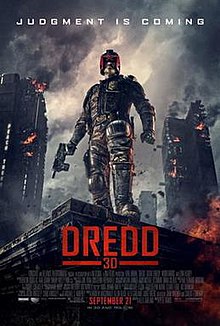
18. Dredd 3D
Directed by Pete Travis
Stars Karl Urban, Lena Heady, Olivia Thirlby 

The Offering: Karl Urban plays Judge Dredd in a world where the police is setup as the jury, judge, and executioner. He takes along Judge Anderson on what seems like a normal day until they're lockdown in a drug complex. Urban does not reveal his full face, not even once. And oh, Cersei Lannister is here, too!

Admission Ticket: Set up similarly to The Raid: Redemption, Dredd won me over by its tendency to be trippy and the effective battle of wills between Karl Urban's Dredd and Heady's Ma-Ma. There are no fist fights, but Dredd's tendency to make fun of itself and its dark humor it derives from its brutality makes it witty and well-adapted in its own right.


17. The Best Exotic Marigold Hotel
Directed by John Madden
Stars Judi Dench, Tom Wilkinson, Bill Nighy, Maggie Smith, Dev Patel

The Offering: Britain's most prized veterans join forces as seniors who retires in India's "The Best Exotic Marigold Hotel" that apparently is crumbling and aging. Their stay in India, however, changes them, and as they start to grow fond of their stay, The Marigold Hotel becomes endangered of being sold.

Admission Ticket: Marigold Hotel may seem like an uninteresting British equivalent to The Expendables, but if given the chance, it's actually charming, sweet, and heartwarming like a grandma. Dench was charming as usual, while Maggie Smith begins dour but ends up lovable. Dev Patel as the enthusiastic Sonny is also a delight.

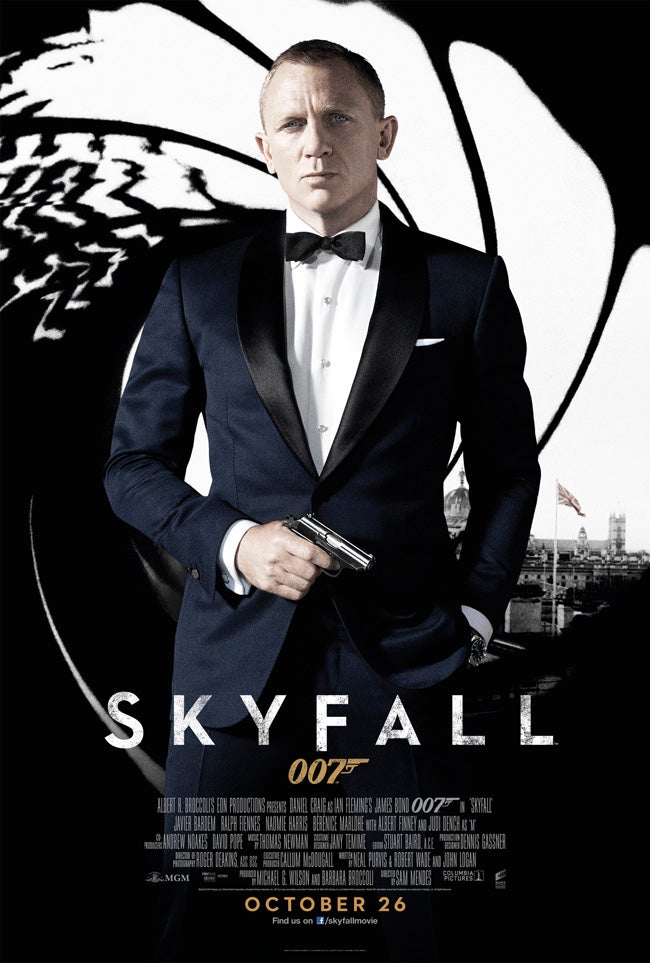
16. Skyfall
Directed by Sam Mendes
Stars a bunch of British people JK! Daniel Craig, Judi Dench, Javier Bardem

The Offering: James Bond gets and presumed dead, while he actually enjoys lounging around in some tropical island. Silva, a terrorist goes for M's neck, and pretty much wrecks England in the process, prompting Bond to go out of hiding.

Admission Ticket: Best Bond film ever! Seriously, this is the only Bond film I've seen other than Casino Royale. And since the internet is in agreement that Casino Royale was the best Bond film of all time, then my finding of Skyfall better than Casino Royale as the better Bond film supports my claim that this is the best Bond film ever. Seriously, crazy action plus a great villain in Bardem makes this Bond film one for remembering.

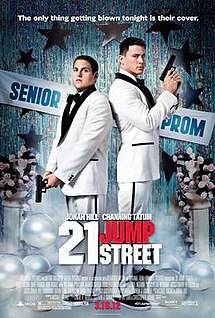
15. 21 Jump Street
Directed by Phil Lord, Chris Miller
Stars Channing Tatum, Jonah Hill, Ice Cube

The Offering: Two underachieving cops are entered into the 21 Jump Street program after failing to read the Miranda Rights to the person they're arresting. Just when you think a movie with Channing Tatum is bound to suck, 21 Jump Street proves you wrong.

Admission Ticket: Perhaps the funniest comedy movie this 2012, the bumbling duo Hill and Tatum hasn't been this funny or good in a long time. The jokes are perfectly timed for Jump Street and it can be credited to producing one of 2012's most profound movie quotes "Fuck you, science!" Tatum goes under the influence of the drug they are supposed to stop the spread. It's crazy and stupid fun, something you can watch over and over.


14. Pitch Perfect
Directed by Jason Moore
Stars Anna Kendrick, Rebel Wilson, Skylar Astin

The Offering: Bring it On meets Mean Girls meets Glee. Probably not the best way to describe Pitch Perfect. Anna Kendrick plays goth girl who wants to be a music producer but instead becomes an a capella girl that she did not think she'd become.

Admission Ticket: Rebel Wilson. Anyone who says otherwise will be slayed immediately. The numbers are just great and the secret lead Rebel Wilson is given enough opportunity to display her talent. The commentary exchanges between Gail and John are also laugh out loud offensive.There's also a fat heart somewhere in the movie and we are told that if we love each other enough, we will win an a capella contest.


13. Seven Psychopaths
Directed by Martin McDonagh
Stars Colin Farrell, Sam Rockwell, Christopher Walken, Woody Harrelson

The Offering: Farrell plays Marty, an Irish writer struggling to come up with a screenplay for a movie while Sam Rockwell plays Billy his bestfriend with psychopathic tendencies who kidnaps dogs for a living. Billy one day kidnaps a mobster's Shih Tzu which begins a crazy spin on their lives.

Admission Ticket: Absurd by design, darkly fun, grandly entertaining, and overwrought with crazy, McDonagh's Seven Psychopaths features a fine performance from Sam Rockwell as the crazy Billy Bickle that buoys the whole story along.


12. Ruby Sparks
Directed by Jonathan Dayton and Valerie Faris
Stars Paul Dano, Zoe Kazan, Chris Messina

The Offering: Calvin Weir-Fields is a celebrated young  writer whose sophomore project just wouldn't materialize. While consulting with his psychologist who helps him get through his fear of being a one-hit wonder and his breakup, he was given a writing assignment that soon turned to a book idea that soon materialized its main character in his kitchen.

Admission Ticket: Dayton and Faris' follow up to Little Miss Sunshine is no less quirky. Paul Dano starts a bit awkward and unlikable but finishes strong with a little help from Zoe Kazan. The idea that we reduce people to expectations that we don't state until they start not meeting those expectations is the central premise of Ruby Sparks that just works for me.


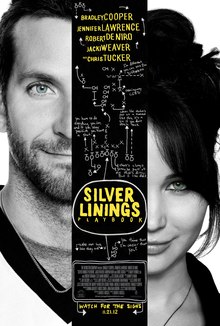
11. Silver Linings Playbook
Directed by David Russell
Stars Bradley Cooper, Jennifer Lawrence, Robert de Niro, Jacki Weaver

The Offering: Pat Jr. (Cooper) is a (hardly) recuperating bipolar who's had a restraining order from his estranged wife after beating his wife's lover severely. After getting out of the Baltimore facility, he tries piecing his life together to eventually win his wife back. He sees a silver lining when he meets Tiffany (Lawrence) who can help him communicate with his wife through letters.

Admission Ticket: Released at a time of rom-com recession, SLP manages to be fun, funny, smart, and sensitive, with Lawrence at her most convincing and human performance of a recuperating sex addict, while De Niro and Cooper were equally terrific as father and son with explosive tendencies, rounding up to make a rare rom-com gem.

10. Holy Motors
Directed by Leos Carax
Stars Dennis Lavant, Edith Scob, Kylie Minogue

The Offering: Trippy as fuck, Holy Motors is about a man named Oscar travelling Paris in a limousine, assuming identities that people completely accept as his. It's a surreal ride filled with allusions and terrific performances with each identity change.

Admission Ticket: Holy Motors will catch you in surprise. Carax keeps an air of mystery around the premise that would make one think for days about what the film is actually about.  Who pays Oscar for these appointments? Why is his identity change fully accepted? What are the actors really? Does the Holy Motors company name relate them to, uh, God? Why do the limos talk?


9. Marvel's The Avengers
Directed by Joss Wheddon
Stars Robert Downey Jr, Jeremy Renner, Scarlett Johansson, Chris Evnas, Chris Hemsworth, Mark Ruffalo, and Samuel L. Jackson

The Offering: 4 years in the making, Marvel's Avengers is (Disney's) Marvel Studio's culmination in everything it learned about making a good superhero movie. 

Admission Ticket: There's just too many to mention here. The great CGI for starters, the epic moments of The Avengers fending off the huge floating aliens, Thor teasing Iron Man about using mom's curtains for his cape, The Hulk cleaning the floor with Loki, Thor flooring Iron Man, Iron Man flooring Thor, Jeremy Renner being badass, Scarlett Johansson being flexible, you know where this is heading. It's the most fun you can have in cinema, and Wheddon's reward for being an unnoticed talent.


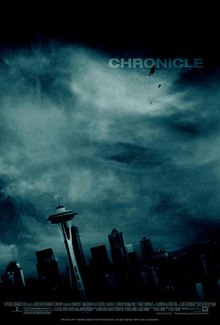
8. Chronicle
Directed by Josh Trank
Stars Dane DeHaan, Michael B. Jordan, Alex Russell

The Offering: Three high school seniors stumble upon an underground cavern where a crystalline boulder lies, emitting strange lights that eventually give them telekinetic powers that they agreed to keep secret. Soon enough, one of them begins acting out of line, endangering their secret and the people around them.

Admission Ticket: Chronicle at first glance feels like a normal cash-in movie: Superhero origins, found footage format, but a charmingly depressed Dane DeHaan, a boy who wanted to do good, but ends up doing the opposite, would propel a could have been vapid film into a thrilling superhero flick that works. And best of all, the found-footage format works with Trank playing with inventive ways of mounting the camera to make it feel floating.


7. Pieta
Directed by Kim Ki-duk 
Stars Lee Jung-jin, Jo Min-su

The Offering: A man working for a loan shark who cripples the clients to get their insurance money for payment comes across a woman who introduces herself as the mother who abandoned him 30 years ago, fills a hole in him, and changes him. But who is this woman, really?

Admission ticket: The Golden Bear winner this year (by means of disqualification) is a South Korean film that echoes a common element of Korean drama: a manic pixie dream girl. But this time, the MPDG is a mother who teaches her son to be a good person. Some scenes may be difficult to watch, but the film's resolution is so breathtakingly gorgeous and haunting, it deserves a re-watch.

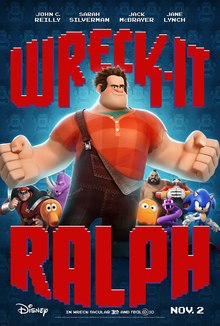
6. Wreck-it Ralph
Directed by Rich Moore
Stars Kristen John O' Reilly, Sarah Silverman, lots of video game characters

The Offering: A video game villain is tired of not being appreciated in his job and so he travels to other arcade games to get himself a medal and be treated like the hero Fix-it Felix. The movie features a lot of video game characters and humors.

Admission Ticket: Rich in nostalgia and humor, Wreck-it Ralph is Disney's closest to becoming Disney Pixar. There hasn't been anything as joyful and nostalgic as Wreck-it Ralph (other than The Muppets) in recent memory, that's why it claims the 5th spot. And how cute was the Sugar Rush game and characters? For me, this is the best animated movie of 2012. Hands down.

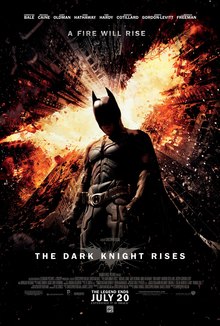
5. The Dark Knight Rises
Directed by Christopher Nolan
Stars Christian Bale, Tom Hardy, Anne Hathaway, Marion Cotillard

The Offering: Nolan's Batman trilogy ends with a Billion dollar bang. Bruce Wayne mourns and becomes a recluse after the death of his love. But a certain burglary leads Bruce Wayne to a man they call Bane who's out to destroy Gotham City.

Admission Ticket: Some will say that The Dark Knight Rises pales in comparison to 2008's The Dark Knight. But let's be fair, Bane is hardly as popular a villain as The Joker. Yet, he worked (though that accent, ugh! Feels like he's in a cooking show)! Plus that twist somewhere near the end and Nolan making us think that someone will be making a Nightwing movie even Gordon-Levitt couldn't even throw a punch without hurting himself.


4. Beasts of the Southern Wild
Directed by Benh Zeitlin
Stars Quvenzhane Wallis, Dwight Henry, a bunch of other unknowns

The Offering: Set in a Louisiana bayou community cut-off from the rest of civilization by a levee, Beasts explores Hushpuppy's journey into adulthood after a violent storm threatens their carefree life in the bayou and her father's health further sinking to deep mud.

Admission Ticket: In a nutshell, it's a poor man's Pan's Labyrinth with a tendency for vivid pictures of poverty and to stick to its convictions, right or wrong. Rife with childish stubbornness, imagination, glee, carefree, and bayou-survival brand of wisdom, Beasts seesaws between fantasy and reality and often emerges imbalanced thanks largely to its dedication to create its own problems. But even so, Wallis's performance pays its own emotional dividends while the movie wraps itself up with a fantastic score.

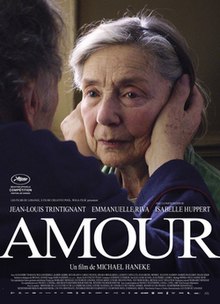
3. Amour
Directed by Michael Haneke
Stars Jean-Louis Tritignant, Emanuelle Riva

The Offering: Simply put, Haneke's Amour is a tale of love surviving even after death. But to capsulate it as such is careless. Amour's a painful look at the trials of growing old together and keeping in love amid the difficulties that accompany old age.

Admission Ticket: It's easy to name Amour as one of 2012's best, watching it is a more difficult task, however, especially if you can identify with the characters. A heart-wrenching tale of growing old together and love surviving even the test of physical death, Amour is a fine work from Austrian director Haneke, laced with subtle symbolisms and an emotionally shattering final act that redeems as much as it stabs.

2. Argo
Directed by Ben Affleck
Stars Ben Affleck, Bryan Cranston, Alan Arkin, John Goodman

The Offering: Based on the clandestine CIA operation known as the Canadian Caper during a tumultuous time in Iran during the 80s, Argo sees Ben Affleck as CIA officer Tony Mendez trying to smuggle American diplomats out of Iran after the American embassy was taken over by the Iranian government.

Admission Ticket: Precision. Tension. Ah, Argo, without any doubt, is Affleck's best directorial effort to date. So much that it's scary for Affleck to be making a new movie because it may not equal Argo's masterclass in control and build up. It's one of the few movies that kept me literally on the edge of my seat. The actors, bar Affleck, are lovable: Cranston, Arkin, Goodman, and even the Iranian guards at the airport that speak Farsi. 

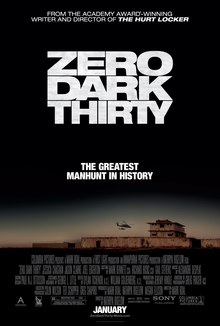
1. Zero Dark Thirty
Directed by Kathryn Bigelow
Stars Jessica Chastain, Jason Clarke, Kyle Chandler, Jennifer Ehle, Joel Edgerton 

The Offering: An unsweetened dramatization of the decade-long search for Osama Bin Laden, Zero Dark Thirty centers in on Maya, a CIA analyst stationed in Pakistan, as she comes to terms with the nature of her work and how she battles terrorism and bureaucracy to accomplish her job--find and kill Bin Laden.

Admission Ticket: Bigelow's and Boal's take on the hunt for Bin Laden possesses the same quiet explosive tendency that Hurt Locker has but has twice the control and tension. It's hard to pinpoint exactly which of the factors of Zero Dark Thirty would stick out as its most defining one. With Argo, that would be Affleck's direction, but in Bigelow's everything just works: the editing, the quiet script that suddenly explodes, the narrative, and Chastain's Maya that goes toe to toe (in terms of cool) with Gosling's Driver in Drive. It edges out on Argo by a small margin, possibly because Argo has no central character to anchor you in on the story, but this one has, and a very cool one, something that Affleck's Tony Mendez had some trouble with.

Wednesday, January 9, 2013

In Review: Life of Pi


Directed By: Ang Lee
Stars: Suraj Sharma, Irfan Khan, Rafe Spall

What I Liked
Ang Lee's visual poetry is spot-on, a pretty straight out adaptation that respected its source material

What I Disliked
Some magic was lost in the translation and the film felt hurried, providing symbolism but not fully fleshing them out

Gist
Ang Lee's adaptation of Life of Pi is visually spot-on, and his choice of narrative fits the material perfectly. It can't be helped, though, that some poetry was lost in translation. The film has a spirit and an emotional pull but not one as intense as its source material.


Piscine Molitar "Pi" Patel is son to a zoo owner. He is named after the "best" public swimming pool his Uncle has swam on in France. When Pi reached his 16th birthday, India found itself in a political turmoil, and his father decides to sell the zoo animals to North American zoos and move permanently to Canada to ensure their future. On board the cargo ship Tsimtsum, they sailed through the Pacific with all the zoo animals on board. But things go wrong when a storm in the sea caused the Tsimtsum to sink. Pi, awake during the storm, managed to escape death and soon finds himself on a raft in the middle of the Pacific Ocean in the company of an adult Bengal Tiger.

***This review does not contain spoilers, but may affect your experience of the film***

In 2002, writer Yann Martel won a Man Booker Prize Award for the book on which the film is based on. Before getting published, his manuscript was rejected by at least 5 publishers. Subsequently, the tiger in the book is called Richard Parker, a play on the coincidence that the name "Richard Parker" often appearing in several shipwreck stories. The source material isn't as unfilmable as some may think (Cloud Atlas is more unfilmable, actually, owing perhaps to length). Ang Lee's adaptation was pretty spot on, except that he didn't go into excruciating detail of Pi's hardships in the sea--which could've given the movie a deeper emotional tug. Not that the film skimped on the emotional beatings, but the book was more punishing and stressful to the reader.

The actors that played Pi did well, particularly Sharma, whose performance was central to the film. His is the human voice that put things into perspective: the guide to the journey and our connection the film and the trials at sea. In my book though, Sharma plays second fiddle to a domineering CGI tiger in terms of importance to the movie. Life of Pi, the book, is full of symbolism, and if you read through them, you'd see that the sea represents a difficult journey or life itself, the boat represents our limited resources, reaching civilization is our destiny, and the tiger is our inner struggle that we need to control as well as our will to survive--in short, the tiger is our spirit. This pretty much worked the same way in the film. Richard Parker, though made of CGI, is the movie's spirit. He is the life and the propeller of Pi as well as the story. The CGI work was done so well that you will forget that Richard Parker is nothing more than 3D modelling with fur. It is quite impossible to not fall in love with and be frightened of the magnificent Richard Parker. Pi's struggle with Richard Parker is so affecting that it will stress you and compel you to rejoice with him when he trains him. And that would not have been possible if Richard Parker wasn't as lifelike as in the film.

And since we're on the topic of CGI, majority of the film is strongly in CGI, thus I entreaty everyone who will be watching this to watch this in 3D. The film will possibly lose some value if seen in 2D. It's just more beautiful when everything pops. Scenes like the fish, the sunsets, the storm, and the like would stun you. A major kudos to Ang Lee's vision of bringing the story with such picturesque execution.

Ang Lee's adaptation of Life of Pi is so visually spot-on, and his choice of narrative is perfect for that approach. It can't be helped, though, that this approach loses some poetry in its translation. The film has a spirit and an emotional pull but not one as intense as its source material. Life of Pi's emotional pull is that it's a story people can relate to in a sense that we all have struggles. The struggles were pretty short-lived in the film, not fully capitalizing on their effects on its audience.

***The succeeding part may contain spoilers, but I tried my best to keep it clean***

The biggest complaint I can give perhaps is how Ang Lee did the meerkat island (you saw this on the trailer, technically not a spoiler). In the book, Pi spends weeks in the island, developing a deeper relationship and understanding (or fear) of Richard Parker as the tiger was nourished back to full health. In the movie, he spends a day and a night before setting sail again. The meerkat island represents the comfortable endings that we settle for in exchange of fulfilling our destiny--Pi admits that he would've wanted to stay in the island for as long as he can. The book describes the meerkats in the island as oblivious to the danger of predators so much so that they accept their fate as Richard Parker's dinner wholeheartedly. The meerkats represent the people who have accepted these comfortable endings as a way of life that when problems (or dangers) happen, they are easily overcome. My problem with that is that Ang Lee did not fully flesh out that symbolism. It was an important symbolism and a missed opportunity.

But still, Lee stands as one of the most poetic directors and his mistakes are forgivable if you haven't read the book and relate to it in a manner that you wouldn't in the movie. The struggles are still intense, picturesque even, conjuring a spirit of humanity that would speak to its audience.

Judgment: I'm still sad over the poetry and symbolism that Ang Lee didn't fully capitalize on. I wouldn't mind spending another hour in the theatre if those were fleshed out properly. But I guess majority would prefer the film as it is. I am torn because I loved what I saw but I wanted more out of it.But still, they are pretty intense and the visuals conjure a certain sense of spirit that would speak to you. My recommendation is that if you are to watch this film, you best pay for 3D. 4 out of 5 stars.

For this movie, I'm willing to pay: 250 to 300 PHP, but only if in 3D.

Monday, January 7, 2013

In Review: Django Unchained


Directed By: Quentin Tarantino
Stars: Jamie Foxx, Christoph Waltz, Leonardo DiCaprio, Samuel L. Jackson, Kerry Washington

What I Liked
Tarantino's signature all over it: gleeful violence, bold storytelling, commitment to a tasteful exploitation movie style. Waltz, Jackson, and Dicaprio were spectacular in their roles, with Foxx trailing not far behind

What I Disliked
The switch to linear narrative focused the character development on Django and Schultz, while leaving the other interesting characters under-exposed.

Gist
Gleeful in its violence and frenetic in its execution, Django Unchained is another artful showcase of bloody (dis)taste and B-movie spirit from Tarantino and his great cast.


Django (Foxx) and his wife, Broomhilda (Washington) were once working together in a cotton plantation but has since been sold separately after being severely whipped when they attempted to run free from their owners. Django, now owned by the Speck Brothers, is rescued by Doctor King Schultz (Waltz), who identifies himself as a dentist, and a bounty hunter with a distaste for slavery. In need of Django's assistance in identifying the Brittle Brothers, Schultz freed Django and makes him a partner in his bounty trips. Django proves to be a natural and valuable partner, aiding him in finishing the Brittles and Smitty Bacall. After a couple of bounties, Schultz and Django decides to rescue Broomhilda who is purchased by the menacing Calvin Candie (DiCaprio), an entrepreneur with a sophisticated taste for violence.

Django Unchained's directorial style is another step in the exploitation film directorial route that Tarantino built his career upon. This time, he chooses to do a Spaghetti Western, and sadly, he abandons his non-linear narrative where individual characters are given a task of developing the plot. One thing to note is that for this film, a linear narrative would work better, it is about Django after all and not about the Candie Land slaves or outlaws.  While I would have appreciated a better look into the life of Calvin Candie, he is after all, a really interesting character or that of Doctor Schultz, the movie chooses to focus on Django who could've easily been outshone by his supporting cast. Though I do miss the wit of a non-linear narrative that Tarantino often pulls. That is to say that the narrative is the least interesting in Django, even if it's not even bad to merit a reprimand.

Going back to Candie, kudos to DiCaprio. His is another Oscar nod in-the-waiting. His Candie is powered by a frenetic anger that calms down with a maniacal smile that only Leo could manage. He is charming and scary at the same time, and that maniacal lust for bloodshed demonstrated in the Mandingo sequence paints the sort of psychotic he is.

Waltz's Dr. Schultz is another interesting German he has played in a Tarantino film. His previous German role is in 2009's Inglourious Basterds' primary antagonist, Col. Hans The Jew Hunter. Schultz is an exact contrast to Hans, where Hans is a relaxed psychotic who choked Diane Kruger to death, Schultz is a charming dentist who's seemingly harmless until he shoots you in the head. Thing with Schultz is that he discriminates who he kills. He is a vigilante with a penchant for disposing of people not in line with his moral compass. Unlike Hans who punishes the innocent Jews, Schultz is a nourisher of the innocent. And Waltz's capacity to perform a detestable Nazi who you'd want scalped to a mild-mannered traveling European who you'd root for is a testament of Waltz's traction as an actor.

Another performance worth seeing, and fury-inducing at that, is Samuel L. Jackson's jealous 70-years-a-slave Stephen. His look of suspicion and envy is spot-on.

Foxx's Django is a typical tough guy, quick on the draw and high on dark humor. But as to how he transform to a merciless gunslinger from a slave who knew nothing but begging for mercy over a change of seasons and several bounties was explained as simply as that he was a natural at it--cementing the premise that Django is a bad boy (aka the 1 niggah in 10000). Assuming that's true, how he managed to speak good English (as with the other slaves)  and even read   was quite puzzling. Plus he knew how to ride a horse--and even without reins and a saddle! (Was he a stable boy in his previous owner, did I miss that explanation?) But then again, why do I bother for historical accuracy, which is not in the movie's agenda anyway. The movie moved quite slow though for me to wonder about those things.

Tarantino shot Django beautifully even if you can find fault on the exaggerated blood splatter--which Tarantino can't do without. Django... has an unflinching resolve to elevate B-moviemaking--using a soundtrack that belonged to that era of B-movie explosion, to the opening credits' use of 70s graphics. Traditionally, B-movie or not, Tarantino's violence is more of the gleeful peppered with dark humor rather than that of a straight out crime noir (as in, say Refn's Drive or Kim Ki-duk's Pieta). The violence is not as brutal as it is fake and often ridiculous, more ridiculous than in Basterds.

Tarantino's B-movie-styled films are exploitations of the exploitation genre--a zooming in on the exaggerations that propel the genre. If you inspect Django... close enough, you'd think it's a curious parody with a very dark tone rather than a homage to the era. Django Unchained's choice of aesthetics and the powerful performances from it's brilliant cast however makes us question our standards and ask why we box the genre and file it as subpar--assigning the letter B to denote its inferiority--if the genre can be made as gleeful and engaging as Django.

Judgment: This film won't be hitting Philippine cinemas this January, and might only get here when it's on DVD and Netflix--which blows. Then again, you have a choice of HD Home Theatre for 15 to 20 USD or a 250PHP/head affair. Chances are, you'd choose to get the screener online, but we'd suggest against it as a movie like Django Unchained is worth paying for at full price. 4.1 out of 5 stars.

For this movie, I'm willing to pay: 250 to 300 PHP.

Wednesday, December 26, 2012

In Review: Six Degrees of Separation from Lilia Cuntapay

The Gist
Heartfelt and hits close to home with its theme of fulfillment versus affirmation, Six Degrees of Separation from Lilia Cuntapay is one of those rare offerings that layer the mundane with humor, heartbreak, and some surprise philosophical agenda to full affect.

The Good
  • heartfelt and heatbreaking story presented in mockumentary format that works
  • humorous in its entirety, makes for a good watch
  • the surprise philosophical agenda is subtly expressed, does not preach, but teaches instead
The Bad
  • has its dragging moments
  • you would often have to read the subtitles as the lead, Cuntapay, has a tendency to speak in garbles
Synopsis
After more than 30 years of work as a professional horror film extra in the Philippine entertainment business, Lilia Cuntapay is getting her big recognition, following a nomination as Best Supporting Actress in the AFTAP Awards (a fictional award giving body) for her role as a pimp in an indie film Sangangdaan (Crossroads). As she goes on to prepare her acceptance speech for an award she has yet to win, Lilia's daily life is presented--from her (over)practicing for an extra role that goes to waste, to her interview with TV Patrol on her nomination and its consequences--giving a picturesque presentation on what it is to give something extra than what is required and to receive so much less than what one gives.

Being Human
On the outside, Lilia Cuntapay is a greying old lady who might strike one as uninteresting, if not scary. She has been the "pagan era" face to horror movie ghouls that haunted us during our childhood. So much was her effectiveness in portraying the horrendous plus her popularity among directors and producers that she became a horror movie staple to the point that her tricks have gone stale and commonplace. What Director Antoinette Jadaone tried to achieve with her film is to reintroduce Lilia Cuntapay to the audience as human, the very same species she sought to frighten on her decades-spanning career, and as actress, too. The idea was neither original nor brilliant, but it is risky and not immediately obvious--a pretty ballsy move for Jadaone.

Cuntapay, for the veteran that she is, is far from being a seasoned actress. I can imagine how it could've been a task had Jadaone set it up to be less raw than a mockumentary, but the treatment meant that Cuntapay had to just be as natural as possible, as effortless as everyday life requires. And with the rawness of a mockumentary lending proper lead ups to emotionally stirring scenes, Six Degrees... achieved the right mix of commonplace, humor, and heart.

The Woman in Black
Like last year's Ang Babae sa Septic Tank that revolved around the concept of creating a film, Six Degrees... used the same idea to a much larger and poignant effect. While Septic Tank struggled to find any story by focusing on the idea of making a story, Six Degrees has a central character that's more real and more affecting than any of the former's. There is something so commercialized about Septic Tank that wasn't present in Six Degrees, and that worked in its favor. Don't get me wrong, if it's just accomplishing objectives, both film did well, but between the two, Six Degrees is more poignant.

It was also surprising how witty Cuntapay is. Her simple musings about being human ("Waiting is part of being human") sheds light on her persona as a veteran horror extra, and her humility to accept simple roles and going the extra mile for these simple roles was a testament to her commitment to her work, albeit at times the testament is more comic than arduous. And all these musings work so well with the quirky narrative.

Six Degrees has a philosophical punch hidden underneath all its quirkiness and wit. And Cuntapay's struggle and lack of recognition was the perfect vehicle for this agenda. Gallaga's commentary on self-fulfillment and Cuntapay's desire to win the fictitious award was a conscious battle between recognition and self-fulfillment, something that everyone may have had a struggle with one time or another in their lives. Why do we all crave for recognition so much Jadaone just nailed that one, especially with Cuntapay's final closing speech where she proclaims her name and the film cuts to black--it was probably one of this year's greatest cinematic highs. Kudos to what Jadaone has achieved with something so simple and yet not obvious.

My verdict:

I hope this film comes out on DVD because people ought to see it.
4.3 out of 5 stars. Passed and highly recommended

In Review: Thy Womb

Author's note: Starting today, I am debuting a new review format because I am a lazy person and because I write too much shit that I shouldn't really write anyways. With this format, I can review more movies because it requires less research for me and really, who's got time for that effort since I won't be typing too many fancy words. So yeah, uhm, here's the movie review of the movie Thy Womb, using the new review format that I thoroughly studied for months (which is true and not a lie because I have time for that).


Directed By: Brillante Mendoza
Stars: Nora Aunor, Bembol Roco, Lovi Poe, Mercedes Cabral

What I Liked
Arresting cinematography, Exposition of Badjao culture

What I Disliked
Aimless narration, Shifty change of dialogue from local dialect to Tagalog reminiscent of shitty Mano Po films, some jerky camera work here and there

Gist
Beautiful but flawed, Thy Womb is a showcase of culture more than a proper drama.


Shaleha (Aunor) and her husband Bangas-An (Roco) lives in poverty among the various Tawi-Tawi islands south of the Philippines. Being infertile, she wasn't able to give her husband a child and the couple had resorted to adopting various children, which were taken from them when the child has grown older. The only solution it seems is for Bangas-An to marry a second wife (permitted by the Islamic laws) who could bear them children. As the couple set out to find a woman for Bangas-An to marry, we are given glimpses of everyday life in the poverty-stricken Tawi-Tawi islands. 

Thy Womb, before making its way to the crapola known as the MMDA Christmas Capitalism Film Festival, was invited in several international film festivals--and won. Its validity as a movie is now put to question by the films it would be competing against in the said filmfest. That said, life is sad and that I hope more films like "Thy Womb" would be shown in this god-awful filmfest in the following years. Rant over.

Upon seeing the film, you would immediately notice that Mendoza took his time on the cinematography. Jerky camera work aside, which I tend to attribute to the fact that this was shot mostly at the sea, Thy Womb shows arresting pictures of the Badjao community's everyday life. Scenes like the two whale sharks flanking their boat and the turtles laying eggs, depict the simple joys the Badjao encounter in their sea-settled life. Mendoza was also generous in peppering his film with depictions of the rich Badjao culture and tradition--something that gives further credence to the film and adds more to its narrative beauty. It's easy to fall in love with Mendoza's depicition of Badjao life and culture, a work that Nat Geo would be envious of.

What I have a problem with is how Mendoza chose to narrate this film. As it is, the story is thin and it's made thinner by the seemingly aimless narration jumping one dragging event to another when beautiful cinematography is not in play. For most of its running time, it's one cut scene after another and that the characters were never allowed to fully interact with each other. There was no tension between the couple (which is perhaps a reflection of how submissive Badjao women are to their husbands) throughout the whole movie, and if there was any, it was buried under the sands of the deep blue Mindanao sea. Mendoza then goes building the conflict for an hour, surprises the audience with a twist: a chance for tension, conflict, intensity, then BAM, Mendoza finishes the film quietly. What a fuckin' disappointment. And while the final scenes were the cinematic high of this film, a crushing look at the protagonist who brought a tragedy to herself, it was too quiet for my liking.

Thing is: 1. It was never revealed explicitly if Bangas-An revealed to Shaleha the twist to this arrangement. 2. The sex scene does not explicitly reveal the answer to number one. Maybe Shaleha was crying because she is giving her husband a woman who can take her husband away, or maybe she is crying because she finally got fucked after like 40 years, or maybe the twist was revealed to her. Maybe I am reading too much into this, but the last scenes were too important for Mendoza to execute them in that manner if there was no follow up to those scenes. It just doesn't fulfill completely that way.

A pet peeve of mine is how Tagalog found itself in Tawi-Tawi, a secluded Philippine island near Sabah, Malaysia. I may not be an expert in Anthropology but I don't believe people there would be fluent in Tagalog or would even choose to speak it when speaking to one another. For crying out loud, Cebu, a highly modernized city, has people in it that doesn't speak Tagalog. How could an island secluded from the rest of the Tagalog speakers with barely any TV in it have people walking around speaking and understanding Tagalog and opting to speak it more than their local dialect? What this made me think was that Shaleha and her husband are migrants to Tawi-Tawi because they are running away from the stressful city life of Manila. But no, they are apparently natives. I mean, come on, people, if you are gonna make a movie like such, with subtitles anyway, don't be lazy and study and use the local dialect throughout, since you're out making a real feel movie anyway. Don't do it the Mano Po way because that's just sloppy filmmaking.

Judgment: Can't recommend it for its rather flimsy storytelling but will recommend it for culture-savvy folks in search of beautiful cinematography and depiction of beautiful culture. 3.4 out of 5.

Monday, November 5, 2012

In Review: Skyfall

The Gist
Tense, gripping, and pays for every second of its rather extended two and a half hours running time, Skyfall is the sort of movie that engages and does not lose its grip throughout.

The Good
  • Fluid, tense, and engaging storytelling
  • The long running time is worth it and mostly ignorable
  • Top-notch casting, Bardem shows good acting chops--crafting a memorable antagonist of endearing ambivalence
  • Sets a good stage for future Bond films, pays enough nods to the originals it rebooted
The Bad
  • Doesn't feel long but could've been shorter
  • Nothing much to complain about
Synopsis
During a chase in Turkey to retrieve a stolen hard drive with the confidential list of NATO agents, Bond (Craig) was shot by another MI6 field agent, Eve (Naomie Harris), was never found, and was declared dead. With his presumed death, Bond chose to live a carefree life of drinking and merriment until he saw a news broadcast of a terrorist attack on MI6 that killed 6 agents. Resolute to get to the bottom of this attack, Bond "resurrects" in order to defend England.

Author's Note:

The speed bump I hit for starting this review is that basically I have zero working knowledge of the previous James Bond films--and also I have zero wanting to leave my bed during the long weekend to endeavor this review. Anyhow, the reason for being is that Skyfall is the first Bond film I've seen--eventhough I have a copy of Casino Royale practically begging to be played. All I know is that it was a fault to miss Casino Royale when it had its theatrical run, and that I shouldn't make the same mistake twice. I still haven't figured out the connection in the continuity between Die Another Day and Casino Royale, but I believe Casino Royale was a reboot, which further confuses me because this reboot seems to be set in the past, but the Brosnan Bond films seems to be set in a timeline after Casino Royale. So I don't know, I couldn't find anything on the net that I quit tying it up altogether and just thought that Casino Royale is to the James Bond franchise as the JJ Abrams Star Trek is to Star Trek franchise.

Dressed to Kill
Wherever you look in the internet, Sean Connery is hailed as the greatest "Bond." But I can see, with Skyfall, why there is a buzz that Daniel Craig is reaching the same level of greatness--or at least popularity. For instance, he exudes the same magnetic screen presence that is possessed only by Jeremy Renner, his nearest contemporary--a charm that Connery possesses, too, during his run, only with Craig, this presence is more raw, more intense, more coarse. Craig is equally sexy and possibly edgier than Connery, owing perhaps to his anti-hero flair and his need to use his fist more often than his honestly empty arsenal. Craig's Bond persona in a nutshell is more raw than any of his predecessors'. In short, this is a Bond tailor-made for modern media. Less squeaky clean and more prone to action, one that commits more mistakes than his counterparts--more human than the film would usually allow. And perhaps that's why it worked well. It's a Bond that we, with our slips and lack of polish, can easily relate to.

On the Third Day He Rose Again
Casino Royale was the reboot that the Bond franchise needed. It heralded a fresh start for the then 46 year old franchise that was ready to run out of stories to tell. It was a risky move that paid off. Daniel Craig, back then, was for the most part unknown--his highest grossing film was the critically panned Tomb Raider, and he wasn't the lead role even. Criticism for Craig was large before Casino Royale was screened, and did it shut everyone up when the receipts came back to make Casino Royale the highest-grossing Bond film (as of this writing), with Craig's performance as Bond being critically acclaimed. If anything, Skyfall proved that this success wasn't a fluke and that Craig is here to stay. Skyfall, the third installment in the reboot, the proverbial third day to this resurrection process, seals the fate of the golden series in modern cinema where heroes and villains threaten to tread the same lines. And that's where Skyfall focused: make the heroes and villains close enough to be indistinguishable from another, then dissect them farther from one another with each choice they make.

Going back to the film, Mendes avoided convoluting the storyline and decided to stick with a very discernible central plot that would pit Bond and Silva (Bardem) against one another--a plot that puts Bond's good side to the forefront. Unlike, say, Nolan's work, where you are not welcome to know the plot as it unravels the story, Mendes was very clear with what Silva was trying to accomplish, there were mind games, and you would even see that coming, but the direction of the story was obvious from the beginning. Yet, it still thrills and occasionally surprises.

The film's main antagonist, however, is not as simple and as straightforward that it perhaps might as well have taken a page from Nolan's book. Silva, the blond-haired antagonist, is one of the most interesting villains in recent memory. Bardem, another actor that exudes raw persona, fits perfectly into the shoes of Silva who needs to be in equal measures enigmatic and deranged, cunning and open to being outwit--the type of villain that moviegoers couldn't denounce completely. And well, Bardem pulled it off with flying colors, being equally charming and detestable, making Silva the sort of villain that you would actually care to reach out and understand what's going on inside his head, and think that maybe, maybe he can still be saved, he was once good after all--but he goes for the kill only to reveal what really fuels his intentions. Bardem's performance alone, a picture of a train wreck, is enough reason to watch Skyfall.

Another amazing thing about Skyfall is how it managed to utilize its running time to its full potential that you would forget how long the movie is. Comparing another similarly lengthy action flick Looper to Skyfall, Looper felt completely excruciatingly long, whereas Skyfall leaves no time for its audience to breathe that 2 1/2 hours would feel an hour shorter. The fluid narration is packed with tension from start to finish, barring a few scenes filled with humor and amusing dialog. The action set pieces were executed expertly, save your occasional need to hold your disbelief. I think Sam Mendes did very well and I couldn't find enough fault that I am now nitpicking on the little details in the action set pieces--particularly the chopper fight.

The other actors on the film were also laudable. Dame Judi Dench was an endearing presence that commanded attention and Bond girl or not, Naomie Harris was particularly likeable, especially with her character's reveal in the end. Ben Whishaw's portrayal of this Q is enjoyable, particularly his banters with Bond on their first meeting. Bonus points for the hispter / nerd factor that this Q puts to the table.

Understandably, the score is expected to be typical Bond: excellent. And Skyfall didn't fall short of this expectation. Though, I feel that an opening track by Adele that eats up a good 4 minutes and feels a bit too Saturday morning Super Sentai (Bioman, Maskman, Shaider, anyone?) and quite excessive. I wouldn't say it's not impressive. It is. I just thought that it got too contrived that it felt tacky overall. And the excess time could've made the movie shorter, though, what is 4 minutes if not for listening to Adele--then again, I honestly find the song tacky.

My verdict:

Touted as the best Bond movie ever, contesting Casino Royale for the title, I don't care, I love this film!

4.6 out of 5 stars. Passed and highly recommended (as if it needs recommendation)

Friday, October 19, 2012

In Review: Argo

The Gist
One of the best films of 2012--if not the best, Argo is intense, thrilling and fulfilling. If anything, Argo further cements the belief that Ben Affleck is one of the most bankable directors of his generation, being an evenly paced movie with a very tight plot and pacing, all while maintaining a certain sense of reality and a storytelling that works.

The Good
  • Extremely tight direction and storytelling
  • Tense, rewarding, fulfilling cinematic experience
  • Perfectly cast, each actor brought something good to the table
  • Humorous but does not abandon the non-fiction nature of its source material 
The Bad
  • Started off a bit slow
  • Minimal use of score, though not really that bad
Synopsis
1980. Iran is in turmoil and a reasonable amount of hate towards America has been cried in the streets by its conservative Shi'ite Muslim residents, asking for the corrupt Shah America has been cradling in its shores. When the riot spilled over to the insides of the American embassy, and its residents seized as hostages by the civilians, 6 diplomats managed to avoid capture and secure a hiding place at the Canadian ambassador's residence, awaiting rescue from America. That or a public execution in streets of Tehran. Tony Mendez (Affleck), a CIA officer, is tasked with the impossible mission of extracting the diplomats. His idea: a sci-fi movie production, heavy in Middle Eastern influence, disguising the 6 diplomats as film crew to secure a flight back to America. But as the plan seem to work as expected, things get interesting when the Iranian insurgents started piecing together the faces of shredded mug shots of the escaped diplomats making their return back home much trickier than expected.

Canadian Caper
Argo is based on the real life events of the declassified CIA Operations that the public dubbed as "Canadian Caper," owing to the fact that the Canadian government participated heavily in safekeeping and smuggling the 6 American diplomats that escaped the siege of the US Embassy in Tehran. The movie adaptation is interspersed with news clips, articles, and good-as-genuine recreation of the 1980 unrest that gives the whole film a real-life feel. Watching Argo felt like witnessing the whole 1980 Iran hostage crisis unfold. The way Affleck stayed faithful to the era, even casting actors that look their real-life counterparts, further fortified the feeling that you are in 1980 and this is the current events you are watching.

Third Time's a Charm
Argo is Affleck's third directorial effort. The first being his sibling-starrer Gone Baby Gone, which co-starred Morgan Freeman and the likable Michelle Monaghan. This was a strong debut for Affleck, garnering a dozen of awards from various critic circles. His second directorial film was another critically lauded film: The Town starring, wait for it, Ben Affleck and Jeremy Renner. If anything, the film fortified the belief that Affleck is born to be a director and it further cemented Renner's screen presence. Third time around, Affleck crafted another critically laudable movie starring, wait for it, him. With Argo, people already have set their expectations, what with the things he managed in his previous efforts. It has become natural for people to expect something as good from him and Affleck delivered beyond expectations.

I would admit, the trailer was kind of so-so and didn't manage to build up my interest for Argo, but a quarter into the movie, I am already seeing the sort of build up Affleck is doing and it's the sort of treatment that I love watching. What he accomplished in Argo is something very special, and I hope this is not his career high. He has given me a very good reason to expect more from him in his future work. Affleck has a very specific control of his movies, and Argo was a master class in control and precision. There were no surprises. He made sure that the audience is aware of what is happening, providing cues on how these events would unfold. And because you know what's coming, you don't want them to happen. Tension builds early in Argo, in small repeating cues, that would rear its head full-on in what must have been 2012's most thrilling cinematic chase sequence. There was a crisis and you know it. There were good people in danger of getting publicly executed. These thoughts were repeatedly built upon in Argo so that the climax kept me at the edge of my seat, cursing, cursing, and cursing that no one was answering the phone over at Studio 6, or that the airport door was opening slowly: there was a considerably long amount of time that I was certain that I am ready to have a heart attack because of the mounting tension.

Even if Affleck took some liberty of exaggerating some scenes and inserting one "chase scene" too many, it didn't hinder the movie from feeling real. It was Iran at its most chaotic and Affleck took you back in time. It was, in a sense, a vision further empowered by the media coverage of the Arab Spring, a picture of violence and unrest that happened so recently, relating to the scenes of the Iran hostage crisis set in 1980 became inevitable at 2012.

As for the cast, it was Alan Arkin and John Goodman playing Lester Siegel and John Chambers respectively that won my heart. They were mostly behind the scenes but part of their involvement with the plot made them endearing. They were Mendez's fairy godfathers, helping him pull off an impossible feat. Then there's Clea Duvall and Kerry Bishe playing Cora Lijek and Kathy Stafford that add a layer of feminine vulnerability and strength to the crew trying to escape Tehran. The sort of determination mothers display even if they are aware of their limitations--Duvall and Bishe are both to portray the sort of weakness and strength the situation call for and they pulled it off quite well.

If the movie had any weak spot in the casting department, I'd say it would have to be Ben Affleck himself. I don't know. For some reason, Affleck felt out of place in his own movie. He wasn't particularly bad or unlikable. He just lacked charisma perhaps. But his casting himself didn't really destroy the movie for me. He did good as an actor, even if it felt that for most of the times, he was a plot device, a utility to move the plot, rather than a central character.

The pacing of the movie was very even. It begins a bit slow with a narrative about the conditions of Iran that would trigger the hostage crisis, but things get exciting quite quickly when Operation Argo was given the go signal. From there on, tension mounts quite rapidly, with Affleck dishing out plot thickeners one after another.  One thing I noticed though, Argo's musical score was far from notable. I'm not sure if it's the tension I was feeling while watching the movie, but I don't remember hearing any particular musical score that marked, not that it matters, but it's still a missed chance.

Summing it up, Argo is intense, exciting, and really tense. It does have its humor but it does not stray from its non-fiction source. I couldn't find much fault for it, except perhaps, another actor could've done Tony Mendez. Easily, the Affleck's best and this year's best. It's hard to beat.

My verdict:

Ben Affleck dons a CIA hat, forgets to shave, goes to Iran and piggybacks 6 diplomats home: best movie of the year so far. I'd say

5 out of 5 stars. Passed and highly recommended