Thursday, September 13, 2012

In Review: Bwakaw

The Gist
Gripping and socially relevant, Cinemalaya's Bwakaw discusses the delicate business of dying and living, choice and its tragedies--an ultimately rewarding cinematic experience bolstered by Garcia's veteran acting skills paired well with ultra-realistic cinematography.

The Good
  • Great performances by Eddie Garcia and Rez Cortez
  • Realistic atmosphere
  • Great script
  • Has enough sense of humor and bitterness to not drown people with pathos
The Bad
  • Can prove to be heavy
  • The resolution is good but reminds me much of Franzen's The Corrections, and while not exactly derivative, I wanted tragedy or a great sense of hope
Synopsis
Rene has accepted that at his age, there's only one place to go but 6 feet under. Other than a stray dog he adopted and fondly calls "Bwakaw,"  (Filipino for glutton) Rene is basically alone, and more often than not bitter with life. He has already boxed up his belongings for distribution in case Death knocks unexpectedly. His friends, who are much less than his fingers, are quick to remind him that there is life and there is happiness that comes along with it, but having never really fallen in love, and having accepted that he is gay at a very old age, Rene is jaded beyond repair. As he tries to live his numbered days, his life is thrown for a spin after meeting a number events that makes him rethink about life.

*** Spoilers Begin Here ***

God Hates F*gs
The Filipino brand of Christianity, especially the rural and conservative offshoot, believes that God condemns all homosexual men and women to hell, and Rene believes in this bitterly that he tried to keep his identity from himself and from the world until he is 60. By which time, he has gathered enough bitterness and hate towards himself that it is outwardly expelled towards everyone around him everytime he speaks to them. The sort of character treatment for the aged homosexual Rene is unusual for a Filipino film. Filipino filmmakers have a perpetual need of portraying gay men as effeminate and terribly cross-dressed salonistas (in fact, there are two of this kind in the film). Jun Lana's Rene is not the sort, in fact far from it. He is just like any old straight men, save for his choice of flower-printed polo shirts and his often throwing shade at the people around him. The sort of treatment done to Rene's character, and with the subtle changes in him as the movie progresses, makes for an interesting 2 hours.

Everything is Broken
The screenplay and set design is spot-on for the story that Bwakaw wants to tell. The way Rene's boxed up estate looks--dark, musty, and falling apart--depicts old age in a very depressing light. Even the post office he works at is effective at bringing out raw sadness simply by not having enough work to do and not being in top shape. The setting of the movie, I felt, is intergral to the overall effect that Lana wanted to depict: old age and the hopelessness / misery that comes with it and with growing alone. There is no more happiness and all the sort of life has evaporated leaving nothing but remnants of what it was. In this sense of fulfilling its role, the cinematography, set design, and screenplay were all effective and beautiful. The depiction of growing old but not maturing meshed with it beautifully to create one depressing atmosphere that becomes absorptive more so as the dialogues start rolling.

The dialogues are very plain, just like any vernacular language, but are effective in conveying emotion and developing the characters. There are scenes where the dialogues become intense that you feel the words piercing through. The scene where Alicia (Armida Siguion-Reyna) was talking to Rene after she recovered clarity from senescence was particularly powerful enough to summarize how growing old in a foster home is. Garcia's dialogue with the local priest on how he detest his being gay and a coward was particularly strong, too, and basically sums up the conflict in Rene that he carried for years and is continuing to carry.

Pacing was fluid, albeit a little slow, and at times you just don't know where the movie is going anymore until it hits a plot bump and sends the story elsewhere, albeit in as paced as it possibly could. The shifts from misery to humor to drama are done in a very fluid manner that the movie does not drown in its own pathos or loses substance from too much humor. It had the right amount of everything it needed to convey its message of the difficulty of growing old alone, even if with a little exaggeration.

The acting showcase of Eddie Garcia is top-notch. The way he fleshed out Mang Rene, the bitter and miserable gay man at his twilight is something that is both memorable and affecting. Affecting because I couldn't say his is a character I'd love or one I'd find endearing. His was a character that wouldn't evoke your sympathy, but still shares you the delight or the hope in his personal redemption. The roles of Soxie Topacio as Zaldy the salonista with mismatching pink hair and his sidekick Tracy played by Joey Paras were the much needed comic relief of the film. Rez Cortez who played Sol, a local tricycle driver with an appetite, was detestable and lovable in equal amounts. I say he did his part justice, but not enough to outshine Eddie Garcia or the rest of the supporting cast. He was, like most of everyone, another plot device for Rene, and in that way he worked well.

The titular animal, Bwakaw, is a Golden Retriever pup and worked just like how the neighbor's dog worked for Melvin Udall in As Good As it Gets. Bwakaw is the humanizer, the one that made sure the audience sees Rene's human and endearing side, one that affirms Rene's ability to love even if everything he does seem toward people seem contradictory. Bwakaw, played by Princess, a puppy Golden Retriever, was good in disguising herself as a typical stray dog that does not do its job, but eats food anyway. In a sense, Bwakaw was the only light in the dreary world that Rene lives in, and as such ends up as a plot device to move the story forward to the resolution.

Lastly, and most regrettably, the movie closes rather too openly when Sol's speeding tricycle passed Rene without any hint of noticing him, as if in disgust, and Rene just walks along anyway towards the highway. This happens after he unboxes every single item he was to give away when he dies--a possibility he has accepted, prepared for, and grew miserable over. But the unwrapping was symbolic. It stood for the truth that it is ourselves that keep us from our happiness, the way that he did with boxing up his belongings. But the fact that he still pines for Sol sort of negates this self-empowerment, in a sense. Though it does affirm another moral lesson, that it is impossible to be human and not love, and such is never too late. While the message is sent and can be easily received, I feel that for the pain it took the movie to develop its characters, I would have wanted a more tragic ending, or one that is glowing with hope to enforce the idea--something that does not only show a subtle change in Rene, but a full on transformation, an acceptance of his own fate of dying alone and still managing to find what is joyful in life, and I feel that Lana missed this opportunity for such showcase. Had he done, I'd say I've seen the best movie of the year, but as it stands, he merely wanted to deliver a message, and it's up to the audience to enforce it in themselves.

My verdict:

A dreary depiction of rural life and of growing old alone and miserable that slowly gains color, bolstered by  the top-notch performance of Eddie Garcia is something that I'd give a passing and recommended mark of 4.25/5 stars. Must watch. 

Bwakaw ended its commercial run last September 12, 2012. You can catch it on DVD in case it comes out.

Wednesday, August 22, 2012

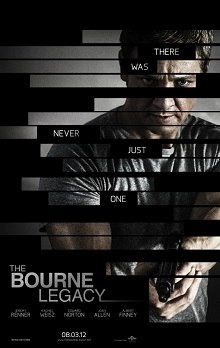
In Review: The Bourne Legacy

The Gist
There is a great drag at the beginning of the Bourne Legacy, and a poor narrative, but everything improves and eventually pays off, leading to one chase scene after another. There might be some narrative flaws and items that beg explanation until after the credits roll, but those aside, Bourne Legacy is a movie that works.

The Good
  • Jeremy Renner
  • Great action pieces
The Bad
  • Annoyingly slow and seemingly paltry narrative in the beginning
  • The resolution may seem like a bit of a fizzle in the end
  • There is the gaping plot hole of using Larx-03 somewhere in the movie
*** Spoilers Begin Here ***

Synopsis
After Jason Bourne exposes Operation Blackbriar and Treadstone Project (both of which I have no idea what they are about), the CIA decides to kill off every Operation Outcome subjects to keep their black ops secret from leaking out of proportion. Desperate to survive this wipeout and retain his enhanced physique, Outcome subject Aaron Cross journeys across the globe to make his enhancements permanent and escape into a peaceful life.

It's More Fun in The Philippines
I think the main draw of Bourne Legacy from where I live (Manila) is how Hollywood portrays the Philippines. Everywhere else, I doubt this is the case. We Filipinos always take pride when our countrymen, our country, or anything Filipino is exposed via international media. Likewise, we take it badly, too, if something is portrayed poorly. I am, however, more curious as to how Manila got into the story. For me, the proper portrayal would be the logical use of Manila within the movie. If it actually makes sense to have used Manila instead of, say, Bangkok or Tirana or New Delhi. And, well, it did make sense. The Philippines is one of the growing economies, and unlike China, has better English speakers and comparatively cheap manual labor for drug companies to put up offices in it. And while the chase scenes were good, my problem with them was that Manila traffic is poorly portrayed. If anything, you can't really do a proper daylight chase scene here as, God would know, the traffic in Manila is perhaps one of the worst in the world.

Hitman Re-Bourne
Bourne Legacy starts slow, and if you, like me, have not seen the previous movies, the first 30 minutes or so will get you lost and disinterested--the starting narrative is clumsy and fails to engage, which can easily lose audiences. But as soon as you've managed to piece the puzzle together at about 30 minutes of setup, it would make sense and it will quickly pick up from there. There are some items that will never be explained like why there is an Outcome operative living in the mountains and why he sends out items via a small auto-pilot plane and those for me are annoying given that they don't really feel like items that can be explored on to the next installment, shall there be one.

Some would blame the clumsy directing, particularly of the first part, to Tony Gilroy, who used to pen the Bourne series before graduating as the director in its first installment, but I don't think the direction was that bad. It just took time to pick itself up. And sadly, not everyone can be as patient as I am.

Jeremy Renner, as always, worked well--not a surprise. Weisz was relatively good. She may not be as large as Renner in this flick, but she worked her part and her scenes well. Was she believable as a doctor? I'm not sure she was given the proper scenes, but she was believable as someone passionate with what she does, and someone passionate to keep breathing. Norton is menacing, but not enough for you to hate him. You'd like Renner, but you won't hate Norton enough because you know Renner will always outsmart him and the perils for both him and Weisz are something that don't really pose any threat.

The chase sequences, albeit truly fictional, are great and exhilarating. Actually, majority of the movie is comprised of chase sequences, with the FBI getting to them as close as they could in Manila. And I have to give it to the producers of this film for shooting that scene in the middle of a sweltering Manila summer.

Then comes my biggest concern with the movie: Larx-03, who was explained as a brainwashed, emotionless, enhanced killer. He flies all the way from Bangkok to go after Aaron Cross on the surprisingly un-busy Manila streets. In a sense, Larx-03 can be excused for not being terminated unlike the other Outcome agents because he is brainwashed. But how about the doctors who attend to him? Or his records, those can be traced by the FBI even if they're remotely linked with the other projects. If Norton's team can do brainwashing, couldn't they have simply brainwashed their Outcome agents rather than killing them and dumping already expensive medical research that have proven results already? And also, why kill the doctors, too? Couldn't they have been simply secured and held against their will somewhere safe? Why the complete whitewash while leaving a Thai speck somewhere in the fabric? The inclusion of Larx-03 to me is the biggest downer to this film; he felt like an unnecessary cornstarch made to thicken the plot, nothing but a nameless instrument.

The ending, though my friends bemoan it, sees Renner and Weisz escaping into the open sea aboard a motor boat into the Palawan sea and the gorgeous beach, this my friends, is impossible given that a motor boat cannot travel all the way from Manila to Palawan without stopping for gas.

My verdict:

Plot holes aside, I felt the Bourne Legacy was a good film, full adrenaline and great chase sequences. Might not be completely logical, but is interesting in its own right. A passing mark of 3.75/5 stars.

Friday, August 3, 2012

Movies I am Excited for this 2012


Life of Pi (November)
Directed by: Ang Lee
Stars: Suraj Sharma, Gerard Depardieu, Tobey Maguire (as Yann Martel???)
Why: I haven't seen an Ang Lee movie in a long while. And it's a bit exciting to know that Ang Lee is directing one of my favorite books. I am also curious as to how Ang Lee is going to approach this book as the book tells Pi's (the main character's) story in two versions. With Ang Lee's track record of making good films, I think this film is in good hands. Just wondering: why the curious casting of Maguire as Yann Martel, the author?


The Great Gatsby (December)
Directed by: Baz Luhrman
Stars: Leonardo DiCaprio, Carrie Mulligan
Why: The earlier adaptation of this film was kind of a bust, amid the good material. Now here comes Luhrman trying his hands on an adaptation. He may not be as prolific as his contemporaries, but when he does make a film, it explodes with color and imagery--something he is known for and something that the material may need--being essentially a period piece. Mulligan and DiCaprio are well-regarded actors who are meticulous with the projects they pick. Seems like a winning combination to me.


The Perks of Being a Wallflower (September)
Directed by: Stephen Chbosky (The very guy who wrote the novel this was adapted from)
Stars: Logan Lerman, Emma Watson
Why: Mmmmmm, looks like a teen movie to me, but wait! The producers of this movie is the same people that brought Juno to life. So this might be good. Plus, Emma Watson. It's her first major effort outside the Harry Potter franchise, so it's interesting to see how this one works for her. Just curious how the director would work this out as this is his directorial debut, and his previous effort, the screenplay to Rent, didn't really work well for the critics


Taken 2 (October)
Directed by: Olivier Megaton
Stars: Liam Neeson, Maggie Grace, Famke Janssen
Why: It's a sequel to Taken, that's why. As much of a popcorn movie the first one was, it was a popcorn movie that worked. Heck, I'd take it any day over Ghost Protocol. The original TAKEN film has suspense, action, and thrills that hopefully is also present in this movie. Liam Neeson sure was kickass the first time around, and I know how cheesy those lines sound in real life, and how improbable those stunts are, but heck, it was entertaining. And hopefully, Megaton does well. His track record is a bit iffy. Remember the flop Hitman and the critic-displeasing Transporter 3? Those are among his directorial credits.


Gangster Squad (September) 
Directed by: Ruben Fleischer
Stars: Ryan Gosling, Sean Penn, Josh Brolin, Emma Stone
Why: Zombieland director returns for gangster film. Warner Bros. went gung-ho on this film only to have it delayed due to cut and reshoot a pivotal scene that's reminiscent of the Colorado shooting. Having Emma Stone and Gosling involved in this project and pairing them up for a second time (first time was the Carell-starrer Crazy Stupid Love) seems a bad idea to me, but can't complain since that's Emma Stone and Gosling. Sean Penn and Josh Brolin further cements the cast into a big movie status, so with all those investments, this movie should be great. Brolin and Gosling have good track record in choosing roles (except perhaps for Brolin's Jonah Hex, blech), so this is possibly a good film. Also, a gangster pic directed by someone who made a comedy of a zombie apocalypse film? Yes, please.
Update: Release date has been moved to January 2013 to reshoot the said scene.


Trouble with the Curve (October)
Directed by: Robert Lorenz
Stars: Clint Eastwood, Amy Adams
Why: Last year, Brad Pitt surprised baseball and non-baseball fans with Moneyball, a sports movie that worked even for the most non-sports person you can ever know (i.e., me). And with the omission of Timberlake whose acting creds are, well, developing, I think this father-and-daughter movie about scouting talents for sports will be another Million Dollar Baby for Eastwood (though I hope it would have a less tragic ending). Robert Lorenz who has worked as a producer with Eastwood on some of his most critically acclaimed films, and has had a hand on being an assistant director, finally takes the seat from Eastwood and takes the directing matters to his own hands. It's interesting to see how this movie shapes up.


Wreck-it Ralph (November)
Directed by: Richard Moore
Animation
Why: Watch the trailer


Cloud Atlas (December)
Directed by: Lana Wachowski (debut) and Tom Twyker (Run Lola Run)
Stars: Tom Hanks, Halle Berry, Jim Sturgess, Hugo Weaving
Why: Its source material is one of the greatest books ever written and a half of the Wachowskis adapted it. Directors include Lana Wachowski and Run Lola Run director Tom Twyker--and while both are quite new to the directorial scene (in terms of international films for Twyker), it's interesting to see how the book translates to film and how 5 storylines are condensed into a 2 hour and something film. Twyker's adventurous Run Lola Run maybe an indication of how great this movie is going to be. And if the trailer is to be believed (mind you, it got me in tears), then this perhaps maybe one of the greatest movies made in this decade.

Sunday, July 22, 2012

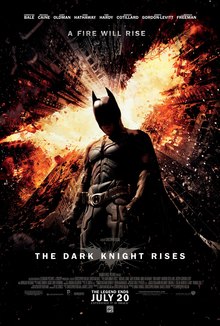
In Review: The Dark Knight Rises

The Gist
A gripping film with an engaging direction and script, The Dark Knight Rises may not have as detestful a villain nor as unpredictable a plot as its predecessor, but it is as satisfying, if not even even more.

The Good
  • Gripping, intense, and taut
  • well-acted
  • beautifully written
  • Anne Hathaway
The Bad
  • Bane falls short as a villain, often dishing out cheesy lines in an annoying sing-song accent, more often annoying than maniacal
  • Some predictable plot twists, which aren't present in the predecessor
  • Predictable Nolan trademark casting
Synopsis
8 years after Harvey Dent's death, Gotham is a much more peaceful city. But a threat is bubbling underneath the peaceful surface. A man called Bane (Tom Hardy) is threatening to send Gotham into anarchy and destruction. Meanwhile, Wayne Enterprises is crumbling after investing money in a fusion reactor that never saw use, with Bruce Wayne (Christian Bale) now a cripple and a recluse. But all these changed when a cat burglar, Selina Kyle (Anne Hathaway), enters the Wayne Manor to steal Wayne's fingerprints, setting a chain of events that forces The Batman out of his peaceful retirement.


*** Spoilers Begin Here ***

A Very Long Engagement
The Dark Knight Rises runs for 2 hours and 44 minutes. The Dark Knight clocks in at 2 hours and 32. The Avengers sets you off for 2 hours and 22. But of the three movies, The Avengers feels like the longest. One can't help but compare The Avengers and The Dark Knight Rises--they are the biggest superhero movies this year, one starts, the other ends. And if I were to compare the two: with The Avengers, the setup part felt like they really were setting up. In TDKR, the setup is composed of many subplots with action pieces that make the setup engaging and affecting. That is one failure for the Avengers. There was very little action happening throughout the whole set up phase, and you'd feel it. With TDKR, you won't. It's mainly composed of one small explosion after the other that ends with one huge explosion (quite literally at that).

Re-Inception
Hardy, Cotillard, Gordon-Levitt, Caine, Murphy. Had Nolan cast DiCaprio and Page, this would have been Inception all over again (and I would probably still like it). But the casting is becoming predictable. To say that anyone could have played Miranda Tate is a slight on Cotillard's acting--which is terrific, but her being cast simply gave her away. Nolan perhaps thinks Cotillard fits the bill of an innocent-looking psychopath, and so she was cast as Tate. Giveaway.

I love Gordon-Levitt on most occasion, but him playing Officer Blake is sort of a mismatch. I just don't find him action star-ish, owing perhaps to the lanky physique and his innocent-looking face, which years ago, was the face of rejection and inability to move on (500 Days of Summer). And this sort of marked his career, at least for me. Gordon-Levitt did well in 50/50, too, opposite Seth Rogen, simply because he played someone who is losing his grip on life. And that made him work. So it was awkward for me watching him do action pieces, and probably much more in the future (he's got an action pic this year, opposite Bruce Willis, called Looper).

Finally my last gripe, Bane. Tom Hardy did well with the script he was given, in fact, you won't recognize that it's him. He has ballooned into Bane and that he's got no hair and he wears a muzzle (come to think of it, he seems to have lost all of his body hair). The problem is, Bane was sent to finish the trilogy. But Bane isn't Batman's nemesis, it's The Joker. Given that Joker was in the middle, and that Heath Ledger did a legendary personification of him, it's hard to follow that up. And villains make or break the movie. Luckily for Batman here, even if Bane is less menacing, Nolan actually pulled it off--distributing the action to different plot points and characters, veering the attention away from Batman and Bane on most occasions, making it the good people of Gotham against the bad ones.

Now for the good stuff, which may not run out. Anne Hathaway, which may seem like the next Kate Hudson (pretty face, but not bankable these days), actually pulled it off thanks to Nolan's minimalist treatment of the Catwoman, who looks more of a spy than a costumed cat burglar. She's flirty and treacherous, but in the end, manages to redeem herself and even bag the prize.

Cotillard played Tate very well, too, releasing her wrath in a very timely manner.

Pacing was particularly enjoyable and it felt fast for the lengthy film that it is. As I've noted above, the overly long film didn't actually feel that long as for most of the times you'd be at the edge of your seat. Though there are predictable plot twists due to some clues being given away, those didn't really ruin the film. Still I decry that Batman was a wuss and didn't think of climbing the wall without a rope for the first try.

As with the previous Nolan Batman movies, CGI and stunts were rendered finely. The script is understandably dry and the atmosphere tense and tight throughout, as if something is about explode. And it's just fine to expect an explosion, a figurative one, as this is a Nolan movie. And were those explosions delivered? More often than not, he has, and it is hard for me to pick which one is a better Batman movie. This or the one before it? Maybe I won't ever be able to answer.

But, damn, did Nolan smash and recreate the bar for superhero movies! That's one thing for sure.

My verdict:

The best film of the year, yet! 5/5 stars, passed and recommended. 

Friday, June 29, 2012

In Review: The Amazing Spiderman

The Gist
Bigger but not exactly better, the reboot to the Spider-man franchise lacks the humor of its predecessor, but the good casting choices--particularly the pairing of Andrew Garfield with Emma Stone--makes the movie entertaining and gripping in its own right, one rife with heart and action.

The Good
  • that on-screen chemistry between Garfield and Stone
  • nicely cast
  • a gripping plot
The Bad
  • Can be dismissed as unnecessary reboot due to its predecessor having a better lead and an overall better treatment of its material.
  • Never quite establishes its characters, failing to cite a reason why Peter stands up against the bullies but not criminals.
Synopsis
Peter Parker (Andrew Garfield) is a normal highschool student living with his Aunt May (Sally Field) and Uncle Ben (Michael Sheen) after his mother and father left him to them at a very early age. Peter grew up with this chip on his shoulder, always having a gap to fill. In pursuit of filling that gap, Peter stands up to the bullies in search of human intimacy or purpose--and it doesn't always go well. This particular trait caught the attention of his highschool crush, Gwen Stacy (Emma Watson), who happens to be an associate at Oscorp where his father's former lab partner, Dr. Curt Connors, works as head of human tissue regeneration research. In search for answers, Parker takes to asking Connors himself and, in the process, got bitten by a radioactive spider that starts his life as a rebel and as Spider-man.

Teenage Dirtbag
Considering that Spider-man was in highschool in the comics when he got bitten by the radioactive spider, it surprised me that Sam Raimi had a mostly late 20s cast on his 2002's Spider-man (Maguire was 27 then and Peter Parker was 16). Webb decided to go with teenagers this time and chose a mostly younger-looking cast. You might be surprised to know, however, that Andrew Garfield is actually 28 when he was cast and Stone, 22. Though because of perhaps how skinny Garfield is, and how--well--young Stone is, they actually look the age for the comic book hero reboot.

It Takes Two to Tango
For some reason, when you say Spider-man movie, the scene that pops to my mind is that upside down kiss between Tobey and Kirsten circa 2002. And that's because the first movie is so iconic and fun, it imprints itself to memory very easily. And also probably because it follows the comic book canon more closely than this reboot. I cannot say the same for this reboot. As with most Marvel movies nowadays, a lot of elements has been lifted from the Ultimate Marvel series. The darker tone of the movie probably had been derived from Ultimate Marvel timeline, and I wouldn't say that Marc Webb had an easy time with this. Storytelling for a great part of the first hour is a bit sloppy and leaves mess like a toddler, not really provoking one to think or at least enthrall its audience. But it gets better after the first hour.

Casting Garfield is both good and bad. On the good side, Garfield can be a really charming teen who is unsure about life and has a natural rebel in him that fit Marc Webb's idea for the refresh. On the other end, he can be a bit dull, not having the same humor and finesse that Tobey's Parker has. At best, he is full of angst and determined, though he works best paired with Emma Stone. Their pairing was a blessing to the movie, as on-screen, the pair really works--making for a cutesy couple with a believable tension and grip.

Martin Sheen was, well, mostly angry and detached as Uncle Ben--almost always strict and ready to reprimand Peter, but caring nevertheless. Just not sure is Sheen was proper for the role, I was expecting him to implode and I was disappointed when he didn't. Sally Field was far far from the Aunt May in Sam Raimi's Spiderman. This one was more antagonistic or at least less expressively caring for Peter, as opposed to the snoopy and sneaky, overly protective Aunt May in Raimi's.

On the plus side, technically, this is a better film compared to Raimi's, given the technological advances from 2002 to 2012. The CGI is more believable. And I have to give it to Webb (he, btw, directed 500 Days of Summer) for taking on an enormous job, and coming out nearly unscathed--giving Spidey more grit and making Peter less of a nerd but more of a rebel. Sure, it is similar to Raimi's, but it had a notably darker undertone, which might be how this new franchise is going to be. He did manage to translate the material to film albeit rather confused and dull at time, and at the obvious risk of being compared to the fun ride that was Raimi's Spider-man. Webb's was an antihero, a defiant kid who always had a piece of him missing, while Raimi's was a geek who loved the world, got powers, and forgot the very lessons that made him. Sure, this adaptation has its weaknesses, but in the end, comes as a whole, capable of delighting and entertaining--and at its best parts, it really is good: the last few scenes are actually very heartfelt and at one point cute, making you want to hug along with Peter and Aunt May.

Though you'd know there is a sequel only because it's a franchise, not because you really want to see one.

My verdict:

A slow Marvel with grit, but does get boring and confused. I had fun but can't really recommend it. A passing mark of 4/5.

Friday, June 22, 2012

In Review: What We Saw from the Cheap Seats

What We Saw from the Cheap Seats, 2012
Gist
Spektor might have lost a little of her humor and quirk in her newest effort, but she gains depth, coming back with often paradoxical lyrics and a dark (and possibly personal) sound not usually heard from her previous efforts. Her piano work has also become noticeably more eloquent and classical.

Overview 
The album starts with the track Small Town Moon which basically sets the mood and expectations for this album. A little lilting and easygoing--quirky but without conscious effort or need to be. The album ends, also, with the equally easygoing guitar-backed track Jessica, which I think is about a song for someone in coma, to which Spektor sings "I can't write a song for you, I'm out of melodies." This made me think how applicable it is to this album as she seems to be running out of the same wild random fervor notably present in her previous works. Her melodies have gone from quirky to emotionally deep, the sort of tracks on her album that I don't enjoy at once. Tracks with the same emotional traction like Lady, Man of a Thousand Faces, Field Below resonate throughout much of the album, save for one to three tracks. I also noticed how much she has switched from storytelling to writing heartfelt songs about heartbreak, sickness, coma, and unrequited love. She has perhaps gone more personal this time and thought of writing songs that people would not only love to sing--and be thought of as weird--but also would be able to relate to.

Favorable Tracks
The opener Small Town Moon worked amid an easygoing demeanor. The backing piano and percussion are easy to listen to and the song itself gets away with a marking phrase, "how can I leave without hurting everyone that made me?"

The new version of Ne Me Quitte Pas from 2002's Songs retitled as Please Don't Leave Me has a classic Spektor flair that blends quirky storytelling with catchy melody. The new version cuts off a verse and adds other instruments to the mix, most notably a trumpet routine that makes everything livelier.

Firewood goes for the daring as it compares humanity to a piano, with sickness and death equated to a piano being cast as firewood. This, I say, is the most emotional and memorable songs from this album, probably producing the most quotes you can need in time of depression and losing hope. The pathos is deep and the melody is deep and Regina does not spoil it by her quirky vocal antics.

The easy-going Patron Saint is a hymn to loving someone undeserving, backed up by playful and curious piano chords. It lights up mid-chorus with a cheery melody that makes it one of my favorite tracks in this album.

How is perhaps as mainstream a ballad can get under Regina's hands. The purity of its lyrics felt like Regina took the song to heart.

All the Rowboats, with its dark brooding tone, sounds like Far's Machine, in which she compares museums to public mausoleums. And like Machine, Rowboats is the noisiest, busiest track in this album.

Initially quiet, Open surprises with a good piano routine at the chorus. The song would have been pretty empty without that precious piano routine in the middle--it sounds like a spring morning coming into being. The exaggerated vowels sort of ruin the song and make it sound scary, with those exaggerated Os coming after a quiet verse.

And speaking of quiet, the very short Jessica, summing itself up in 1 minute, 44 seconds, closes the album with Spektor saying "I am out of melodies," swapping Spektor's piano for a guitar. The song feels like a conversation between two children: Jessica, who is in coma, and is about to celebrate her birthday this February, and her sister who's prompting her to wake up and grow older.

The bonus track Call them Brothers, co-written by Dishel and appears on his album, is a breath of fresh air from mostly solo efforts that Spektor dished out most of her career. The song, which is a hymn to war, is beautiful as well as haunting.

Two other bonus tracks in Russian were included. Both are written by the bard Bulat Okudzhava. Both are beautifully rendered by Spektor, which again brings to the forefront her classical piano.

Unfavorable Tracks
I like the quirky Regina, which is mostly absent here. Her quirkiest novelty work, Oh Marcello, is a big mess and did not work for me, although it seemed like a big middle finger for the whole music industry (just like how Lady Gaga keeps on using fake accents, acting like a good soul, hoping not to be misinterpreted).

The Party sounds better than Open, and even livelier, but there's a silliness to it that didn't quite work for me. You can imagine it playing at a city parade, though, with floats and confetti, but Regina needs to work on her rhymes here as those make her silly songs funny.

And my least favorite from this effort, The Ballad of a Politician, goes a la Songs. It feels like the lovechild of 20 Years of Snow and Chemo Limo and it didn't quite cut it out for me, perhaps due to Spektor trying to make her voice sound big and that just makes this effort too weird.

Conclusion
I am not sure, but Spektor feels running out of ideas, or at least the quirky ones. Gone are the days when she'd write about drinking soap she played with on the sink, singing dolphin songs, or refuse chemotherapy for a limo ride. She opts, however, to write more relatable songs about people being like a party not good for her, or a guy who falls for the wrong girl against her advices, or the impossibility of moving on from a lost love.

The general shortness of the album (the only album without a single track surpassing 5 minutes), the loss of the frenetic piano play for a more disciplined classical piano, the fact that you almost always see nothing from the cheap seats, and the admission that she's "out of melodies" in Jessica seem to be telling that she's out of stuff to write about. That or maybe she got tired of writing about quirky things. My fear is of the former. Ne Me Quitte Pas, one of the two or three quirky songs in this album, came from her 2002 album, Songs, and nothing in the album sounds like it, or of her old quirky songwriting.

You can also notice her marked change in clothing and figure. Is it possible that her music label is promoting her as a pop artist, which, of course, she is not?

Not that all those are bad things at all, but where's the funny and fun Regina Spektor? The wild Regina. This perhaps may be her darkest, possibly most personal and disciplined body of work to date, and that makes this album beautiful and a stand out compared to her previous works. It's impossible to hate what she makes, for me at least, but I can't help but miss the classic (ack) Regina who's just about quirkier and sillier, and would rather write about people inside a musicbox, two birds lying to each other, and being kicked out by the bartender. Where art thou, old Regina? Have the Skrulls taken over you, too?

Score: 4 out of 5 stars

Friday, June 8, 2012

Personals: Fly


May 2012 was a difficult time for me. Its last two weeks were particularly troublesome, mentally taxing, annoying, and emotionally wrecking. I was only so happy to see it gone. And with it, my brother who was to live with his family in the USA.

Me and my brother had an uneasy relationship, if it was at all, as one may say, a relationship expected of siblings. We were more like strangers who for some reason hate each other to hell. I am not keen on what he hates about me, but probably the fact that I breathe and that I criticize him and question his authority as often as I draw breath--and probably the fact that I have work and that I am knowledgeable and there was no escaping the fact that you cannot subdue an educated man's conviction. On my part, I hated my brother for being the biggest Bible-reading, Old Testament professing bigot that I knew. If my mother is religious, my brother thought it was best to read the Bible on a daily basis and shove it down your throat whenever he gets the chance. And he claps while you choke on it. That's to put it on a nutshell. Or maybe I am just stressing for a comic effect.

He's not very brave. We, as a family, are aware of that. He needed faith, the Bible, for a reason. Everything for him is scary or doomed to fail. He quit school early and didn't get back to finishing it amid my parents' repetitive--almost forceful--efforts. And he wasn't satisfied with just being unschooled, he thought it cool to have a son by the age of 20. And another by the age of 23. And another by 25. Another by 26. I've lost count actually. But, thank God, his children are delightful and brilliant little children capable of bringing and sharing happiness. Imagine now how he is without work, and with children, he needed something. Something to still make him a man he believes he is. He needed religion. Something to make sense of the poor decisions he has made, that it was all planned somewhat. That there was a God to blame for all of his mistakes. And the only way it can be right is if people agreed to him, to the Bible--the words of God that says everything is God's will--the perfect device for absolving yourself of responsibility.

He's a good son, nevertheless. He loved our mother. He was always there for our mother when she was sick. He cared for her, albeit with a few outbursts of temper. As for father, he always doubted if father has any love for him. The fool will probably never realize how much our father thinks of him, of how much the old man cares for his future, of how much father wants him to correct his ways and start moving. For our Dad was a mechanic, he believes everything can be fixed. Even our brother. But I am not. I quit on people. Dad wouldn't. And that's what my brother couldn't see. My father couldn't see that my brother thinks that his constant attempt to repair him is a sign of his lack of affection, but my brother couldn't see that that disapproval was the only way available to my father to express his love--even after all that he's done to himself, our father's desire for him to live decently for him and his children persists.

Amid all this, I find myself going home each night missing my brother for the past few days, worrying how he is doing in America. He was always one to ask me to turn on the wifi router as he doesn't know how to. I wonder if he's figured this out now on his own. Amid all our disagreements and the many things I dislike about him, at the end of the day, he's still family. And family is family. It's not the same household without him.

Secretly, I root for him, that he finds success and happiness out there. Although, I'm just happy he's gone. I can now play Wii all I want!