Tuesday, February 28, 2012

In Review: The Descendants

The Gist
A non-cheesy trage-comedy, The Descendants is one of those rare films that is mildly lying and mildly telling the truth--it does take life's tragedies with seriousness, but ends up with a childlike self-laughable behavior. Truly one of 2011's best films.

The Good
  • pleasant and realistic script, serious but with a heart and candidness
  • excellent performance from Clooney and everyone involved.
The Bad
  • has dragging parts near end, with an unsatisfying ending
  • will not feel long, but will dilly-dally on a lot of occasions
Synopsis
Matt King, father of two girls, a local Hawaii lawyer, and a failing husband, is the sole trustee of an inherited Hawaiian land, of about 25,000 acres. Having thought of no better way to resolve their problems with the rule against perpetuities, the King clan decided to sell their property to a local developer, Dolitzer for half a million dollars. During the course of the bidding, Matt's wife gets into a motorboat accident, which left her in a coma, which if she ever recovers from, will leave her in a vegetative state, leaving Matt to execute her living will of disconnecting her from the machine. On the course of accepting the bitter truth, Matt fetches her daughter from her boarding school and embarks on a journey to inform everyone about his wife's fate and dealing with his family's ancestral property.

Pleasantville
When one thinks of Hawaii, all we ever think of is parties, fun, pinacoladas, beaches, surfing, and other recreational activities. Media has done very little to expose the other side of Hawaii, that is the political dealings, the common life of the residents, and the problems that Hawaii faces, in general. Alexander Payne depicts part of that undiscussed side of Hawaii in a very lifelike light, using a realistic script that reflects American values with a Hawaiian flavor. The result is a finely-crafted mix of unexpected humor in tragic circumstances.


Surf's Up
I am not a big fan of Hawaii-based films (or TV series or TV series episodes for that matter). There is a weird feel in Hawaii being American and smack right in the middle of the Pacific. It's an uneasy mix of culture and humidity and vibrant colors that don't really go well altogether. Anything set in Hawaii makes me feel uneasy and humid and to some extent, feels corny, shallow, and predictably a surfer or beach movie. That is to say, that to me, watching The Descendants felt initially like that. But the thing with The Descendants is that it's actually a movie that normalizes Hawaii, make the beaches as commonplace and as uninteresting as a heavy traffic in New York. In a way of saying: it's a drama set in Hawaii, and not a surfer movie with some drama. Heck, even George Clooney, who is normally polished and gleaming, is disheveled and slob-looking here. That is how bigwigs in Hawaii looks like, apparently, as his character explains.

If only we can all get paid to look like slobs.
What's gonna surprise you as the movie goes on is how the dialogues, at their most pedestrian ("motherless whore," "you are such a retard"), becomes humorous and entertaining.

The whole cast did well on their parts, though I have to note Shailene Woodley and George Clooney's acting. Here, Clooney plays a vulernable and uncertain father, quite unsure of what he is doing and what he is to do after he gets the news about his wife. This is quite an opposite to the roles he has played in Michael Clayton, The Ides of March, Ocean's Eleven, and Up In the Air, where he plays a suave successful man who's figured out everything only to learn a lesson in the end. Kudos, too, to a relatively unknown Nick Krause, who did great on his role as Sid, the equally lovable and detestable friend of Alex (Woodley), for providing most of the movie's comic reliefs and that rare wisdom amid stupidity.

Scene-stealing Sid played by Nick Krause

Near the end, the story will slow down and mostly rely on visuals for the resolution. And speaking of resolution, I'm not sure I'm a big fan of the way the movie ended. Sure, that's how life is sometimes, we peek in the middle of the story and the end for us is up to how much we are allowed to peek into the lives of these characters. It's just that the ending felt kind of undone and could've been done better.

In a sense one can say that the movie was effortlessly done. There are sparks of brilliance here and there, but one may need to dig the sand for those. It's in the normalcy and how Payne managed to capture the human response to tragedy that makes this movie shine. How genuine the characters are and how relatable they are. There was very little cheesiness too as there was grit, but those worked exactly for the better.

My verdict:

A comedy amid tragedy, hindered by some dragging parts and a nonchalant ending. A passing and recommended mark of 4/5.

Sunday, February 19, 2012

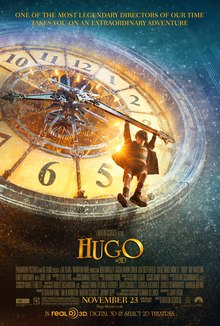
In Review: Hugo

The Gist
A 3D wonderment at its finest, Hugo is a family film that, while entertaining and rewarding, may discuss too many things all at once to mask its huge fanaticism for the magic of cinema.

The Good
  • fine 3D experience, at a running time of more than 2 hours, it doesn't wear your eyes down
  • an innocent film with a heart of a child, eager to discover new things
  • finely cast with great performances from Butterfield and Moretz
The Bad
  • the semi-fictional viewpoint may seem dubious for cinephiles who know the story behind Melies
  • initially focuses on existentialism then does a turn for movie preservation; should have focused on one thing intensely
Synopsis
Hugo Cabret spends most of his days stealing bread and milk and winding the clocks secretly in a French train station to avoid being placed in an orphan home. His father, a clock maker, perished in a fire and left him to his drunk uncle who has been missing for months. One day, he was caught by toy shop owner George Melies who confiscates all his belongings, including his father's notebook that has all the notes on the automaton they have been working on. To get back his notebook, Hugo enlists the help of Melies' granddaughter Isabelle and together, they embark to a journey that shows them the wonder of cinema.

Not Like the Movies At All
Scorsese, famous for his gangster films, surprises everyone by directing an adaptation to a children's book, The Invention of Hugo Cabret. The book itself is based from the later life of George Melies after his decline in the industry. Scorsese followed the same course as the book did and the result was a family-friendly film. Sadly, if you know the true story of Melies and how he suffered, and how unromantic everything was going for him, you would feel as if the movie had trespassed on a lot of things that Melies has gone through. But, if you didn't know about those, you'd most likely enjoy yourself. Sorry.


Cinemagical
The problem with me reviewing this movie is that I know the real story of Melies and for me, the inclusion of fictional elements seem like an affront on the history of cinema, although a little mellowing does not hurt anyone, but this is real life that Selzsnick "fixed." Trying my best to be objective, I would like to commend on the casting of Asa Butterfield, Chloe Moretz, and Ben Kingsley into the film. Sacha Baron Cohen was typically annoying, but I guess it worked for the better of the film. And while I am here, might as well comment on how much Kingsley looks like Melies.

Not sure if Ben Kingsley or George Melies...

The pacing of the movie will initially feel slow, but actually, you wouldn't notice the running time of 128 minutes as events unfold fast enough. Butterfield's innocence also helps a lot in the movie as you will be engaged watching him.

Initially, the movie will existentialist, dealing with one's purpose of being here with analogies from machines and clockworks. Then the focus would soon turn to the cinema, forgetting the existentialist premise it initially started on. The later parts of the movie are generally dangerous due to their inaccuracy. If people were to take these accounts as true, given that Melies was a real person, one might not completely understand the real story of Melies and conclude this to be true. Nevertheless, the depiction and re-enactment of the early days of cinema were delightful and as poignant, making Hugo one loveletter to the joy of the movies, just like The Artist.

The 3D in Hugo is liquid. It does not hurt your eyes much as would other 3D movies. 

My verdict:

A family affair with a historical and existential twist. Not bad, could've been better. A passing mark of 4/5.

Monday, January 30, 2012

Pick of the Week

This week's pick is from a year before I was born. Hailing from the early days of MTV, "We Belong" is one of Pat Benatar's most remembered songs from her career that spanned two multi-platinum albums, 6 platinum albums, 3 Gold albums, and 19 top 40 singles. Benatar is one of the most heavily played artists during the early days of MTV. We Belong has been used in the soundtrack of the film, "Blue Valentine."


In Review: Haywire

The Gist

Neatly done, tense, and well-directed, Haywire works in spots and keeps it going until you figure out the whole scheme of things; unfortunately, it leaves a few spots unchecked with gaping empty spaces and the large lack of emotional range makes for a somewhat shallow experience.

The Good
  • succeeds largely at being a tense thriller
  • action sequences are well-done, makes complete use of Carano's fighting prowess
The Bad
  • Carano's emotional range rival that of a teaspoon
  • largely unemotional script, unemotional characters that don't evoke your empathy
Synopsis
Mallory Kane (Carano) works as an agent for a private contractor working for the government operated by her ex-boyfriend Kenneth (Mc Gregor). After her last mission in Barcelona contracted by Rodrigo and Coblenz (Banderas and Douglas), Kane plans to retire, which Kenneth accepts, asking one last mission from her, a paid vacation of sorts to pose as the wife British agent Paul (Fassbender) who's meeting crimelord Studer to get further intel on his operations. As the night progresses, Kane discovers something that leads to events going haywire.

Carano, the film's main star, is not an actress, but an MMA fighter.


Why so Serious?
Soderbergh apparently saw Carano battle it out at the Octagon and thought of making a movie centered on her hand to hand combat skills. The result is Haywire, and as expected, Carano as a seasoned fighter and her own stuntwoman is excellent. But as an actress, the depth of emotions she displays on this film is questionable. The camera loves her, and Soderbergh focused on that and avoided placing any scene that would require much acting effort from Carano. In doing so, the movie felt dry and shallow towards the end.

1, 2, Punch
Carano delivers punch per punch as I said above. The fight scenes were cool and believable, and unlike big budgeted thrillers that contain one explosion after another and one car chase scene at least for good measure, Haywire is more of a Jason Bourne movie where the action scenes are stripped down to hand to hand combat.

Most of the tension in the movie comes from the fact that people want to kill Mallory Kane and that every step she takes, they were able to track her and that they beat her up real bad when they get to her. Eventually this ploy loses its effectiveness that at the end, it kind of becomes dull that when Soderbergh tries to pull it off again, it goes flimsy and pointless.

A lot of the problem of with Haywire comes from the fact that Soderbergh failed to make Carano "act" the way an actress would. And while she is not expected to do such, the movie suffers from this fault. Eventually, everyone in the movie ended with 3 emotions: angry, serious, or in pain dying, because if they showed anything more, it would greatly upstage Carano. Another fault was that the characters were poorly developed. Aaron (Tatum) dies and we feel no empathy. As far as Soderbergh suggests, he and Kane only had a one-night stand, yet Soderbergh thought it would be necessary to play a flashback of them kissing to emphasize Kane's sadness from Aaron's passing. Sadly, Soderbergh could've built on this to make this more evocative. But he hasn't and chose to point that out anyways.

Other than those, Haywire is thrilling and would work most of the times. Just don't expect great depths.

My verdict:

A thriller made lame by a surprising lack of emotional range, Haywire works best when it features its fight scenes. A passing mark of 3.5/5.

Sunday, January 29, 2012

In Review: The Artist

The Gist

Primarily a visual and auditory feast, The Artist is a riveting and entertaining tribute to old Hollywood, peppered with heart-rending scenes and profound humor only to be ended very lightly for the premise and story line it took.

The Good
  • stimulating, riveting, good-natured, and easy to follow story
  • not much dialogues to closely follow as it is a silent movie, making it more stimulating as you don't need to process words, but just gestures and orchestral pieces.
  • completely replicated the magic of old Hollywood films, from charming stars to lively storyline
The Bad
  • quite weird to experience a silent movie in an age where everyone talks even when they don't need to.
  • unknown actors can alienate moviegoers if not for the Hollywood hype
  • too light an ending

Synopsis
George Valentin (Jean Dujardin) meets a fan Peppy Miller (Berenice Bejo) after a screening of his silent film "A Russian Affair" in 1927 when a crowd pushes her into bumping him while the press where taking pictures outside the theatre. The funny encounter lead to another when Peppy was taken as an extra in Valentin's film, "A German Affair," which lead to an intimate moment between her and Valentin that encourages her to pursue stardom--initially taking extras then slowly graduating to larger supporting roles. By 1929, talkies (movies that feature speech) had started becoming popular; George Valentin vehemently rejects this as he sees talkies as nothing more but a fad--ultimately separating him and Kinograph which has decided to produce only talkies from then on. By this time, Miller has grown in popularity and has been signed on by Kinograph as one of its main stars in the talkies era. Not one to admit defeat, Valentin starts his own production of a silent movie entitled "Tears of Love," which apparently launches the same time as Peppy Miller's lead role debut in Kinograph's talkie, "Beauty Spot." What follows next is a series of heart-rending events that tests the friendship of The Artist and the Aspiring Beauty.

Silence is Golden
The Artist's main strength lies in the fact that it is for a good long time speechless. Sometimes, dialog cards are shown as with silent movies, but what really makes up for The Artist's voicelessness is the music they used and the highly enticing visuals. Dujardin and Bejo make up for a really charming pair and Uggie the dog is no different as he is very delightful and dear that you actually watch for when he is coming back on-screen. An article from CNN explains why The Artist works in a time where we have 3D in our movie houses (see here). And I would have to agree that it goes beyond "shutting down the surround sound." it's replicating what has been lost so magically well, it screams brilliance and ingenuity.

Sad Movies Make me Cry
After I've seen Roman Holiday early this year, I have concluded that films made during the Golden Age of Hollywood were clean and innocent--untarnished with violence and sex as with the movies we have today where the virtue is more often than not, "the dirtier, the better." How Audrey Hepburn managed to sleep in Cary Grant's room, drunk with drugs, and not get raped at all is impossible had Roman Holiday been remade in 2012. And this innocence is also present in The Artist. It's a movie made in our time, but was taken from another. And this magic that we miss is what makes this work irresistible.

The irresistible pair of Dujardin and Uggie tries to placate
the angry wife to no avail.
You also can find the similar charm in Jean Dujardin's portrayal of George Valentin and Berenice Bejo's Peppy Miller. Their flawless portrayal will fool you into believing that they really belong to the 1920s. Valentin has that charm reminiscent to Bogart's and Grant's, the charm absent in today's leading men who are more of gritty personifications of Hollywood and whose life outside the camera is one for evading it. Not to mention the Tintin-Snowy-like partnership between Uggie the dog and Dujardin makes for adding color to the black and white flick.

Miller fantasizes an embrace from Valentin only to be surprised
by a lack of knock from reality.
And speaking of adding color, there are too many visual delights in The Artist--enough to justify your seeing a black and white film. One of the most memorable ones being Peppy Miller making love to Valentin's coat. The way Hazanavicius pairs that particular scene with the "Scene d'Amour" score used in Vertigo is haunting and impeccable. The spare dialog, which you can count as they are flashed through dialog cards, are written well. They come as trickles in summer and completes the overall silent cinema feel. There are also some imaginative use of dialog and sound in this film as it is about the transition from silent films to talkies. The way sound was used to convey certain scenes is brilliant and worth writing home about.

As the movie moves to nearer and nearer to conclusion, heart-rending scenes will pour in more and more often, and given how likeable Dujardin has made his character, it will be impossible to not empathize. This exercise in empathy is however ruined by the too light-hearted ending. In my opinion, the movie could still have ended positively without feeling too hastily done. I really wouldn't mind extra minutes just for a better ending as I am enjoying myself anyway. Although, I must say, the last scenes in the ending were revelatory enough to placate me.

My verdict:

The Artist is a brilliant and ingenuine loveletter to the magic of early cinema powered by charming characters and a wonderful pairing of visuals and musical score. A passing and recommended mark of 4.5/5.

Sunday, January 8, 2012

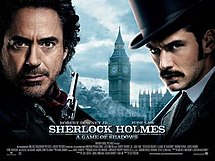
In Review: Sherlock Holmes, A Game of Shadows

The Gist

If you can forego little character development, use of incredible foresight and other improbable plot devices, then A Game of Shadows will prove to be a palatable popcorn movie, rife with action and thrills and an effective chemistry between its leads, that course perfectly served after the draining holiday offerings of the past film fest.

The Good
  • fast-paced and action-packed
  • Downey's charm and Law's dead-on timing and effective humor wagon for Downey is still easy to appreciate and has not yet trudged the lines of annoyance.
The Bad
  • almost cartoonish improbability of some plot devices and scene progressions
  • little use of other cast members; largely non-nefarious villain

Synopsis
Sherlock Holmes (Downey Jr.) traces a sequence of bombing and assassinations to one man, Prof. James Moriarty (Harris), whom his lover-adversary, Irene Adler (McAdams) is working for. As this early part of the plot unravels, Holmes requires the services of his assistant and dear friend, Dr. Watson (Law), who is to marry. Unfortunately, Watson refuses to participate and Holmes seems to rest his case, even offering to bring Watson to his "stag party," which is apparently a visit to a casino where one of the clues to his new case is at in the form of a gypsy fortune-teller, Madam Simza (Rapace). As Holmes digs deeper into his case, the newly-married Watson is forced to join his friend in a case big enough to start a world war.

Bad Bromance
Like the first installment, on-screen chemistry between Downey Jr. and Law is familiar to that of man and wife, which is to say that they're both effective and believable. While often Watson has to play comic relief on which Holmes pulls his tricks on, he is shown to be more hands-on in this movie, being allowed to use his own form of deduction he grew from watching Holmes; Holmes on the other hand is shown to be a more devoted friend than a jackass as he is shown in the previous installment. This is the case perhaps because Holmes does not have any lady in this film. Watson marries here, but for most of the time, he does not endeavor in any on-screen romance with his wife, either. So what it lacks in romance, Guy Ritchie fills in with action and brotherhood. I do not mind, I like the burger better without the cheese.

19th Century Fringe Science
It is both a blessing and, er, a curse that Shadows was shown late here in the Philippines due to the annual Metro Manila Film Fest. What's good about that is that you get to see reviews ahead of watching the movie, what's bad is you'd get spoiled. For weeks, I instead just watched the tomatometer (in Rotten Tomatoes) for this movie to battle it out for freshness. Unfortunately, the movie has bordered the rotten territory and I eventually lost interest, given how not enthralled I was with the first film. Now that I have seen it for myself, I do not understand why the critics were not pleased. What I will do is attempt to discuss probabilities why they did not like it all while reviewing it.

First (and least important) of all, the musical score was not really memorable, albeit for an action flick such as this, it does not always need be, as long as it plays at the right time and helps build up the thrill. During the holidays, I've seen some old movies myself and what I noticed is that films back then rely heavily on dialog and acting. There is little to no musical score unless the film itself is a musical or comedy, and even then, most scenes are left out without any background music, especially if it has a dialog. For modern movies, however, music is key albeit it is most of the time not noticed on first viewing. For a casual moviegoer, music is merely a natural addition, the salt to the dish, that if left out, may make the dish bland. Did Shadows have enough music? Not that you'd notice. It's mostly noise, explosions, grumbles, and bantering.

Second, while Jude Law and Robert Downey Jr. were terrific in their roles and have a convincing chemistry, they barely had anything bright to say. Unlike the first movie where wit is present and the jokes are actually based on smarts, this one goes more for banter and a bit of slapstick. Don't get me wrong, the dialog is not bad, but if you compare it to the previous installment, this one falls flat on the smarts department. Funny, yes. Smart, I have my reservations.

Third, If you'd give props to Downey Jr. and Law, the rest of the cast inspires your ho-hum. You wouldn't particularly like Watson's wife (I actually didn't), nor will you find Mycroft Holmes (Stephen Fry) irresistible. He does not provide any good insight as the Mycroft Sir Arthur Conan Doyle painted. He was instead depicted as streaking government official with minor importance to the storyline. Another troubled character is that of Madam Simza's. The writers did very little for the audience to like her and she is also not blessed with a good character development. Noomi Rapace, who appeared in the Swedish version of The Girl with the Dragon Tattoo and its sequels, was wasted in this film. Her facial expressions were either angry or pondering angry. Given that Sim is quite an important character in this film, she could've been given more character depth. Although I find it relieving because I dislike her based on the trailers as she's replacing Rachel McAdams as the movie's dame. And speaking of McAdams who plays Irene Adler, I actually personally like her; There is something charming about her, something charming about the way she plays Irene Adler. Then boom, she is given very little screen time! Injustice! And last for this barrel: Jared Harris who plays the main antagonist, James Moriarty. While you couldn't fault Harris' acting, there is something about the way the movie played out that didn't seem to make him menacing at all. You will know he's the villain, but you couldn't hate him so much. He's just not that detestable. He suggests that he lacks a soul, but he does not show it so much. The way his character was written just did not allow that. It's possible that his character's screen time is sacrificed to focus much on Holmes and Watson. But either way, Ritchie should have made him more menacing, more cold, more nefarious. He just didn't become any of those. He's just that. A token villain.

Fourth and last, this Sherlock is possibly a psychic who has insanely inhuman foresight. That plus the several practically improbable plot devices running throughout the film, which can be excused as passable.

Luckily for me, I was able to look beyond those and enjoyed the film thoroughly. If the film had any dragging moments, they were very few and very little to be noticeable, to destroy the movie. The real challenge perhaps is the suspension of your disbelief, which more often than not can be accomplished if you get too engrossed with the movie. Gladly, the movie is engaging enough that you can easily forgive its various flaws if it does engage you. If it doesn't, I think you can still appreciate the fight scenes, the destruction, the trickery, and some semblance of play on logic in the film. Ultimately, I find this film more memorable than the last one as this one just makes you wish for a third installment while the first one makes you wish that that's about it.

My verdict:

A passing and recommended mark of 4/5.

Tuesday, January 3, 2012

Pick of the Week: Future Love

This one hails from 2009 and one I recently heard, again, in class. There are three versions of this song, one is from a boy band called Varsity Fan Club, which features male vocals, running on a slower tempo, and is the original version of this song. A rendition of that version by Kristinia DeBarge appeared on her debut album, featuring the same tempo, and finally, this one, featuring a more uptempo beat and dancy feel with a rap verse from Pit Bull. Personally, I prefer the uptempo version out of all three renditions.

If this is the first time you'll be hearing this track, you wouldn't think it was a product of 2009 as it is still sounds recent as it could be.