Monday, January 14, 2013

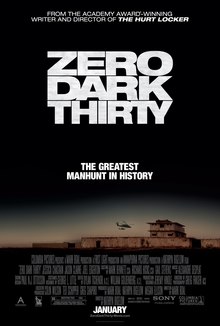
In Review: Zero Dark Thirty


Directed By: Kathryn Bigelow
Stars: Jessica Chastain, Jason Clarke, Kyle Chandler, Jennifer Ehle, Joel Edgerton

What I Liked
Bigelow's no-nonsense direction, Chastain's powerful performance, narrative is fast-paced, controlled, and quietly intense

What I Disliked
Carrie and Saul's missing cameo in Langley. Why, Bigelow, why?

Gist
Bigelow respects her source material by not over-dramatizing the harrowing experience of her subjects. She instead delivers an intelligently executed gripping thriller possessing the same quiet explosive tenacity as her previous war movie, Hurt Locker, but with twice the control and surprise, thanks to Jessica Chastain's incredibly reserved cool and intensity popping out unexpectedly from her seemingly frail frame.

Maya (Chastain) was recruited to work for the CIA in highschool. 2 years after 9/11, she got her first overseas assignment in Pakistan where she accompanies a colleague, Dan (Clarke), to a CIA black site where a detainee is held. Initially, Maya distastes at the sight of torture, but eventually grew unflinching and sly--outsmarting the detainee even after failing to prevent an attack. The revelations from the outwitted detainee soon lead her to a trail rife with peril, putting her at odds with insurgents and superiors as she try to prove what she believe is the right trail to avenging her nation.

When I was 22 or 23, can't remember, and I haven't seen a lot of movies, I went to see Hurt Locker on DVD (as is the usual case of non-moneymaking machine movies, it didn't get shown in my country until it was up for like Oscars for Everyfuckignthing). Initially, I couldn't finish it, not because it was too intense--that would come a bit later--but because it dragged a great deal for the first thirty minutes. Besides, who was Jeremy Renner then, though? He played bad guys mostly (primarily remembered for his role in SWAT as an antagonist, and last billed among the list) and wasn't particularly likable at the start if the movie. Months after my first attempt, and I had no social functions to go to (i.e. get drunk till I needed to be driven home for my own good), I picked up my copy and managed to finish the whole thing. It was a rather emotionally harrowing experience of the war on Iraq and I understood why Bigelow got the nod in 82nd Oscars. It was an intense thriller that had multiple build-ups of tension and release.

Bigelow's Zero Dark Thirty (ZDT) does not stray far from Hurt Locker's atmosphere. But it had tighter control. It was noticeably quieter than its predecessor, with its build-ups going in unnoticed until it's time for the release. And what a release! The only sort of suspense that could've equaled it is this year's Argo, which, for the sake of comparison, only had one monumental build up and release, and quite a joyous one. ZDT had multiple build ups, multiple acts that build up tension and release them, all of which are as masterful as Affleck's, and, I daresay, a step ahead of him. The sort that needed good editing to quicken the pace. One climax: boom! There you go. Let's move on to the next one, shall we? Bigelow shows us how it's done.

And since we're on the topic of comparing ZDT and Argo, I might as well finish. I have to say that it's a toss between the two for my favorite movie of the year. The similarities: both are about CIA intelligence operations, both are rife with suspense and have masterful direction and storytelling, both have endings that are part of history and already known to the audience--and yet they still manage to be an engaging watch, amid having its audience spoiled. The major difference between them, and I would need an analogy here, is this: if they were orange juice, Argo would be the sweetened sort, having spiced itself with delightful characters (Goodman and Arkin) and good old drama. ZDT appears to be the unsweetened sort, no drama, no delightful characters, just pure orange-y goodness. Some people would prefer one over the other, but both are orange juice and orange juice is good for you unless your hyperacidic, or in the sense of these suspense thrillers, tachychardic.

Not to say that Affleck has been curt with Argo, but Bigelow respects her source material by not over-dramatizing her subjects and their harrowing experience. She delivers an intelligently executed gripping thriller possessing the same quiet explosive tenacity as her previous war movie, Hurt Locker, but with twice the control and surprise, owing perhaps to Jessica Chastain's incredibly reserved cool and intensity popping out unexpectedly from her seemingly frail frame.

Both Chastain and Danes play strong CIA female analysts,
and the physical similarities align nicely, too: wide eyes,
deep eye sockets, big thin lips, thin nose, strong cheekbones,
delicate frame. 

Chastain's "Maya," a role she has performed with reserved cool and quiet tenacity that goes toe to toe with Gosling's Driver in 2011's Drive in my book, has drawn several comparisons with Danes' Carrie Mathison, prompting people to look up their inspiration. After all, both Carrie and Maya possess the same love for poring over details and obsession to what they think they're right about, clashing even with their superiors to arrive to the truth. Some digging in the internet suggests that they are based off from the short story "No Easy Day" whose central character, a "Jen," is a female CIA analyst. Whether their similarities are coincidental or not, Chastain's Maya is more controlled than Danes' Carrie who tends to employ dangerous assumptions and equipped with a penchant for reckless abandon. And I think that's what makes Maya work for ZDT's brand of suspense. She has no drama that she throws on about (even at the death of a close friend, she remains calm), she sticks to the plan, and keeps everything toned down. The sort of storytelling that ZDT came up with demanded control and Chastain delivers that to Boal and Bigelow. Her Maya is our guide, connecting to our minds rather than to our hearts (that is handled by the events depicted in the movie), the voice of calm in a shitstorm of clusterfuck, pardon the language, and if she has gone over-the-top, it would not have helped the audience understand the goings-on in the movie. And does Chastain deserve all the accolade she is getting? Yes, and she'll probably even get the Oscar.

Perhaps, that was the problem with Argo. It didn't have a Maya. We are presented with a Tony Mendez, performed by a less than likable (as an actor) Affleck, who isn't as sure as Maya in his convictions. He couldn't calm the storm the way Maya. Mendez knew his plan can fail, and when that happens, God help him--he is sure they're fucked. With Maya, there was no failure. She has data and she even wants to drop a bomb because she is that sure. In a movie full of suspense, a Maya would be more preferable than a Mendez as a guide.

Judgment: 2012's Best Picture? For me, it's no question. Bigelow delivers a mastefully executed thriller,  doubling the control and tension from her previous war movie. The result is a film that has a heavier weight than any of the competition--one that entertains as much as it educates. 5 out of 5 stars.

For this movie, I'm willing to pay: 250 to 320 PHP.

Wednesday, January 9, 2013

In Review: Life of Pi


Directed By: Ang Lee
Stars: Suraj Sharma, Irfan Khan, Rafe Spall

What I Liked
Ang Lee's visual poetry is spot-on, a pretty straight out adaptation that respected its source material

What I Disliked
Some magic was lost in the translation and the film felt hurried, providing symbolism but not fully fleshing them out

Gist
Ang Lee's adaptation of Life of Pi is visually spot-on, and his choice of narrative fits the material perfectly. It can't be helped, though, that some poetry was lost in translation. The film has a spirit and an emotional pull but not one as intense as its source material.


Piscine Molitar "Pi" Patel is son to a zoo owner. He is named after the "best" public swimming pool his Uncle has swam on in France. When Pi reached his 16th birthday, India found itself in a political turmoil, and his father decides to sell the zoo animals to North American zoos and move permanently to Canada to ensure their future. On board the cargo ship Tsimtsum, they sailed through the Pacific with all the zoo animals on board. But things go wrong when a storm in the sea caused the Tsimtsum to sink. Pi, awake during the storm, managed to escape death and soon finds himself on a raft in the middle of the Pacific Ocean in the company of an adult Bengal Tiger.

***This review does not contain spoilers, but may affect your experience of the film***

In 2002, writer Yann Martel won a Man Booker Prize Award for the book on which the film is based on. Before getting published, his manuscript was rejected by at least 5 publishers. Subsequently, the tiger in the book is called Richard Parker, a play on the coincidence that the name "Richard Parker" often appearing in several shipwreck stories. The source material isn't as unfilmable as some may think (Cloud Atlas is more unfilmable, actually, owing perhaps to length). Ang Lee's adaptation was pretty spot on, except that he didn't go into excruciating detail of Pi's hardships in the sea--which could've given the movie a deeper emotional tug. Not that the film skimped on the emotional beatings, but the book was more punishing and stressful to the reader.

The actors that played Pi did well, particularly Sharma, whose performance was central to the film. His is the human voice that put things into perspective: the guide to the journey and our connection the film and the trials at sea. In my book though, Sharma plays second fiddle to a domineering CGI tiger in terms of importance to the movie. Life of Pi, the book, is full of symbolism, and if you read through them, you'd see that the sea represents a difficult journey or life itself, the boat represents our limited resources, reaching civilization is our destiny, and the tiger is our inner struggle that we need to control as well as our will to survive--in short, the tiger is our spirit. This pretty much worked the same way in the film. Richard Parker, though made of CGI, is the movie's spirit. He is the life and the propeller of Pi as well as the story. The CGI work was done so well that you will forget that Richard Parker is nothing more than 3D modelling with fur. It is quite impossible to not fall in love with and be frightened of the magnificent Richard Parker. Pi's struggle with Richard Parker is so affecting that it will stress you and compel you to rejoice with him when he trains him. And that would not have been possible if Richard Parker wasn't as lifelike as in the film.

And since we're on the topic of CGI, majority of the film is strongly in CGI, thus I entreaty everyone who will be watching this to watch this in 3D. The film will possibly lose some value if seen in 2D. It's just more beautiful when everything pops. Scenes like the fish, the sunsets, the storm, and the like would stun you. A major kudos to Ang Lee's vision of bringing the story with such picturesque execution.

Ang Lee's adaptation of Life of Pi is so visually spot-on, and his choice of narrative is perfect for that approach. It can't be helped, though, that this approach loses some poetry in its translation. The film has a spirit and an emotional pull but not one as intense as its source material. Life of Pi's emotional pull is that it's a story people can relate to in a sense that we all have struggles. The struggles were pretty short-lived in the film, not fully capitalizing on their effects on its audience.

***The succeeding part may contain spoilers, but I tried my best to keep it clean***

The biggest complaint I can give perhaps is how Ang Lee did the meerkat island (you saw this on the trailer, technically not a spoiler). In the book, Pi spends weeks in the island, developing a deeper relationship and understanding (or fear) of Richard Parker as the tiger was nourished back to full health. In the movie, he spends a day and a night before setting sail again. The meerkat island represents the comfortable endings that we settle for in exchange of fulfilling our destiny--Pi admits that he would've wanted to stay in the island for as long as he can. The book describes the meerkats in the island as oblivious to the danger of predators so much so that they accept their fate as Richard Parker's dinner wholeheartedly. The meerkats represent the people who have accepted these comfortable endings as a way of life that when problems (or dangers) happen, they are easily overcome. My problem with that is that Ang Lee did not fully flesh out that symbolism. It was an important symbolism and a missed opportunity.

But still, Lee stands as one of the most poetic directors and his mistakes are forgivable if you haven't read the book and relate to it in a manner that you wouldn't in the movie. The struggles are still intense, picturesque even, conjuring a spirit of humanity that would speak to its audience.

Judgment: I'm still sad over the poetry and symbolism that Ang Lee didn't fully capitalize on. I wouldn't mind spending another hour in the theatre if those were fleshed out properly. But I guess majority would prefer the film as it is. I am torn because I loved what I saw but I wanted more out of it.But still, they are pretty intense and the visuals conjure a certain sense of spirit that would speak to you. My recommendation is that if you are to watch this film, you best pay for 3D. 4 out of 5 stars.

For this movie, I'm willing to pay: 250 to 300 PHP, but only if in 3D.

Tuesday, January 8, 2013

La MMFF Est Mort, Vive La MMFF!

Finally, after today, it is over! Metro Manila Film Festival's monopoly of local cinemas is finally no more. And quite nicely, our first foreign film for January is none other than Ang Lee's Life of Pi contrast this with last year's The Devil Inside. Don't get me wrong, I love me some Filipino film, but not the sad sort shown every MMFF and was this previous film fest a punishment, with Thy Womb not even measuring up in my opinion. In earnest hope that next year some brilliant young director (or returning veteran director) will bring at least 1 sensible entry into the filmfest that respects our intelligence as consumers, let's look at the different type of movies shown every MMFF since the late 90s to present.

The Barrel Bottom Scraper

examples: Enteng Kabisote / Okay Ka Fairy Ko franchise, Tanging Ina franchise, Mano Po franchise, Shake Rattle and Roll

Once upon a time, some director managed to make a hit of a movieof genuine charm. Since it broke box office records, the studio thought to make a sequel. And show it on the MMFF. But since there isn't any more story that can be made of the material, the upcoming film now banks on its prequel(s)'s box-office to get buzz and revenue. And surely it would. But people would be so appalled by what they saw that next year, since it earned big bucks, the studio will produce a sequel and the people who detested it will watch it again anyway, in case it gets better, or just because, continuing a vicious cycle of feeding crap and the studio scraping the bottom of the barrel of a tired franchise in need of retirement.

The History Class

examples: El Presidente, Jose Rizal, Rizal sa Dapitan

It perhaps started with 1997's Rizal sa Dapitan then soon followed by the much lauded Cesar Montano vehicle Jose Rizal. It was a legitimate excuse of an entry. After all, an exposition of culture and history is more acceptable than a melodrama. Soon enough, they became a staple on our film fest, continuously proving that we don't want to take risks into creating a period drama about the common man during the Spanish colonization era. But we could. We just don't think we should because who'd like to see that? Personally, I think a lesbian / gay love affair between a slave and an educated mestizo would be an interesting film because we don't have any idea how homosexuality is treated during then. My Catholic School history textbooks didn't acknowledgment that homosexuality exists even in Rizal's Days. Or how about a brother-sister attempt to rescue their father arrested for charges of treason using their innocence and charm, but ultimately ends up with one of them killed and the other decapitated, left to wander the streets of Manila, ultimately inspiring a young Rizal (not revealed to the audience) to write against the Spanish.

The Family Affair

examples: Tanging Yaman, Dekada 70, Filipinas, Mano Po 1

Tanging Yaman was actually a good film, though I was like 4 when I saw it. Nevertheless, it was top-billed by great performances from Gloria Romero playing an ailing mother to two irreconcilable sons, Manzano and Delgado. The confrontation scene where Manzano promises that he'd leave not a single centavo to Delgado's name is perhaps one of early 2000s cinema's most memorable scenes. That was 12 years ago. Things have gone bad since then. Delgado has succumbed to cancer, Romero has modeled for Ricky Reyes, and Manzano ran for VP and had humble pie for dinner, now living on a career on TV game shows. What followed after Tanging Yaman's strong influence was a slew of cheesy family dramas that ape it. The tepid Dekada 70 and Filipinas, attempted but to no avail and soon we had the Mano Po 1, starting a another Bottom Barrel Scraping franchise for Regal Films. Family Affairs are either hit or miss, but mostly miss, with nothing but melodrama to buoy it along and an ensemble cast that struggle with poor material. I daresay, the fabled Oro Plata Mata was a Family Affair in a way Dekada 70 was not.


The Star Cinerma Cash Cow

examples: Dalaw, One More Try, I Love You Goodbye, 

A prominent and imposing studio in Filipino film industry, Star Cinema once delivered sensible films to the filmfest, but having suffered setbacks in their attempts in Dekada 70 and Bagong Buwan, films that failed to top the MMFF, they have since played it safe with formulaic melodramas or horror films or the Tanging Ina franchise. As per practice, a Star Cinema Cash Cow competes with another Star Cinema movie that is less advertised in their commercial breaks. By theory, a Star Cinema Cash Cow is less crappy than a Regal Film cash cow, but is almost always formulaic, safe, and sappy.


The CGI Mess aka A Bong Revilla Movie
examples: Bong Revilla films

Bong Revilla Sr. was decidedly Nardong Putik. Unfortunately for Jr here, he had yet to find out what he wants to become when he grows up. He has tried his hand at being Panday twice, then he became a robot maker from recycled junk in Resiklo, then he's Exodus, then he's now with Enteng and Juday. But if there's anything we can be sure of, it's that Bong's assumed identity is one to wear a sleeveless outfit revealing enough to highlight his thick arms but conservative enough to hide his man-boobs and flabs. And another, when there's a Bong Revilla film, trust his Imus Productions to color his film rife with poor CGI and a story written by an 8-year old kid. While we wait for Senator Bong Revilla to find his iconic identity, we would have to suffice with these CGI messes he is so proud of. Ladies and Gentlemen, Manila's Michael Bay, sadly.

The Tardy Horror Film
examples: Kris Aquino films (her acting alone is scary)--Segunda Mano, Dalaw, The Strangers, Sigaw

I have some reservations classifying Shake Rattle and Roll because more often than not, those movies are more of a comedy and a slap on our faces. Surprisingly, we are faced by these films, too late for Halloween, scaring us at Christmas Day. Almost always, these horror films do not intend to win any award. They are the most straight-forward and honest of the film fest entries. They are there for lovers who wants to chance a hug from their frightened mate. They are the most honest in a sense that they are only competing for money and not for awards and are the first to acknowledge that the MMFF is a money-making machine.


The Retirementville Special
examples: FPJ films, Dolphy films
When Dolphy was dying, people were saying all good things about the man and how he is an icon industry and how he made great comedy films. But in the not-too-distant past, Dolphy made several worn out comedy films like Home Along Da River, Nobody Nobody but Juan, and Father Jejemon, films that earned him tongue-lashing from not so forgiving critics. Prior to that, who could forget FPJ's attempts at Alamat ng Lawin, which was basically Panday that grew old and wanted to bond with kids. Today's Barrel Bottom scraper masterminds would soon find themselves taking up the shoes of Retirementville veterans.

The Pacquiao / Jinggoy / Currently Famous Person Vehicle aka the Oddball that No One Watches
examples: Wapakman, Panday (with a motherfucking shotgun)

If you remember that time when Pacquiao wore Spandex and acted to horrible script then I know how that feels, bro. Apparently, it is worth the cinema time. Almost always no one watches these films but their relatives and are the lowest of low in filmmaking, exploiting the starpower, if any, of the top-billed star in the movie.


The Rare Gem That No One Remembers
examples: Panaghoy sa Suba, Crying Ladies, Bridal Shower, Markova, RPG: Metanoia, Tanging Yaman
Color me weird by citing the above movies, but most of those were actually watchable movies. Panaghoy sa Suba was a brave attempt, using primarily Bisaya as its language and is composed with picturesque imagery. Crying Ladies was a great directorial feature by then-new Mark Meily, featuring a Sharon Cuneta casting off her leading lady image, opting for a more mature and motherly role that made the audience laugh and cry. Bridal Shower is a movie that made Alfred Vargas a name--his stripper paired with Cherry Pie's insecure aging single woman was the best part of it, making the movie work. It was a charming comedy that worked and was possibly Seiko Films' last good film. Markova featured Dolphy in probably his most heart-breaking role as an ageing gay man who was forced by Jap soldiers into sex work. The Gil Portes film featured fully fleshed out characters and great performances by Dolphy and sons. And yes, for some weird reason, my mom took me to watch this film with her, of all her sons. 2010's RPG: Metanoia was a breath of fresh and was, fortunately, not just a Star Cinema Cash Cow, it was a charming, heart-warming affair and a step forward in Filipino 3D animation. And lastly, Tanging Yaman, for the reasons I've stated in the previous number.

Sadly, as the sappy or poorly produced films keep raking in, we would be out of rare gems year in and year out and suffer the same sort of tosh the film fest delivers. But here's to hoping.

Monday, January 7, 2013

In Review: Django Unchained


Directed By: Quentin Tarantino
Stars: Jamie Foxx, Christoph Waltz, Leonardo DiCaprio, Samuel L. Jackson, Kerry Washington

What I Liked
Tarantino's signature all over it: gleeful violence, bold storytelling, commitment to a tasteful exploitation movie style. Waltz, Jackson, and Dicaprio were spectacular in their roles, with Foxx trailing not far behind

What I Disliked
The switch to linear narrative focused the character development on Django and Schultz, while leaving the other interesting characters under-exposed.

Gist
Gleeful in its violence and frenetic in its execution, Django Unchained is another artful showcase of bloody (dis)taste and B-movie spirit from Tarantino and his great cast.


Django (Foxx) and his wife, Broomhilda (Washington) were once working together in a cotton plantation but has since been sold separately after being severely whipped when they attempted to run free from their owners. Django, now owned by the Speck Brothers, is rescued by Doctor King Schultz (Waltz), who identifies himself as a dentist, and a bounty hunter with a distaste for slavery. In need of Django's assistance in identifying the Brittle Brothers, Schultz freed Django and makes him a partner in his bounty trips. Django proves to be a natural and valuable partner, aiding him in finishing the Brittles and Smitty Bacall. After a couple of bounties, Schultz and Django decides to rescue Broomhilda who is purchased by the menacing Calvin Candie (DiCaprio), an entrepreneur with a sophisticated taste for violence.

Django Unchained's directorial style is another step in the exploitation film directorial route that Tarantino built his career upon. This time, he chooses to do a Spaghetti Western, and sadly, he abandons his non-linear narrative where individual characters are given a task of developing the plot. One thing to note is that for this film, a linear narrative would work better, it is about Django after all and not about the Candie Land slaves or outlaws.  While I would have appreciated a better look into the life of Calvin Candie, he is after all, a really interesting character or that of Doctor Schultz, the movie chooses to focus on Django who could've easily been outshone by his supporting cast. Though I do miss the wit of a non-linear narrative that Tarantino often pulls. That is to say that the narrative is the least interesting in Django, even if it's not even bad to merit a reprimand.

Going back to Candie, kudos to DiCaprio. His is another Oscar nod in-the-waiting. His Candie is powered by a frenetic anger that calms down with a maniacal smile that only Leo could manage. He is charming and scary at the same time, and that maniacal lust for bloodshed demonstrated in the Mandingo sequence paints the sort of psychotic he is.

Waltz's Dr. Schultz is another interesting German he has played in a Tarantino film. His previous German role is in 2009's Inglourious Basterds' primary antagonist, Col. Hans The Jew Hunter. Schultz is an exact contrast to Hans, where Hans is a relaxed psychotic who choked Diane Kruger to death, Schultz is a charming dentist who's seemingly harmless until he shoots you in the head. Thing with Schultz is that he discriminates who he kills. He is a vigilante with a penchant for disposing of people not in line with his moral compass. Unlike Hans who punishes the innocent Jews, Schultz is a nourisher of the innocent. And Waltz's capacity to perform a detestable Nazi who you'd want scalped to a mild-mannered traveling European who you'd root for is a testament of Waltz's traction as an actor.

Another performance worth seeing, and fury-inducing at that, is Samuel L. Jackson's jealous 70-years-a-slave Stephen. His look of suspicion and envy is spot-on.

Foxx's Django is a typical tough guy, quick on the draw and high on dark humor. But as to how he transform to a merciless gunslinger from a slave who knew nothing but begging for mercy over a change of seasons and several bounties was explained as simply as that he was a natural at it--cementing the premise that Django is a bad boy (aka the 1 niggah in 10000). Assuming that's true, how he managed to speak good English (as with the other slaves)  and even read   was quite puzzling. Plus he knew how to ride a horse--and even without reins and a saddle! (Was he a stable boy in his previous owner, did I miss that explanation?) But then again, why do I bother for historical accuracy, which is not in the movie's agenda anyway. The movie moved quite slow though for me to wonder about those things.

Tarantino shot Django beautifully even if you can find fault on the exaggerated blood splatter--which Tarantino can't do without. Django... has an unflinching resolve to elevate B-moviemaking--using a soundtrack that belonged to that era of B-movie explosion, to the opening credits' use of 70s graphics. Traditionally, B-movie or not, Tarantino's violence is more of the gleeful peppered with dark humor rather than that of a straight out crime noir (as in, say Refn's Drive or Kim Ki-duk's Pieta). The violence is not as brutal as it is fake and often ridiculous, more ridiculous than in Basterds.

Tarantino's B-movie-styled films are exploitations of the exploitation genre--a zooming in on the exaggerations that propel the genre. If you inspect Django... close enough, you'd think it's a curious parody with a very dark tone rather than a homage to the era. Django Unchained's choice of aesthetics and the powerful performances from it's brilliant cast however makes us question our standards and ask why we box the genre and file it as subpar--assigning the letter B to denote its inferiority--if the genre can be made as gleeful and engaging as Django.

Judgment: This film won't be hitting Philippine cinemas this January, and might only get here when it's on DVD and Netflix--which blows. Then again, you have a choice of HD Home Theatre for 15 to 20 USD or a 250PHP/head affair. Chances are, you'd choose to get the screener online, but we'd suggest against it as a movie like Django Unchained is worth paying for at full price. 4.1 out of 5 stars.

For this movie, I'm willing to pay: 250 to 300 PHP.

To Rave About: The Idler Wheel...

To Rave About is a series of posts about things you might have missed that the author of this blog thinks is worth your time to check out. Movies, music, tv shows, restaurants, and other non-current items worth checking out end up here, and are of course presented in a review-ish manner.

Released: June 2012
Like her When The Pawn Hits the Conflict..., Fiona Apple's The Idler Wheel Is Wiser Than the Driver of the Screw and Whipping Cords Will Serve You More Than Ropes Will Ever Do is in need of a shorter moniker, which, for all intents and purposes, is abbreviated to The Idler Wheel... by the media. This album has been in the works since 2008 or 2009 according to Fiona Apple and was recorded without the knowledge of her label.

It then went on to sell 72,000 copies on its first week and continues to top year-ender lists. Released in June 2012, the 10-track effort wouldn't give you any clue that it took 4 years to craft given how raw it sounds.

There's a certain rawness in The Idler Wheel  that captures my imagination. Fiona Apple's closest pal in my book, Regina Spektor, does not even come close to what she managed to achieve with The Idler Wheel.... Unlike her previous efforts, Fiona Apple puts a decidedly alternative sound to her 4th studio album, using raw vocals paired well with the emotions she's trying to paint a picture of, and sparse backing instruments for a fresher more subdued sound. Unlike Spektor, who manages to insert a laugh-out-loud line in the middle of a cry-your-heart-out track, Fiona Apple has decidedly stuck her sound to acrid bitterness and grit, occasionally injecting dark humor here and there that would make you grin but not laugh. The result in this work is often intense, gripping, and emotionally absorptive. It doesn't invite you to feel with her, but her songs are a narrative to a soul who has had it hard, perhaps from being different. She deviates at times, though, or at the very least, once, in the whole of The Idler Wheel and the resulting track is more revelatory than any of her work in years.

Why you should give it a listen: It's an important work from one of the most unique artists of our time. To call it her magnum opus would be debatable, but it wouldn't be wrong either. It wouldn't work for highly commercial ears--except perhaps for the top track Hot Knife--but a listen or two to the whole body of work would get you plugged in and absorbed.

Recommended Tracks:

Hot Knife - Fiona Apple uses sparse instruments in this production: namely a single timpani (?) booming a single repeated pattern and some interspersed piano now and then. The bare vocals refers to Fiona Apple being a butter and her lover a hot knife. Or vice versa. By the end of the track, Hot Knife has four choruses sang on top of each other, building up and collecting over its running time. At the end, all choruses are sung together at once, producing an orgasmic harmony of 4 overlapping choruses. It's the closest Fiona Apple gets to being pop. And non-suicidal fun.


Valentine - In Valentine, Fiona Apple paints herself in dreary metaphors on lilting piano chords: she's a tulip in a cup, cut off by her former lover and that she has no bitterness whatsoever. But her subsequent singing suggests sarcasm, particularly in the lines, "You, you, you, you..." as though she's saying that her lover is too self-important. Notable are her rasps and an evident bitterness on her voice here. If anything, Valentine maybe the most depressing song in Idler Wheel, telling a story of letting go and wishing the best for your former lover in a manner that Adele will envy.

Periphery - "Ohhhhhh, the Periphery," Fiona Apple sings about a bar or a place where (possibly in her opinion) unimportant people go and throw great parties. Having lost another lover to the Periphery, she sings a song of sour-graping claiming "all that loving must have been lacking something, if I got bored, trying to figure you out." Possibly Fiona Apple's quirkiest song in the album.

Anything We Want - Things go for darker in Anything We Want. Fiona Apple sings of quirky pictures that lead to kissing in private then doing anything they want. The pictures suggest quirkiness (for instance, she sings "I look like a neon zebra shaking rain off her stripes" or "I'll draw on the wall and you can play UFC rookie") but the singing voice she uses suggests a a primal, darker side to the desires drawn in the verses. The energy in the song is low and suggests depression, but is nonetheless a good listen. This track perhaps may be the most produced track in Idler Wheel but nonetheless still sounds subdued and raw.

Werewolf - The disaster metaphor-filled Werewolf is backed by relaxed piano chords and a positive disposition--an irony in the works. The ode to incompatible lovers goes for the awry when we here screams added to the track (reminiscent to those in the film, We Need to Talk About Kevin, where Ezra Miller locks his high school gym and starts shooting everyone with arrows). The effect is a bit mixed but the writing is strong, evident in the lines, "I can liken you to a werewolf the way you left me for dead, but I admit to have provided the full moon." and "We're like a wishing well and a bolt of electricity." It then goes for the ultimate irony (or sarcasm) by claiming "but can still support each other, all we gotta do's avoid each other" a bad rhyme that it makes up for by singing "nothing wrong when a song ends in a minor key."

Wednesday, January 2, 2013

One More Hurrah: Revised List of Favorite Movies in 2011

This may have been two years in the making, but here is the revised list of my 20 favorite movies released in 2011, including ones that didn't make it to Philippine release. I'm making this revised list to count the movies worth revisiting or acquiring a copy of in case you missed them--especially since most of these movies have found their way to DVD or on Netflix. My ranking is based on their personal effect on me and of course, I've added merits on the cinematic effort placed into making the movie happen. I've added such personal biases and noted them down so you'd know if this movie would suit your taste.


1. Weekend (not screened in 2011)
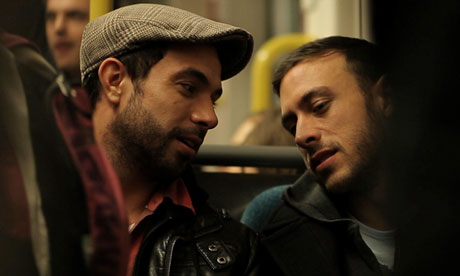
This little indie masterpiece has won several accolades. What would probably put you off from watching Weekend is that it's an indie and it's a gay indie. It seems to have been made for a certain niche only, but to think such would be to not give this film a chance as that is what makes this movie stand out. It exactly discusses in brilliant dialogue how the heterosexual partners deride homosexual ones and the universality of love. To box Weekend as a gay indie movie is to deny it of its resonance because if you pay attention to its dialogue, it's an apparent eye-opener the way Brokeback Mountain could only dream of becoming.

After this bus ride is one of the most intense dialogs
about love ever delivered in cinema
2. Bridesmaids (previously number 1)
This Judd Apatow blockbuster smash will be forever resonant. Bridesmaids is one of those movies would usually use as a benchmark to other comedies. "Hey, do you know Pitch Perfect, it's a riot." "Well, it's not as funny as Bridesmaids." "Oh, why do you have to say that?" Bridesmaids feature fully fleshed out characters, some emotional depth, and a resolution that's catered to Hollywood pleasure without the problematic possibility of being cheesy.

One of the most hilarious exchanges in Bridesmaids

3. My Week With Marilyn previous (not screened in 2011)
I am big fan of Marilyn Monroe and before watching this, I've already taken an interest in Michelle Williams' work after having seen her in Blue Valentine. So this marriage of Michelle and Monroe was a cinematic orgasm for me. And what was so great about it? Williams managed to transfigure herself to Monroe: posture, speech, acting, makeup, costume, walk, down to the smallest rasps in Monroe's lines. It was akin to watching Monroe rise from the dead and back to the silver screen. Williams' performance alone is enough to engender you to watch this movie, but the dialog, the storyline, and the cinematography was also fantastic. And wait till you see Williams dance the way Monroe does. It's breathtaking.

This scene completes Williams' transfiguration to Monroe

4. Drive (previously number 3)
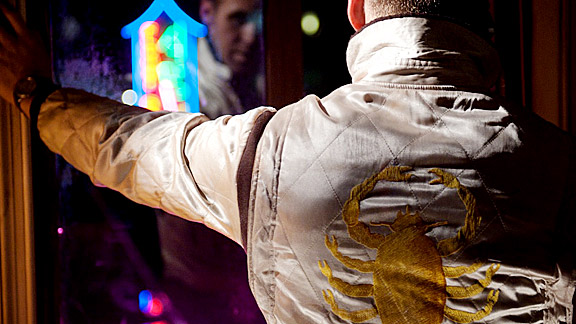
Ryan Gosling. Carrie Mulligan. Walter White with hair. A thug named Standard. A really beautiful ginger. The soundtrack. The visceral action pieces. The car chases. The gun assaults. I can go on, but what makes Drive so damn good is the fact that Nicolas Winding-Refn managed to blend all these seamlessly, anchored by Gosling's central performance that required like 5 lines of dialogue! Heck, his character doesn't even have a name.

Who doesn't recognize this jacket?

5. The Artist (not screened in 2011)
Whether it's a gimmick or pure cinematic genius, The Artist accomplished to be a love letter to genuine filmmaking. And it doesn't hurt that it sends a message of adapting to change, all while being buoyed by speech cards and magnetic performances by Jean Dujardin and Uggy the dog. In the modern times of dizzying CGI and sophisticated storytelling, The Artist's simplistic storytelling and silent movie treatment stands as a refreshing cinematic experience first and an Oscar Best Picture second.

One of the cutest scenes in The Artist. Awww, Uggy

6. Contagion (previously number 4)
There were so many brilliant performances in Sodebergh's outstanding ensemble medical horror slash docudrama slash social commentary piece given that it's headlined by an ensemble cast, but I am most moved by Jennifer Ehle's participation and next by Winslet's dedicated medical worker skit. Then you also have Paltrow's death scene which to most people was a treat. Let's also not forget Jude Law's turn for the evil blogger stunt. Contagion was the sort of slow-moving docudrama that polarized its audience, mainly because of how slow it unfolded and how it killed off its cast, losing central POVs along the way, but it works as a social commentary and a riveting medical drama detailing how easily our world can collapse into chaos because of a Contagion and various capitalism evils.

Ehle plays the dedicated scientist with a penchant
for monkeys.


7. The Muppets (not screened in 2011)
Anything that Disney touches becomes gold and it's no different for The Muppets (if you need further proof, just take a look at the 1.5B USD and that awe-inspiring Disney masterpiece The Avengers, that Disney had rights to after buying Marvel). Having bought by Disney and pushed forth as a project, The Muppets, written by HIMYM star Jason Segal is a revitalized and heartwarming take on The Muppets, decades after their TV show went off-screen. If like me you're a Muppet fan at heart, then you'd want to see this. And yes, Amy Adams is here, too. Doing a very nice number.

It doesn't grow old!


8. A Separation (not screened in 2011)
Moral ambiguity and Religion spun the Oscar Best Foreign Language Film winner, A Separation. Situated in modern Iran and takes advantage of the complexities of the Islamic laws, A Separation is a gripping tale of, well, divorce, playing the strings of Iranian culture and Islamic laws. The end of the movie sees an open ending that begs you to want to know the answer.

Razieh, played by Sareh Bayat, puts all the complications
and sophistications of A Separation in action.

9. Take Shelter (not screened in 2011)
Michael Shannon was robbed! As to how Shannon was not nominated for Best Actor in the 2011 Oscars was beyond me. His performance in Take Shelter was riveting to say the least, empowering a character study that's equivocal and hard-hitting. Jessica Chastain was also excellent in her role, as expected. But to watch for is just how the movie ends that is breath-taking and infuriating (if you believed Shannon's character was a nutcase).
The famed shelter

10. Young Adult  (not screened in 2011)
Charlize Theron managed a difficult task in the Diablo Cody-penned Young Adult. As Mavis, Theron plays a hardly grown up young adult novel writer with a mean streak and a delirious plan to win her ex-boyfriend back--who is married and with a child. Being a bitch and still managing to make the audience root for you is a task only few can pull, among them being Theron. Young Adult proves to be a delightful affair of craziness resulting from failure to grow past highschool. Just look at Theron's face below.

The Queen Bee is back. 20 years after highschool

11. No Other Woman (previously number 5)
Ruel Bayani's deliciously camp Anne Curtis vehicle smashed box office records. And how could it not, Anne Curtis was already a media darling prior to the film and having her deliver one-liners against co-star Cristine Reyes (most of which found their way to Facebook and Twitter immediately after viewers have seen the film) cemented the film to a whopping 275M gross revenue. Apart from a terribly flawed final act, No Other Woman was a triumph in Filipino commercial filmmaking, so much so that it spawned several rip-offs in 2012: two movies and a handful of TV series, all about mistresses. It is worth a revisit if only for the bitchfest in the pool, in the kitchen, and Anne Curtis' iconic big hair and wardrobe.

The bed scene that started Kara's downward spiral


12. The Help (previously number 6)
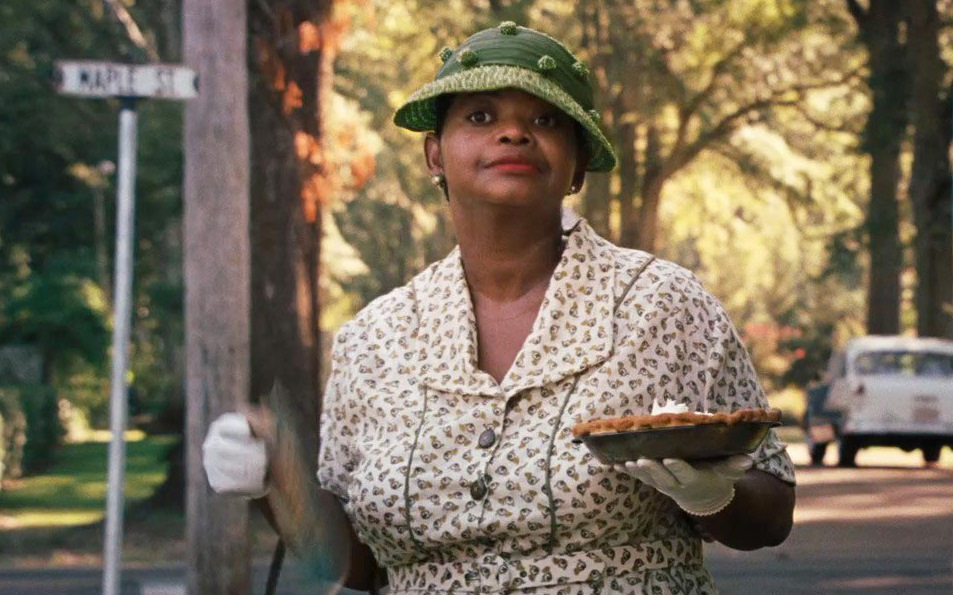
The moral in The Help is that black people's problems are solved by white people who take action. Decidedly silly that sounded, if not offensive, but that is basically The Help. Emma Stone plays a tomboy and propels her town's black women to a new level of empowerment. Sounds familiar? But there's more it than that: Octavia Spencer's scene-stealing, award-winning performance, Jessica Chastain's similarly strong performance, Viola Davis's that earned her a nomination as Best Actress, and the still charming Emma Stone.

This.

13. The Girl with a Dragon Tattoo (not screened in 2011)
Rooney Mara's dedication earned her a surprise Oscar nomination. Her transformation from a waif-Hepburn-like damsel likely to appear in Vogue (and she did) to the disturbed-looking Girl with a Dragon Tattoo in the English adaptation of the Swedish novel was all the dedication her director could've asked for, getting several real piercings on her eyebrows, ears, nose, and lips for the film. And that's not the end of it, the brutal rape scene and the payback was so scarring and powerful that it made her a name. Sadly, talks of a sequel seems unlikely as of 2012 and we would have to look for Mara elsewhere in the future such as in Malick's future feature where she co-stars with Ryan Gosling.

The look of dedication. Bow.

14. Source Code (not screened in 2011)
Anchored by Jake Gyllenhaal's performance and a dizzying scientific premise with a curious ending, Source Code was a breath of sci-fi fresh air. Michelle Monaghan was winsome while Vera Farmiga's portrayal of a stern but helpless scientist put at odds with a direct order puts the tension to could've become an exhausting affair otherwise. Maybe we should ask Taylor Swift?

Just where the heck is Gyllenhaal? That's a mystery
that Source Code plays on

15. Arthur Christmas  (not screened in 2011)
I was wrong to judge Arthur Christmas as a holiday snoozefest, bent to cash in on kids' money. Within the first 15 minutes of this wonderful effort from Aardman Animation Studios, you'd be captivated by the animation film's natural charisma and surprising emotional depth and a new spin on the Santa folklore, which is fun for kids, and entertaining for adults.

Arthur starts as annoying but ends up endearing and
resolute.

16. Moneyball  (not screened in 2011)
I am no sports fan, but Moneyball was made for me. It was a baseball story that works even for non-baseball fans with great performances from Brad Pitt and Jonah Hill. Though how Lenka's The Show found its way to 2002 is beyond me. Based on the events that happened in 2002, Moneyball pairs Pitt and Jonah Hill to great effect. While Hill does not do his laugh out loud routine, he does provide a refreshing insight to Pitt's character, while Pitt provides the tough man / persistent coach role that turns the gears of the story. Interactions with Pitt's film daughter were also tender.

Kid performs Lenka's The Show in 2002


17. Insidious (previously number 9)
I have yet to see a movie as scary as Insidious. The winning direction by James Wan and the creep-out visuals perfectly timed makes Insidious the horror movie to beat of 2011. And to date, nothing commercially made has been as scary an affair as Insidious. Save for the shaky final act that felt too hurried, Insidious is beyond your normal scare affair.

Whoever thought of this scene has a special place
reserved to him in hell


18. Ang Babae sa Septic Tank (previously top 20 runner-up, no placement)
Chris Martinez and Domingo teams up for a movie about making a movie, Ang Babae sa Septic Tank. Featuring a fresh from Kimmy Dora success Domingo, whose starpower has suddenly become undeniable, Septic Tank became talk of town when Domingo, while filming, fell straight to the Septic Tank and shortly to the hospital for treatment of infection. It then became a runaway winner in Cinemalaya 2011. Storywise, Septic Tank is very thin, but the treatment of the film-in-a-film with superb performanced by Domingo, visualized in each treatment to showcase the difficulty of filmmaking is one that bears repeated viewings.


19. Hugo (not screened in 2011)
Maybe it's my fault that I didn't enjoy Hugo as much as others did because I know the sad story of how George Melies lost his films, and how he died after, and it wasn't as light and lovely as it is portrayed in Hugo. And maybe that took root too much that I carried it to the theatre. But just like The Artist, Hugo is a loveletter to filmmaking, preservation, and restoration. Scorsese, for a change, tried his hand on a non-gangster family film with Hugo, and he arrived with something that has great cinematic depth. Asa Butterfield was fantastic in the film, and the pairing with Moretz was a great decision.

An homage to cinema, Hugo
20. Thor (previously number 8)
Problem with superhero films is that they don't age well. I remember upon seeing Thor that I had so much fun watching it. It was a great vehicle for Hemsworth to ride on. Natalie Portman was great, too. And Tom Hiddleston was an effective villain. Brannagh's directorial chops were put to good use here as how he managed to reimagine Valhalla and the whole Thor mythology in place was just spot-on and not cheesy. Kudos to the great humanity Thor displayed through the movie, which is central to the film, and the ending, it makes you beg for more. On its original release, Thor was a risk that paid off. A daunting task that Brannagh and Hemsworth managed to deliver. But 12 months forward, it is overshadowed by other superhero films, particularly The Avengers, making you ask, what was Thor about again?

Exploring Thor's humanity was a good call!


Sunday, December 30, 2012

2012's Movie Disappointments

If you went in to the theater to watch Silent Hill: Revelation 3D, then you probably have set your standards low enough to not have a bad time. But when you think a movie is great and then you sit through it to realize how wrong you were, feeling betrayed by the internet who has hyped that shit you are tolerating now. And you just can't wait to finish it and blog about it and just about how unfair life is and you cry and wish to see your therapist. That's what normally happens right? No? Oh...

Anyways, with 2012 almost out the door, I am recounting my ten most disappointing movie experiences of the past year. This is not exclusive to movies initially hyped as good and completely falling short, but also for movies that didn't come on time or those that failed to meet box office expectations. So without further ado, let's begin.

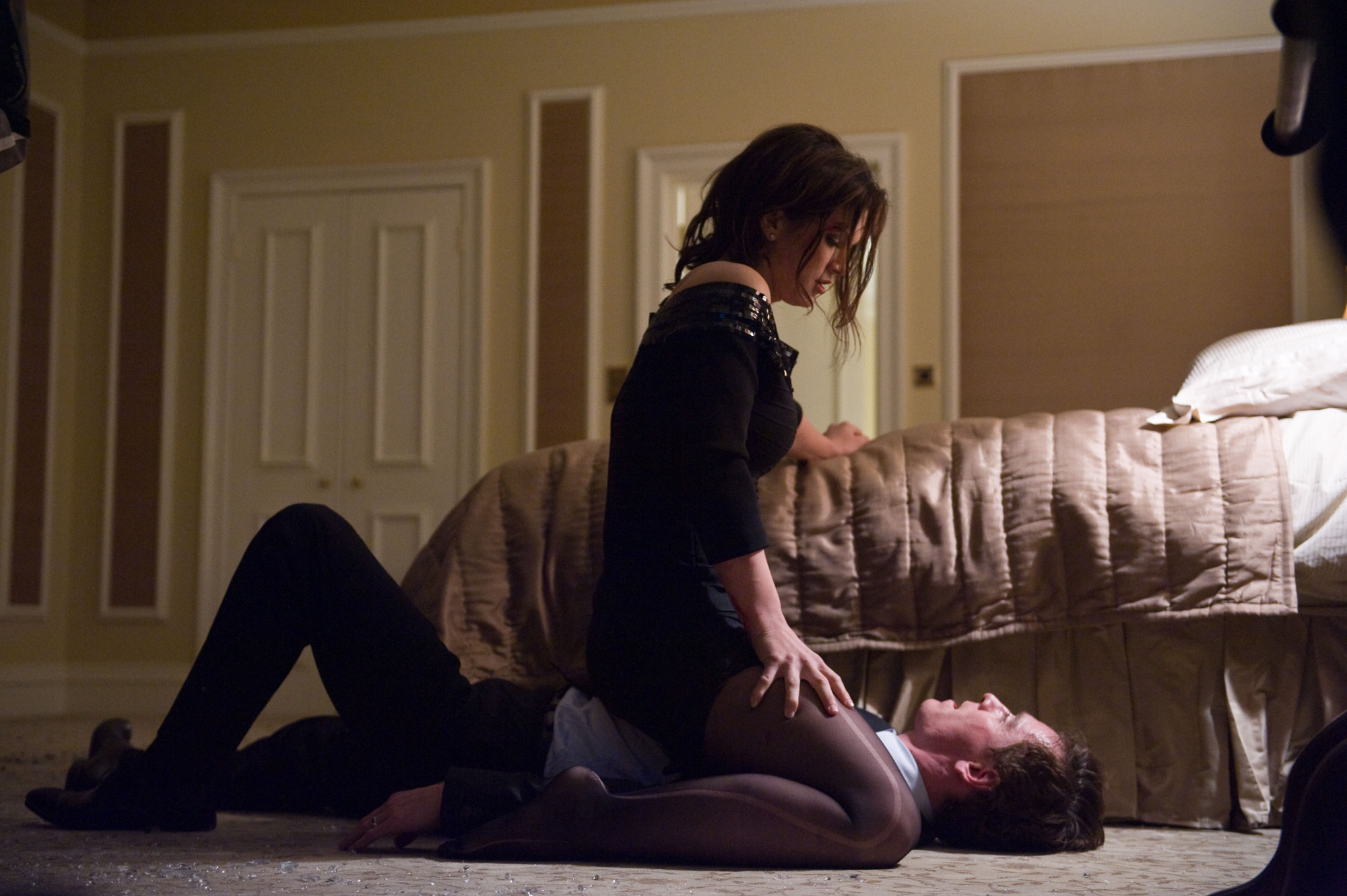
Carano on top of Fassbender's neck. One of Haywire's most
intense fight scenes
10. Haywire is actually boring
Sodebergh is my hero after what he has accomplished with last year's medical tragedy cum social commentary film Contagion. Thus, in my books, he can do no wrong, even with the controversial casting of an MMA fighter, Gina Carano, to lead his latest film. Then voila, I ended up regretting hyping the film. Let's just say it's not for everybody, and it tends to be boring when there aren't any fight scenes. And while the fight scenes were gritty and cool (remember how Fassbender died here and how Tatum smashed Carano's head on the table), it just doesn't have enough energy to keep it going. It worked for me on some cases, but it felt mediocre at best. I wouldn't say Carano was a bad actress, she felt surprisingly at home and the camera loved her, but perhaps it's the story. We've seen this before and some did it better, more intense, more spirited.


Marilyn Monroe (Williams) gets a pep talk from
her acting coach Paula. They're late to the set as usual.
9. Hugo, War Horse, My Week with Marilyn, The Descendants, The Muppets, The Artist, and Moneyball only came to theatres middle of 2012
It will be forever a thorn on my movie-watching side, this MMFF. The once home to Filipino filmmaking greats is now nothing but a moneymaking machine for the moviegoing masses who don't mind seeing the same jokes played out year after another and that cinematic cockblock to film buffs eager to make love to Oscar frontrunners released late of the current year. This year, the MMDA film fest has cockblocked Life of Pi (to  to a January 9 screening, thank God!), Zero Dark Thirty (January 11), and Les Miz (January 16). The Silver Linings Playbook still hasn't gotten a playdate (come on, dudes, that's Bradley Cooper and Katniss Everdeen!). Last year, it blocked Hugo (screened February), War Horse (got a slot in January, then moved to May), My Week With Marilyn (March, limited), Moneyball (April!!!, limited), The Descendants (April), and The Muppets (May, limited). The Artist didn't get a wide release either, and that's an Oscar Best Picture film for 2011. Sigh!

Yikes!
8. Gangster Squad moved to 2013 screening, so did The Great Gatsby
Someone went mad and killed people in the moviehouse. That's how Gangster Squad got moved to a 2013 screening as they need to remove a scene reminiscent of this incident. This is disappointing as I felt the movie lost some of its mojo already. So it was also annoying to hear word that the December release date for The Great Gatsby was moved to May 2013. Bummer!


The most "emotional" scene in Ang Nawawala
7. Ang Nawawala's aimlessness
I could not believe how Jamora's entry to the Cinemalaya 2012 got a standing ovation for minutes, based on what was hyped around the internet. It's like the hashtag #firstworldproblems coming to the big screen. And it baffles me to this date, how it got the good word of mouth in the internet. Buoyed along by an unrelatable lead (who does not let us in to what he is thinking because does not speak) and obnoxious women (the main love interest and the mother were both annoying, maarte women), Ang Nawawala felt lost for me: too contrived in its workings, wandering along scene after scene, accomplish nothing. And come on, in what remote reality does a privileged teen-ager listen to Kundiman and feeling orgasmic about it? It felt flat out fake and contrived to me that when the built-upon ending happened, I blew raspberries and felt this was a big bad joke orchestrated by the hipsters who run the internet.

The only thing this movie has going for it
6. We don't really need a Spiderman reboot
Individually, Maguire and Dunst outperforms Garfield and Stone, but together, the reboot duo outdoes the original pair. Great great chemistry, possibly because they're dating in real life, too? And that's all the reboot has going for it. Everyone else from the original trilogy was more likable than this new one. And seriously, Garfield's Peter Parker is a boring anger-fueled teen who's better off cast in Perks of Being a Wallflower.


Without Ethan Hawke, this movie is as dead as
the pagan gods it is built upon
5. Sinister is a big fat fluke / There is no really scary movie this year
Word was out that Sinister was this year's Insidious. How wrong was I to believe that. Halfway through the movie and I am already bored. It's only Hawke's performance that glues it together. The scares weren't that scary and the story is actually predictable. What a waste of time and what great sadness that we don't have any scary flick this year, at least like in the caliber of Insidious. And don't even try to raise in Cabin The Woods. It's too camp to be really scary.


Not even Eastwood and Adams' performances
can save this tired film
4. Trouble with the Curve sucks big monkey balls
You put drama heavyweights like Adams and Eastwood in one film and boy, am I stirred. Too bad Lorenz's snooze-inducing so-so direction ruins it. And that last scene, how everything fell into place just like that is a big middle finger to Eastwood's works where it's always a heart-breaking ending. Here, everyone reconciles without having to know what exactly happened. It just all got fixed. The last time I saw a movie like this, it was a Filipino movie that adapted another Filipino movie. SMH.


Hanks: What you looking at?
Berry: I'm looking for where the money of the
investors of this film go
3. Great movies like Cloud Atlas and Dredd flopped
Tom Twyker and The Wachowskis were unfortunate that Cloud Atlas was only able to recover about 60% of its production budget, while Miramax's Judge Dredd reboot also failed to cash in. Normally, I wouldn't care if movies are a hit or a miss, but in the case of Cloud Atlas, it felt bad for me because the material was good, the movie was well-made, and I'd give the directors some credit for taking the risk of using a different narrative rather than straight-out adaptation (even if this approach kind of didn't work for me), but maybe it just didn't evoke the same emotional pull the trailers did. So too bad. As for Dredd, I felt Karl Urban was great in it, so as Thirlby. And the critics agree, but it's just bad marketing, failing to create hype for the movie, which I only knew because of Rotten Tomatoes. The bad thing is that, we won't see a sequel to this more or less, so let's hope the DVD picks up and that Miramax reconsiders putting Thirlby and Urban for another go.

I love me some Emily Blunt, but I felt the extended TK
storyline was more of a bust
2. Looper's plot shift
I may be a minority here, but everyone who I watched Looper with felt it was a weak movie, particularly how Rian Johnson felt the need to shift the story to the TK subplot was completely the turn for the boredom. Then when you think about it, the time-travel cause and effect logic is kind of screwed. And, oh, that ending, mighty predictable. 


AND THE MOST DISAPPOINTING MOVIE EVENT FOR ME IS:

This is probably the funniest scene in the movie
after this follows an hour more of slapstick.

1. Kimmy Dora 2 ruined it all
When Kimmy Dora came out some 3 years ago, I felt as if Filipino comedy has found its new spark, making way for smarter comedies like "Here Comes the Bride," that odd film "My Amnesia Girl," whose one liners worked for me as well as the quirky narrative, and last year's Cinemalaya runaway winner, the Eugene Domingo and Chris Martinez quirkball "Ang Babae sa Septic Tank" that actually saw Domingo in a Septic Tank, then later a hospital for treatment of infection. Then what happens next? Vice Ganda and his money vehicle "Praybeyt Benjamin" happened, posing a counter-thesis to the idea that comedy movies need to be smart and need to have a story to tell, not just jokes and slapsticks. So it angers me that Kimmy Dora 2 happened. The posters excited me, this is really happening and I only dreamt of this. My friends knew how much I love Kimmy Dora and how it felt to me as a modern Filipino classic--at once witty and arresting, with Domingo claiming her seat with the comedic greats. Then the trailer came, and I was, "uh oh, that didn't look good. Horror comedy never worked. But I might as well give it a chance. It might be a surprise hit." And it was a surprise hit. A hit on my face that it. Domingo and Martinez ruined everything that the original Kimmy Dora stood for, that is, make a good comedy and make it witty. Put jokes, but don't make the movie itself a joke. And it was a joke. A very bad joke played on us believers that Filipino mainstream and commercial filmmaking will actually improve. With these bad movies easily earning bucks, like MMFF cash-in winner Sisterakas, we can only wish.