Showing posts with label 84th oscars. Show all posts

Tuesday, March 27, 2012

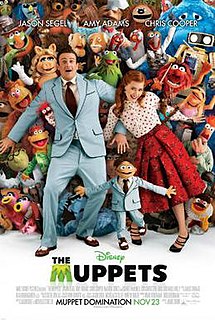
In Review: The Muppets

The Gist
Magical may be the only fitting way to describe this Disney triumph. Truly a must-see not only for the nostalgia, but also for the joy you can derive from its simplistic approach to life and laughter, The Muppets has a heart beneath all that layers of felt and fabric.

The Good
  • grandly clever and traditionally Muppet nonsense sense
  • nostalgia level over 9000
  • the amount of laughs in this movie equals its amount of heart
  • great music
The Bad
  • It's not 4 hours long, for the time they've been gone, we need more
Synopsis
Walter (a born muppet) and his older brother Gary (a human) grew up together in Smalltown. Together, they grew up watching The Muppet Show and Walter dreamt of becoming part of The Muppet Show, while Gary grew up to have a relationship with Mary, a school teacher. On their 10th year anniversary, Mary and Gary are going to Los Angeles to celebrate; Gary adds Walter to the entourage to surprise him with a visit to The Muppets studios. However, what they arrive to in Los Angeles was the condemned Muppet Studios, every attraction closed, every part close to falling apart. Walter wanders inside the abandoned Kermit's office and overhears a plan between Mr. Richman, his henchmen, and Statler and Waldorf to take over the Muppet Studios and turn it into a museum. After Statler and Waldorf have gone, Richman and his gang revealed that they will tear down the Muppet Studios and drill oil, all while laughing maniacally. Walter heard all these and ran out screaming until he got home. Together, he, Gary, and Mary gather the Muppets so they can raise the money and save the studio.

Life's a Happy Song
Like in TV, The Muppets is filled with musical numbers, most of them contribute to the overall humor of the film. Most of the songs are touching or silly or both, and are at times sing-able. In fact, Bret McKenzie's Man or Muppet won the Academy Award for Best Song. As with most comedy musicals, this film is filled with silly dance numbers that adds to the movies light-hearted feel.

Bret McKenzie, with Kermit, performs one of the songs he
wrote for the Muppet movie via Youtube

The Rainbow Connection
I was 5 when I discovered The Muppets. Initially, I watched Sesame Street only and slowly graduated to The Muppet Show after watching their Music videos. I kept looking for Big Bird, Ernie and Bert, Oscar, etc. in The Muppet Show. Eventually, I got used to the humor of The Muppets. Then I grew up, the re-runs stop airing, and I forgot them. I forgot how fun they were. So when I found out that they have a movie coming up, I was like, "Meh. Probably boring." It's been more than a decade since the last Muppet movie and at this rate, they were easy to dismiss as has-beens.

As this was shown around December 2011 last year in the United States, I was fortunate enough to get knowledge of this film being a surprise treat. Without nothing much to work on other than it is a "surprise treat," I dove in to discover how true that description is.

How I Met Your Mother star, Jason Segel, co-wrote
The Muppets
Jason Segel and Nicholas Stoller (who Segel worked with in Forgetting Sarah Marshall) co-wrote the Muppet movie, and the result of this cooperation is an extremely fun and rare fourth-wall breaking / absurdly funny movie filled with nostalgia and heart. The extensive use of absurd jokes such as "travel by map," "maniacal laugh," and "that was an expensive-looking explosion, I didn't know we have that in our budget" greatly surprises audiences who think that the Muppets will take itself seriously and come out cheesy. In fact, that was the last thing it did, and these absurd jokes took the movie to a level of light not achievable by real people.

But it's not all about laughs and music, The Muppets have internal conflicts, too, that showcase the heart beneath the fabric. In a way, these conflicts further gave the Muppets character and made them grow. For instance, if before we just knew Kermit as the Muppet leader and the voice of reason and order among the gang, the movie shows him also as reluctant, proud, and regretful--things you would not have known about him if he was trapped inside the TV--in fact, this approach help introduce the Muppets to a wider audience who don't have knowledge of them. Their struggle to put up a telethon with very little progress or interest from the current world (and a realization that they are has beens) shows a conflict that is, albeit light, crucial, rending, and engaging. The telethon itself is a clever depiction of a returning audience's reaction to the movie. Initially, a moviegoer may start doubtful and faithless that the movie will be good, just like the telethon where initially only hobos were watching, but as the movie progresses, you would be completely absorbed and rooting that The Muppets succeed, just like the entertained audiences in the telethon who came in flocks, eventually.

The movie's nostalgic scenes (such as the Muppets' opening sequence) and the Mahna Mahna number bring back so much memories that may be enough to make you forget that you are a grown man and cry your eyes out, and with its proper pacing, the moviegoers are guided very well, whether they are new to the Muppets or are age-old fans.

In the end, it's hard to describe exactly what happened in the Muppets. All I know is that it's nothing short of magic.

My verdict:

Not much more can be said about a movie that brings back the joy of being a child. A passing and recommended mark of 4.75/5.

Tuesday, March 6, 2012

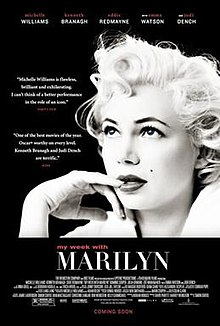
In Review: My Week with Marilyn

The Gist
Williams' glowing transfiguration to Monroe will leave spell-bound throughout the whole movie and that alone is enough reason to watch and recommend the movie.

The Good
  • spell-binding performance by Michelle Williams
  • perfectly cast, with Redmayne, Caine, Brannagh, Dench, and Watson doing solid work all the while allowing Williams to completely shine
The Bad
  • would need you to suspend your disbelief in the events that happens (as this is a memoir of Colin Clark), lest, take it as a fan fiction of sorts.
  • though is pleasurable to watch, does not completely achieve a climax

Synopsis
Colin Clark, 23, applies to be a production assistant in Olivier's production of The Prince and the Showgirl. During the course of things, Olivier and Monroe's professional relationship are marred by Monroe's stage-fright and Olivier's impatience. Feeling a need to help Monroe, Clark "takes sides" with Monroe and in the process, spends a flirtatious week with her. The movie recounts that week.

Gentlemen Prefer Blondes
My reaction when Williams was cast as Monroe was apprehensive. Sure she's blonde, American, a female, and has full lips, but that's about it. Williams is a good actress, but a bit too far from looking like Monroe, much more carrying her charm and allure. This is me coming from watching her in "Blue Valentine" where she played a sappy housewife who couldn't seem to attract even the flies. And remember how pathetic the housewife she played in Brokeback Mountain was? That, plus the fact that if anything, Williams does not in any bit look like Monroe. But alas! Williams manages the impossible: she recalls Monroe from the dead and becomes her! Complete from accent, diction, speech, gait, and allure. She even managed to be really sexy, though not Monroe-sexy. That transformation alone got me hooked throughout the movie's 1 hour and 40 running time. I believed it was Monroe I was watching the while time.

Seems legit


Whose Side are You On?
Marilyn explains the kind of behavior that Monroe brings to the set, which is consistent with the literature written about it: habitually late, difficult to work with, struck with stage-fright; albeit, I find it all too condensed that one will have to imagine how she became lovable, how she became the most famous woman on Earth. The movie does not bother to explain it in length, but assumes you have a basic knowledge about Monroe before you jumped in to watch the movie.

The script is fair enough, with Williams squeezing the most potential out of it. Some may bemoan the lack of depth, but it didn't really bother me as I am taking this as a biopic for which witty dialog do not really suffice or happen often, but when they do, they do. What really brings the work to life is Williams' channeling Monroe into being. It is impossible to imagine anyone playing the role. As mentioned above, she got everything spot-on, from the raspy, breathy speech pattern to the flirtatious gestures. She brings Monroe to full life when she performs a dance routine number that Monroe played on The Prince and the Showgirl. Branagh's and Dench's performance of Olivier and Thorndike were laudable, too, while Redmayne, albeit outshone by Williams, did relatively well, too.

Costume and set design were also great and add to authenticity of the movie, while the pacing is fluid and simple, which helps a lot to enjoy the movie. There are great sparks of comedy in the movie and like most of Marilyn movies, this one is light, with the darker areas mostly reflecting on Monroe's inability to cope up with her stage-fright and being near impossible to work with. It is however impossible to decide which part of the film is the climax. For most of it, the film goes on to become delightful that there is no discernible climax, but rather a series of playful scenes during the whole filming, guided by Curtis' tight direction.

My verdict:

A biopic, albeit dubious but a really enjoyable one, powered by a glowing transfiguration of Williams into Monroe is not something you'd like to miss. A passing and recommended mark of 4.5/5.

Tuesday, February 28, 2012

In Review: The Descendants

The Gist
A non-cheesy trage-comedy, The Descendants is one of those rare films that is mildly lying and mildly telling the truth--it does take life's tragedies with seriousness, but ends up with a childlike self-laughable behavior. Truly one of 2011's best films.

The Good
  • pleasant and realistic script, serious but with a heart and candidness
  • excellent performance from Clooney and everyone involved.
The Bad
  • has dragging parts near end, with an unsatisfying ending
  • will not feel long, but will dilly-dally on a lot of occasions
Synopsis
Matt King, father of two girls, a local Hawaii lawyer, and a failing husband, is the sole trustee of an inherited Hawaiian land, of about 25,000 acres. Having thought of no better way to resolve their problems with the rule against perpetuities, the King clan decided to sell their property to a local developer, Dolitzer for half a million dollars. During the course of the bidding, Matt's wife gets into a motorboat accident, which left her in a coma, which if she ever recovers from, will leave her in a vegetative state, leaving Matt to execute her living will of disconnecting her from the machine. On the course of accepting the bitter truth, Matt fetches her daughter from her boarding school and embarks on a journey to inform everyone about his wife's fate and dealing with his family's ancestral property.

Pleasantville
When one thinks of Hawaii, all we ever think of is parties, fun, pinacoladas, beaches, surfing, and other recreational activities. Media has done very little to expose the other side of Hawaii, that is the political dealings, the common life of the residents, and the problems that Hawaii faces, in general. Alexander Payne depicts part of that undiscussed side of Hawaii in a very lifelike light, using a realistic script that reflects American values with a Hawaiian flavor. The result is a finely-crafted mix of unexpected humor in tragic circumstances.


Surf's Up
I am not a big fan of Hawaii-based films (or TV series or TV series episodes for that matter). There is a weird feel in Hawaii being American and smack right in the middle of the Pacific. It's an uneasy mix of culture and humidity and vibrant colors that don't really go well altogether. Anything set in Hawaii makes me feel uneasy and humid and to some extent, feels corny, shallow, and predictably a surfer or beach movie. That is to say, that to me, watching The Descendants felt initially like that. But the thing with The Descendants is that it's actually a movie that normalizes Hawaii, make the beaches as commonplace and as uninteresting as a heavy traffic in New York. In a way of saying: it's a drama set in Hawaii, and not a surfer movie with some drama. Heck, even George Clooney, who is normally polished and gleaming, is disheveled and slob-looking here. That is how bigwigs in Hawaii looks like, apparently, as his character explains.

If only we can all get paid to look like slobs.
What's gonna surprise you as the movie goes on is how the dialogues, at their most pedestrian ("motherless whore," "you are such a retard"), becomes humorous and entertaining.

The whole cast did well on their parts, though I have to note Shailene Woodley and George Clooney's acting. Here, Clooney plays a vulernable and uncertain father, quite unsure of what he is doing and what he is to do after he gets the news about his wife. This is quite an opposite to the roles he has played in Michael Clayton, The Ides of March, Ocean's Eleven, and Up In the Air, where he plays a suave successful man who's figured out everything only to learn a lesson in the end. Kudos, too, to a relatively unknown Nick Krause, who did great on his role as Sid, the equally lovable and detestable friend of Alex (Woodley), for providing most of the movie's comic reliefs and that rare wisdom amid stupidity.

Scene-stealing Sid played by Nick Krause

Near the end, the story will slow down and mostly rely on visuals for the resolution. And speaking of resolution, I'm not sure I'm a big fan of the way the movie ended. Sure, that's how life is sometimes, we peek in the middle of the story and the end for us is up to how much we are allowed to peek into the lives of these characters. It's just that the ending felt kind of undone and could've been done better.

In a sense one can say that the movie was effortlessly done. There are sparks of brilliance here and there, but one may need to dig the sand for those. It's in the normalcy and how Payne managed to capture the human response to tragedy that makes this movie shine. How genuine the characters are and how relatable they are. There was very little cheesiness too as there was grit, but those worked exactly for the better.

My verdict:

A comedy amid tragedy, hindered by some dragging parts and a nonchalant ending. A passing and recommended mark of 4/5.

Sunday, February 19, 2012

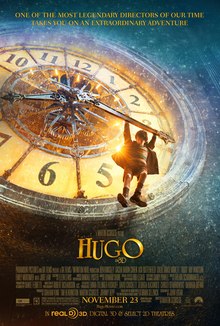
In Review: Hugo

The Gist
A 3D wonderment at its finest, Hugo is a family film that, while entertaining and rewarding, may discuss too many things all at once to mask its huge fanaticism for the magic of cinema.

The Good
  • fine 3D experience, at a running time of more than 2 hours, it doesn't wear your eyes down
  • an innocent film with a heart of a child, eager to discover new things
  • finely cast with great performances from Butterfield and Moretz
The Bad
  • the semi-fictional viewpoint may seem dubious for cinephiles who know the story behind Melies
  • initially focuses on existentialism then does a turn for movie preservation; should have focused on one thing intensely
Synopsis
Hugo Cabret spends most of his days stealing bread and milk and winding the clocks secretly in a French train station to avoid being placed in an orphan home. His father, a clock maker, perished in a fire and left him to his drunk uncle who has been missing for months. One day, he was caught by toy shop owner George Melies who confiscates all his belongings, including his father's notebook that has all the notes on the automaton they have been working on. To get back his notebook, Hugo enlists the help of Melies' granddaughter Isabelle and together, they embark to a journey that shows them the wonder of cinema.

Not Like the Movies At All
Scorsese, famous for his gangster films, surprises everyone by directing an adaptation to a children's book, The Invention of Hugo Cabret. The book itself is based from the later life of George Melies after his decline in the industry. Scorsese followed the same course as the book did and the result was a family-friendly film. Sadly, if you know the true story of Melies and how he suffered, and how unromantic everything was going for him, you would feel as if the movie had trespassed on a lot of things that Melies has gone through. But, if you didn't know about those, you'd most likely enjoy yourself. Sorry.


Cinemagical
The problem with me reviewing this movie is that I know the real story of Melies and for me, the inclusion of fictional elements seem like an affront on the history of cinema, although a little mellowing does not hurt anyone, but this is real life that Selzsnick "fixed." Trying my best to be objective, I would like to commend on the casting of Asa Butterfield, Chloe Moretz, and Ben Kingsley into the film. Sacha Baron Cohen was typically annoying, but I guess it worked for the better of the film. And while I am here, might as well comment on how much Kingsley looks like Melies.

Not sure if Ben Kingsley or George Melies...

The pacing of the movie will initially feel slow, but actually, you wouldn't notice the running time of 128 minutes as events unfold fast enough. Butterfield's innocence also helps a lot in the movie as you will be engaged watching him.

Initially, the movie will existentialist, dealing with one's purpose of being here with analogies from machines and clockworks. Then the focus would soon turn to the cinema, forgetting the existentialist premise it initially started on. The later parts of the movie are generally dangerous due to their inaccuracy. If people were to take these accounts as true, given that Melies was a real person, one might not completely understand the real story of Melies and conclude this to be true. Nevertheless, the depiction and re-enactment of the early days of cinema were delightful and as poignant, making Hugo one loveletter to the joy of the movies, just like The Artist.

The 3D in Hugo is liquid. It does not hurt your eyes much as would other 3D movies. 

My verdict:

A family affair with a historical and existential twist. Not bad, could've been better. A passing mark of 4/5.

Sunday, January 29, 2012

In Review: The Artist

The Gist

Primarily a visual and auditory feast, The Artist is a riveting and entertaining tribute to old Hollywood, peppered with heart-rending scenes and profound humor only to be ended very lightly for the premise and story line it took.

The Good
  • stimulating, riveting, good-natured, and easy to follow story
  • not much dialogues to closely follow as it is a silent movie, making it more stimulating as you don't need to process words, but just gestures and orchestral pieces.
  • completely replicated the magic of old Hollywood films, from charming stars to lively storyline
The Bad
  • quite weird to experience a silent movie in an age where everyone talks even when they don't need to.
  • unknown actors can alienate moviegoers if not for the Hollywood hype
  • too light an ending

Synopsis
George Valentin (Jean Dujardin) meets a fan Peppy Miller (Berenice Bejo) after a screening of his silent film "A Russian Affair" in 1927 when a crowd pushes her into bumping him while the press where taking pictures outside the theatre. The funny encounter lead to another when Peppy was taken as an extra in Valentin's film, "A German Affair," which lead to an intimate moment between her and Valentin that encourages her to pursue stardom--initially taking extras then slowly graduating to larger supporting roles. By 1929, talkies (movies that feature speech) had started becoming popular; George Valentin vehemently rejects this as he sees talkies as nothing more but a fad--ultimately separating him and Kinograph which has decided to produce only talkies from then on. By this time, Miller has grown in popularity and has been signed on by Kinograph as one of its main stars in the talkies era. Not one to admit defeat, Valentin starts his own production of a silent movie entitled "Tears of Love," which apparently launches the same time as Peppy Miller's lead role debut in Kinograph's talkie, "Beauty Spot." What follows next is a series of heart-rending events that tests the friendship of The Artist and the Aspiring Beauty.

Silence is Golden
The Artist's main strength lies in the fact that it is for a good long time speechless. Sometimes, dialog cards are shown as with silent movies, but what really makes up for The Artist's voicelessness is the music they used and the highly enticing visuals. Dujardin and Bejo make up for a really charming pair and Uggie the dog is no different as he is very delightful and dear that you actually watch for when he is coming back on-screen. An article from CNN explains why The Artist works in a time where we have 3D in our movie houses (see here). And I would have to agree that it goes beyond "shutting down the surround sound." it's replicating what has been lost so magically well, it screams brilliance and ingenuity.

Sad Movies Make me Cry
After I've seen Roman Holiday early this year, I have concluded that films made during the Golden Age of Hollywood were clean and innocent--untarnished with violence and sex as with the movies we have today where the virtue is more often than not, "the dirtier, the better." How Audrey Hepburn managed to sleep in Cary Grant's room, drunk with drugs, and not get raped at all is impossible had Roman Holiday been remade in 2012. And this innocence is also present in The Artist. It's a movie made in our time, but was taken from another. And this magic that we miss is what makes this work irresistible.

The irresistible pair of Dujardin and Uggie tries to placate
the angry wife to no avail.
You also can find the similar charm in Jean Dujardin's portrayal of George Valentin and Berenice Bejo's Peppy Miller. Their flawless portrayal will fool you into believing that they really belong to the 1920s. Valentin has that charm reminiscent to Bogart's and Grant's, the charm absent in today's leading men who are more of gritty personifications of Hollywood and whose life outside the camera is one for evading it. Not to mention the Tintin-Snowy-like partnership between Uggie the dog and Dujardin makes for adding color to the black and white flick.

Miller fantasizes an embrace from Valentin only to be surprised
by a lack of knock from reality.
And speaking of adding color, there are too many visual delights in The Artist--enough to justify your seeing a black and white film. One of the most memorable ones being Peppy Miller making love to Valentin's coat. The way Hazanavicius pairs that particular scene with the "Scene d'Amour" score used in Vertigo is haunting and impeccable. The spare dialog, which you can count as they are flashed through dialog cards, are written well. They come as trickles in summer and completes the overall silent cinema feel. There are also some imaginative use of dialog and sound in this film as it is about the transition from silent films to talkies. The way sound was used to convey certain scenes is brilliant and worth writing home about.

As the movie moves to nearer and nearer to conclusion, heart-rending scenes will pour in more and more often, and given how likeable Dujardin has made his character, it will be impossible to not empathize. This exercise in empathy is however ruined by the too light-hearted ending. In my opinion, the movie could still have ended positively without feeling too hastily done. I really wouldn't mind extra minutes just for a better ending as I am enjoying myself anyway. Although, I must say, the last scenes in the ending were revelatory enough to placate me.

My verdict:

The Artist is a brilliant and ingenuine loveletter to the magic of early cinema powered by charming characters and a wonderful pairing of visuals and musical score. A passing and recommended mark of 4.5/5.