Thursday, October 18, 2012

In Review: Pitch Perfect

The Gist
Easily crowd-pleasing, Pitch Perfect scrambled to resolve its plot and resorted to taking the formulaic route, but is nevertheless a fun ride filled with entertaining musical numbers and a showcase for its talents, particularly Anna Kendrick and the scene-stealing Rebel Wilson.

The Good
  • Outstanding musical numbers that inspire delight
  • Rebel Wilson outshines the likable protagonist, Anna Kendrick
  • Jokes are more often effective than not
The Bad
  • Tends to be a typical feel-good movie with a typical feel-good ending
  • Scrambled to resolve its plot rather than having a healthy progression on the transfer of power between Beca and Aubrey
Synopsis
Beca doesn't want to go to college. Instead, she wants to be Los Angeles where she can try her luck on mixing tracks and becoming a music producer. Her father disagrees and asks her to just give a try for one year in college, and if she doesn't like it, he'd send her to LA himself. Beca agrees and unwittingly joins an a capella club when a senior caught her singing Titanium on the shower. Joining the Barden Bellas, an all-girl a capella group from Barden University, Beca is now a part of a quirky a capella gang who's had a shameful time at the previous regionals. And she finds out, college ain't bad at all. That is until the pressure to get to victory starts on giving it to everyone.

Rebel Without a Cause
I have a particular penchant for Rebel Wilson since I've seen her in Bridesmaids last year, and if anything, it's because of her that I watched this movie. Prior to the watching the movie, I've seen her interview over at Ellen and I got a nagging feeling that if I let this week pass and not see Pitch Perfect, I'd be haunted by it for the rest of my life or until it's available on DVD. Thankfully, she did great, probably as good or even better than her work on Bridesmaids. Pitch Perfect gave Rebel Wilson the same scene-stealing exposure that Bridesmaids gave to Melissa McCarthy and I don't see any reason why she won't be the next big comedic thing, perhaps soon starring in her own Judd Apatow produced movie.

Smashed
I don't watch Glee and I'm not very fond of musicals or any movie that involves singing to portray a certain event or scene (the last of this kind that I liked was Chicago, or Muppets if that counts), but with Pitch Perfect, it worked for some reason, maybe because you can skip (fastforward on DVD) the singing and the story would still be in tact, but for some reason, I liked the musical numbers well enough to not get bored by them. There is something in the a capella performances that worked. Or maybe simply because the numbers were not so over the top and that they conform with the overall tone of the movie. It kept pitch, so to speak--demoting the song numbers to practice scenes and competition scenes made it un-cheesy. I in fact look forward to the song numbers in some cases because the numbers were that good.

And speaking of great musical numbers, the one that got me the most is the 30-second audition piece from Beca (Kendrick) where she did  a verse from Lulu and the Lampshades' "You're Gonna Miss Me" with a paper cup as her background instrument. Her lilting voice and the simplicity of the paper cup and clap trick made this scene her brightest moment in the movie that when she finished the verse, you wanna go and cheer for more. And if anything, this number quashed my feeling that Kendrick can't deliver. She actually can sing. I've seen her in a number of films, but I've never liked her this much. I've a conflicted opinion of her in Up in the Air, though I liked her better in 50/50, but I'd say I like her most here, especially paired with Skylar Astin--whom she shares a great on-screen chemistry with.

The film, however, is not without foibles. Like one of its characters, Aubrey (Anna Camp), Pitch Perfect tries to be, well, perfect. Like most feel-good movies, it aims to make everything and everyone in its storyline happy and tends to tackle the supporting cast on a shallow level. I would have loved a bit more depth from the characters, but the movie may not have enough time to do so effectively. For instance, there is some depth in Aubrey's character development, the group's leader and little Ms. Perfect. Her father was a military official, who made sure she's disciplined and such. Glimpses of their background history are absent for the other characters, something that Fat Amy (Rebel Wilson) could've benefited from and would've made her more lovable. Instead, we are only allowed access to the present state of some characters, making them less lovable and a tad less relatable.

As the film progresses, the more formulaic side of Pitch Perfect shows. Things get resolved rather easily in the end, rather than a gradual progression from being uptight and traditional into the hip group the Barden Bellas ended up becoming. I don't believe any group would have been able to change its style and manage to knock the crowd out, with what, like a month of preparation at most? And, yes, that final number of the Bellas felt like a mess. I particularly disliked the song choices (2012 and Price Tag), save Simple Minds' "Don't You." I felt the final number is very messy and uncomfortable to watch. They also lost me because I was hearing percussion in the background.

Luckily enough, the good points of Pitch Perfect are strong enough to forgive the weaker points. Other than the very enjoyable song numbers, Rebel Wilson as I mentioned above saves the movie from unhinging itself into a disaster. Her Fat Amy is one of the most confident / clueless / sassy supporting characters in recent film viewing memory--a little less scary eccentric than Bridesmaids' Megan, but no less fluffy. Her comic timing and improvs are spot-on, more often than not saving the movie from being too flat. The interaction between the cast members are also enjoyable to watch, as if something funny is always about to happen when two characters talk about something, Chloe and Aubrey for instance take a capella so seriously that they have to use the prefix "a ca" in some words / expressions (i.e., aca-scuse me?) like a pair of sorority girls with a secret vocabulary.

Overall, I'd be repeating myself in summarizing this movie. The pros outweighs the cons and it's not a perfect movie, just one trying to make everything perfect and delightful. It's a crowd-pleaser, it would behave like one. And in that goal, I think Pitch Perfect achieved its reason for existence.

My verdict:

A laugh out loud time with enjoyable musical numbers and a memorable performance from Fat Amy. It's a crowd-pleaser and if you are not in the best of moods, it would cheer you up for sure. I'd say

3.9 out of 5 stars. Passed and recommended.

Author's Note: Pitch Perfect is a Robinson's Malls exclusive movie.

Sunday, October 14, 2012

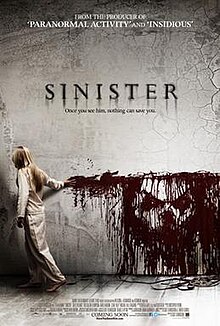
In Review: Sinister

The Gist
Grisly and disturbing, Sinister brings a flavor of SAW to Paranormal Activity. While not being as good as its predecessors, Hawke's strong performance and the eerie cinematography manages to make this film from sliding into cheap-scare film territory

The Good
  • Hawke remains a legitimate actor throughout the whole film
  • The cinematography inspires thrill rather than cheap scare
  • The film follows a healthy progression that wouldn't get you lost
The Bad
  • Has its dragging moments
  • Unfortunately not as scary as its predecessors
  • The uneven pacing desensitizes the conclusion
Synopsis
Ellison Oswalt (Hawke) used to be an accomplished fiction writer but he has since been relegated to less critical acclaim with his less successful crime novels that earn him the disregard from cops wherever town he moves to write a new novel. In his new novel, Ellison investigates a family hung by their necks on their backyard, while one of their daughters still missing. As they moved in to their new home, Ellison finds a box of home movies that opens a can of worms for him and his family.

Before Sunrise
I can't help but notice two things about this film. First, Ethan Hawke's performance (whichs kept this film from unhinging) and second, the time when it was filmed. I'd like to focus on the second matter, which, for me, spoiled the film. I have to wonder why most of the times, the Oswalt household is dreadfully dim, amid Ellison already scared out of his wits. Even at noon when the sun is at its brightest, the Oswalt household remains dark and dreary. While it did help the movie achieve a feel of creepiness and dread ready to rear its head, I don't think it does much for logic or realism. The fact that the Oswalt household was already feeling disturbed by Ellison's and Trevor's behaviors after moving into this new home should have made them keep the lights on more often and their curtains raised.

Taking Lives
Before anything else, I'd like to go back to my previous paragraph's first point: Hawke. Throughout the gradually degrading storytelling, Hawke remains a legitimate actor, dishing out extreme portrayal of depression, desperation for success, familial concern, and disgust. While his character remains to be extremely courageous throughout the film, you find that he's not your typical horror movie hero who loses all sort of humanity in favor of heroism (or sometimes stupidity). In fact, he remains very human through it all: greedy, stubborn, fatherly, frustrated, determined, frightened. Hawke has managed to flesh out Ellison, the central character, into something with more meat and more humanity--determined to stay alive, finish his work, and keep his family safe. This portrayal itself helped keep the film from losing its hinges and going all cheap thrills.

After the success of Paranormal Activity, fake found footage have been embraced by supernatural / horror films recently. Chronicle, The Devil Inside, and V/H/S, are among these films that embrace the combination of two genres with success. Sinister joins the fray, except instead of found footages of supernatural creepiness, it features sick documentation of people getting killed--some in very grisly ways that involve a gardening equipment. This part of the film always makes me flinch. The way the killings are done are very crude and are reminiscent of the SAW franchise, meant to evoke shock, and this is, I guess, one of Sinister's goals. It gives the crime a mask of visceral realness fitting perfectly into the horror and supernatural setup of the film.

I've noted above the Cinematography which made the simple suburban home fill up with dread and creepiness. But did I mention that the dreary atmosphere becomes annoying at times, too? Usually, horror films succeed by presenting and abject setup that is very commonplace in real life: for instance, watching a video that would trigger your death, or mirrors being passage ways for spirits, or even something as trivial as getting in contact with someone who's been cursed. Sinister goes for something less often encountered: a Super8 film projector that crisps while it plays. Horror movies are noted by how much effect they'd have on you after watching them. Some people would leave the lights on for days just because of seeing The Ring, but I cannot say the same is true for Sinister. It has a very specific setup that is hard to come by in real life and should only scare people who just moved in to their new home. Maybe it attempts to beat or better that formula, but does it make it any scarier, I can't say so. That projector trick eventually got old and Icouldn't be happier that Ellison has started burning it. And so much was my frustration when it came back. Not because of the horror that would ensue, but because it means another repeating trick that has tire itself very early on.

The pacing for Sinister is quite slow, it does not get scary at once and it takes its time, which can get pretty annoying. It does build up dread, but does not scare you much. The visuals were creepy, but nothing in the movie would suggest that anything creepy is about to rear its full head at the screen. Just more and more creepy visuals until you get desensitized for what is about to pop out later. Good news is that the progression is slow enough for you to appreciate the logic and mechanics of the movie's, er, curse that it will be a revelation in the end for you. Thing is, the payoff isn't as much as what the director could've hoped for and in the end, you sort of feel like Ellison's a nosy rat and that he had it coming anyway.

I couldn't say the movie skipped borrowing from other horror films and that it did not commit horror genre cliches, and it did, but it did with finesse and that you wouldn't mind. What I find fault in however, is the pacing that gave the movie its dragging moments--which eventually desensitized me for the final act--which albeit is still grisly and disturbing, wasn't as scary as needed.

My verdict:

Unfortunately does not outdo its predecessors or invents anything new for the genre. It does sidestep vulgar display of horror cliches and a great performance from Hawke supplies for a conflicted central character cast in a dreary and disturbing suburban atmosphere. I just feel that the pacing spoiled the surprise and desensitized far too great for the conclusion to have a greater payoff than it delivers.

3 out of 5 stars. Passed but against recommending.

Tuesday, October 9, 2012

In Review: The Perks of Being a Wallflower

The Gist
Smartly scripted but poorly paced, "The Perks of Being a Wallflower," the directorial feature of Stephen Chbosky--the author of the source material, will not feel overlong, but it will feel long. There's something about the film's tendency to be "quiet" and too sensitive that didn't sit well with me, but the lessons are deep and still relevant even to adults and the film itself is a bit of a charmer even if it may seem too teen-deep at times.

The Good
  • Strong performances by Logan Lerman, Emma Watson, and Ezra Miller
  • The serious tone of the film and its tendency to tackle issues with sensitivity and tact makes it feel more mature than its genre would normally allow
  • Smart script and good casting
The Bad
  • May feel long, pacing is not as flawless as the script
  • Like most teen movies, it can get teen-deep
  • Has a tendency to be too quiet and too self-involved, like its lead, not allowing you insight on what the characters think.
Synopsis
Charlie grew into highschool awkwardly. As a freshman, he finds out that the best way to survive high school is to keep to himself. Unfortunately, that only works to keep him out of trouble and admittedly he needs a friend to survive the loneliness of American high school. But as an awkward and unpopular kid, Charlie finds out that getting friends is not as easy as getting A's. As he struggled to keep himself from going back to depression due to events in the past he'd best leave forgotten, he soon finds himself tangled in the company of high school misfits--not so popular high school kids who are just like him and love him for what he is. And just as things get better for Charlie, his past finds itself slowly surfacing to the foreground forcing an unwanted confrontation.

Not Another Teen Movie
Teen movies, there will always be one every year, and every generation would always have one teen movie to summarize them: in the 90s, it was Clueless, 2000s, it's Mean Girls, and for the 2010s, it would be ...Perks. And my common complain for these teen movies is the same: how they portray teen problems in a way that only teens can relate to. I am not sure if I've just grown too old to appreciate them, but I feel like the way they portray teen problems in serious movies such as Perks.. is a bit overblown. Sure, the awkward feeling and needing to belong when you're a teen is a sad thing, but with the way it is romanticized here. For one, I find it hard to believe that girls won't take a liking to Logan Lerman. Sure, he's a nerd, but come on, he's way more decent than any other freshman, and definitely than any other nerd in campus. And if you think about it, all this feeling of not belonging would have been solved had he spoken up and tried to reach out to people. But instead, he sat alone in the cafeteria, waiting for the world to approach him. I know people like that, and they still stay alone in their cafeteria corner.

Out of Reach
I have to give it Chbosky for translating his novel into film with such finesse and sensitivity even at the cost of pacing. For most of the movie, I was able to make do with the pacing even if it hindered me at times. Similarly to my previously reviewed film, Perks has a very quiet lead. Although this one speaks, Charlie (Lerman) is rather too introverted.

I can not guess how they couldn't make them like Juno anymore--it tackles a serious issue but it allows its viewers to know what its characters think and is paired with a lively narration. And that is my problem perhaps with Perks. As it was apparently hiding a secret, it needed to keep the tone down to not spoil the surprise--and it didn't help people know what everyone is thinking. And I learned a thing or two about hiding secrets from your audience, it must be a have a big pay off for it to work. In this case with Perks, it did work, but the way it was narrated and handled afterwards wasn't so refreshing. It lacked something that would've given the ending more oomph.

The script has deviated from the book here and there and I do not completely understand why Chbosky felt this was necessary. If anything, I expected it to be a straight out translation, but that wasn't the case. Many funny dialog were missing from the film, and certain beautiful quotes were omitted. The performances that came with the script were pretty effective, giving life to the quotable lines and making them memorable. Sam's (Hermione Granger, I mean, Emma Watson) confrontation with Charlie before she goes for college is perhaps one of these years most memorable and heartfelt scenes, and I'd say the performance and the build up that lead to it were to blame. If anything, Watson's performance in Perks shows that she can do stand on her own better than her two Harry Potter co-stars and that she refuses to remain under a smart witch's shadow. Charlie was effective in playing a reserved-often-disturbed teenage boy with a chip on his shoulder. And Ezra Miller may have to be the scene-stealer in this film, having an arc and personality that only him owns--and of course the acting prowess to back it up, though it's unfair as he might be simply playing himself in this movie, still it's amazing how he gives life to Kevin and his quirkiness.

If anything, the quite silent treatment with powerful lines and performances worked for the message Perks... would like to impart--not sure if it did the same for storytelling. It was tender enough and not too in the face for its target audience, yet deep enough for adults to relate to. In a sense it is a movie that would like to let everyone know that we belong somewhere, and it is our job to find that place and that's only possible if we take action--and everything else should follow if you reach out.

I am divided with this film as I felt it sometimes tend to dwell on some things that are too teen deep, dwell in a way teens would only know how to, but isn't this what this movie is about and is made for anyway? Ultimately, I get the message and I enjoyed the empowerment it tries to send across. And it has it's charm, mostly worked on by the quirky Miller. The problem I have was with the way storytelling, which is made up for by above average performances of its cast and the solid script. So I guess

My verdict:

May feel too serious and quiet for something paltry, yet universally true and empowering with great performances--I know, contradicting. Couldn't give this movie a 4, but a 3.75 is warranted.

3.75 out of 5 stars. Passed.

Tuesday, September 25, 2012

In Critique: Ang Nawawala

The Gist
Jamora's Ang Nawawala is a fresh depiction of the hipster subculture, the lives of the young and affluent, largely hindered by an unrelatable lead--making the film feel overlong, bland, and lost.

The Good
  • Great performance by Dominic Roco and Anicka Dolonius
  • Finally, a Filipino movie not centered around poverty and one that uses everything exclusive to the subculture it derives its story from
  • Tender and subtle approach on the topic of isolation and returning home
The Bad
  • Takes too much effort to convey its meaning by using a non-speaking lead
  • Takes too long to build up to something that ultimately does not climax and not very rewarding
  • Feels overlong and lost
*** Spoilers Begin Here ***

Author's note: I wasn't initially intending to write a review for Ang Nawawala but with so many good reviews floating online, I cannot understand what I disliked about the film. Normally, when I don't like a film, I don't make a review about it, but this film is a special case. I want to understand what I disliked about this film, flake every detail that hindered me from feeling the same ooh-ahh in the blogosphere. A friend said that a review is merely stating what you disliked, and what I need to do is a critique: a pointing out of the things I disliked, why I disliked them, and how I would've wanted it done. I felt I need to make one to clarify to myself why I disliked it so much and why I could not share the same sentiment that everyone has felt watching this film. So here, then, is an unabashed critique of Ang Nawawala.

Synopsis
Gibson (Dominic Roco) goes home to his family for the holidays after spending time away from them for years--doing therapy and studying. He is still haunted by his twin brother's death when they were young, placing the blame on himself, thinking that he should have been the one dead, instead, and ever since then, Gibson has remained tight-lipped around everyone, unable to utter a word, save for when he's alone and conjures an imaginary conversation between him and his long-dead brother Jamie (Felix Roco). One day, while attending an art exhibit with his bestfriend Teddy, Gibson meets Enid (Anicka Dolonius), a quirky, pretty lass who Gibson takes a liking to. Exploring the local indie music scene as his young love for Enid blossoms, Gibson struggles to make peace with himself and find his way back home, back to everyone.

Silence is Golden
I will be quick to point out what I disliked in Jamora's Ang Nawawala. There is a lot. But my main gripe with the film is its use of a non-speaking lead character. Don't get me wrong, Dominic Roco was superb in his depiction of Gibson--he's fragile when he needs to be fragile and carefree when the occasion calls for it, it's just that I dislike Gibson as a character. I feel that his inability to speak failed to engage me. His inability to express himself through words alienated me rather than successfully establishing a connection to me--making me go the distance to understand him--which I wouldn't do since I don't find his character interesting enough. In the near-two-hours run time, Gibson was nonchalant, waiting for something to react on, or just going on his business not caring for others--and why again would I care about a character like this. This sort of detached lead did not appeal to me and I feel that he failed in his job in pulling his viewers into the story, into engaging them and holding their attention.

All is Calm, All is Bright
If you've read the gist of this review and the preceding paragraph, you would know that this review would be unfavorable. So I'd go right away to the things I like about the film, because there are plenty to like, too. Dawn Zulueta for instance is a total bitch, and a good one at that. She is the typical affluent woman with fine taste, quick to dispel anything which does not agree with her view of what is right. But she has never lost her femininity--as well as her sensitivity. She's in pain, but she does not want to show it.

As I've noted earlier, Dominic Roco excelled in playing Gibson. He pours every bit of frailty and pain that cannot be translated to words into his character. Anicka Dolonius is also a breath of fresh air, doing her best impersonation of a spoiled upper middle class girl, knowledgeable of things commonly inaccessible to people below her social stratum. Her capability to change the way she looks matches the versatility in her acting. At one moment, Dolonius is outgoing and friendly, and another bitchy and heartless. Still, I felt that something is missing in her. She is likable, but I couldn't relate to her. Something felt out of place amid her good performance. Something made her completely unrelatable. Something I could not precisely point out, but it is perhaps her non-traditional heroine look--in the way that Carrie-Anne Moss was a bad, yet beautiful, thing for Guy Pearce in Memento. Perhaps I had clues that she's no good for Gibson--ending their relationship saying that she valued what they had but means the contrary. I mean if she does value what they had, then she wouldn't have thrown it away, she wouldn't have gone back to Deacon. Perhaps I have a prejudice for this sort of people and Dolonius acted out this sort of people very well that I've grown a distaste for her character.

The key strength perhaps of Jamora's film lies in its imagery and and use of inaccessible music. Its reverence to vinyl and independent music earns my nod of approval, not because I am a fan of the sort of music, but because I salute such goal of bringing this sort of music into mass consciousness--which for most of what I've heard is beautiful music that we don't always get on the radio. Going back to imagery, Ang Nawawala presented pictures of isolation and decay with subtlety and grace: discarded photos, vintage cameras, boxed up toys, untouched childhood bedroom, things that give cues on the idea of isolation and introversion that do not scream in your face--they all blend well with the overall cold feel of the film. The closing shots of the film would register well in your memory.

Now for the things I did not agree with in the film.

First up, the most paltry complaint I have is how Gibson and his family kept dressing as if they are in Baguio--one scene even had Dominic Roco in a trench coat over a coat (I know it's a costume party, but still!). We get it, they are affluent, but affluent people do not dress like that. I've wealthy relatives in Alabang and they don't dress like such. I've wealthy relatives in California and they don't dress as such. I just didn't understand what they were aiming making the cast dress with clothes that aren't Manila-weather-appropriate. It looks silly and reaching--and to some extent uncomfortable. It also made Dominic Roco look chubby amid his rather slim frame.

Perhaps that simple detail increased the alienation of these characters, they felt too cardboard cut-out and unrealistic. My next gripe is that I wasn't able to relate to any of them. In a manner of speaking, we have an Apatow movie in Ang Nawawala. The women are straight arrow perfectionists, strong and knowledgeable of what they want; and the men are defeatists, douches, or losers always taking hints from their female counterparts. Take for instance Gibson's dad (Wes) and mom (Esme). Garovillo's character (Gibson's dad, Wes) is always submissive to Zulueta's character (Gibson's mom, Esme), with Esme always knowing better on how to start a camera or what is best for her children--she's almost always prompt in correcting people around her, it's crazy and annoying. Corey (Gibson's sister) dates a douche of a boyfriend, Michael (Marc Abaya)--an ineffective attempt at introducing humor to the film, I felt Abaya's performance lent more annoyance than humor--a douche with no redeeming qualities such as Michael apparently exists. The pairing between Gibson and Enid (Dolonius), further fortifies the idea that Jamora felt that women are stronger than men. Enid was almost always in control of the relationship, and in the end, she's the one who initiated the breakup amid Gibson finally managing to break his vow of silence. Then there's Teddy, who's another annoying douche. It felt unreal that almost always women have the last say in this film and that men are either defeatists or annoying douches. I found it difficult to relate to defeatists and bitches so to speak, and that made my attention wander, trying to find something or someone delightful in Ang Nawawala's near 2-hour run. Jamora offered no such relief.

Unlikable characters don't usually end up destroying a film--Bwakaw's Rene was unlikable, but it didn't stop Bwakaw from becoming a good film. After all, Ang Nawawala has a valid character development in place, particularly for Gibson's. But the problem was the pacing is so languid. The film tries to savor on its own faults and invites the audience to do the same. There were moments in it that I enjoyed: the dancing on an underground concert venue, the intimate music-sharing scene, the fireworks in the closing shots. But those dispersed moments of brilliance are marred by the slow pacing and drab storytelling--owing perhaps to the non-speaking lead.

Another slight misstep, I feel, was the casting of the young Gibson and Jamie twins. They stick out like a sore thumb beside the other Bonifacio family members and I could not believe one of them would grow up as Gibson or Jamie. First and foremost, no one in the Bonifacio household is as dark as those twins cast as Young Gibson and Jamie. Garovillo and Zulueta are both fair-skinned. So was Corey (played by Jenny Jamora) and Promise (Sabrina Man). Even the yaya who appeared in the flashback was a shade lighter than the twins. Not only were they a tad too dark, they also look a tad too malnourished and lack any believable coming from affluence. Anyone who comes across these kids would mistake them for poor kids. Where then did these two kids come from? I know it's a minor complaint, but their casting distracted me.

If you feel that was a minor complaint (and I agree), here's a major gripe: Gibson, when alone, would imagine his twin brother Jamie alive and cocky (another annoying character in my opinion). I don't know, I find this approach rather too corny and clashing from the realism that the film envisions. This made me think why the Roco twins were cast. This could've been done away and I feel that Gibson would be a deeper character because you will cherish the very few moments he'd speak. But since he actually speaks to himself (in the image of his dead brother), Gibson's return to speech felt devalued. Add the mostly dead dialogue to the mix. I don't remember any lines from the movie that I can end up quoting in my FB status.

Lastly, Jamora attempted to build up to the final scene of Esme waking up in Gibson's lap, and I believe she was doing so for most of the movie, but the final scene was not only expected, it was also a tad bit unrewarding and deeply underwhelming. It would have been more compelling had Jamora cut to black before Gibson managed to say his name. "Ma, it's me..." cut to black. Bam! Mystery! I was actually expecting that Dominic would finally say that he's Jamie just to blow everyone's minds. And I would've been blown away even if I expected it, but he didn't. Perhaps, the simple answer that he's Gibson means that he found his way back home already and a twist would have gotten things more complicated than necessary, but a simple cutting to black before him saying his name would've gotten everyone thinking and curious, adding to the movie's appeal. I believe this is a missed opportunity for Jamora that she chose to send Gibson home instead of teasing her audience before sending them home.

The mixture of the complaints I've listed above made the movie feel bland, underwhelming, and, most of the times, lost. Because I could not like the characters, I could care very little for whatever happens to them, and the drab storytelling further reinforces the movie's lack of appeal. I could not imagine what Jamora was trying to do because other than make a movie about affluent 20-ish kids of Manila, a simple exposition of their lifestyles and choices of furnitures and room decors. It was in a way a hipster movie about the hipster culture riding on the idea of a dead twin to get somewhere, to give stuffing to the hipster turkey.

Perhaps one can argue that I am not the target audience. It was made by someone in the upper middle class, perhaps for her fellow upper middle class (which is a very small audience who don't watch movies in SM and Robinsons' cinemas). Perhaps that is true, but if that is the case, then I should not be able to like every court drama, every science fiction about space travel, every movie about war, every spy movie, every period piece because I was never a part of those field of work, era, or intellect level. I believe it was with the characters that Jamora failed. She did well with the imagery and the atmosphere, but ultimately failed in putting humanity and charm in her characters--you just don't know what's going on in their heads. And the use of a non-speaking lead for me makes Ang Nawawala DOA.

My verdict:

Drab, underwhelming, unrelatable. I cannot recommend this movie. 2 out of 5 stars. Failed.

Ang Nawawala originally screened in Cinemalaya 2012 and ended its commercial run last September 19, 2012. You can catch it on DVD in case it comes out.

Thursday, September 13, 2012

In Review: Bwakaw

The Gist
Gripping and socially relevant, Cinemalaya's Bwakaw discusses the delicate business of dying and living, choice and its tragedies--an ultimately rewarding cinematic experience bolstered by Garcia's veteran acting skills paired well with ultra-realistic cinematography.

The Good
  • Great performances by Eddie Garcia and Rez Cortez
  • Realistic atmosphere
  • Great script
  • Has enough sense of humor and bitterness to not drown people with pathos
The Bad
  • Can prove to be heavy
  • The resolution is good but reminds me much of Franzen's The Corrections, and while not exactly derivative, I wanted tragedy or a great sense of hope
Synopsis
Rene has accepted that at his age, there's only one place to go but 6 feet under. Other than a stray dog he adopted and fondly calls "Bwakaw,"  (Filipino for glutton) Rene is basically alone, and more often than not bitter with life. He has already boxed up his belongings for distribution in case Death knocks unexpectedly. His friends, who are much less than his fingers, are quick to remind him that there is life and there is happiness that comes along with it, but having never really fallen in love, and having accepted that he is gay at a very old age, Rene is jaded beyond repair. As he tries to live his numbered days, his life is thrown for a spin after meeting a number events that makes him rethink about life.

*** Spoilers Begin Here ***

God Hates F*gs
The Filipino brand of Christianity, especially the rural and conservative offshoot, believes that God condemns all homosexual men and women to hell, and Rene believes in this bitterly that he tried to keep his identity from himself and from the world until he is 60. By which time, he has gathered enough bitterness and hate towards himself that it is outwardly expelled towards everyone around him everytime he speaks to them. The sort of character treatment for the aged homosexual Rene is unusual for a Filipino film. Filipino filmmakers have a perpetual need of portraying gay men as effeminate and terribly cross-dressed salonistas (in fact, there are two of this kind in the film). Jun Lana's Rene is not the sort, in fact far from it. He is just like any old straight men, save for his choice of flower-printed polo shirts and his often throwing shade at the people around him. The sort of treatment done to Rene's character, and with the subtle changes in him as the movie progresses, makes for an interesting 2 hours.

Everything is Broken
The screenplay and set design is spot-on for the story that Bwakaw wants to tell. The way Rene's boxed up estate looks--dark, musty, and falling apart--depicts old age in a very depressing light. Even the post office he works at is effective at bringing out raw sadness simply by not having enough work to do and not being in top shape. The setting of the movie, I felt, is intergral to the overall effect that Lana wanted to depict: old age and the hopelessness / misery that comes with it and with growing alone. There is no more happiness and all the sort of life has evaporated leaving nothing but remnants of what it was. In this sense of fulfilling its role, the cinematography, set design, and screenplay were all effective and beautiful. The depiction of growing old but not maturing meshed with it beautifully to create one depressing atmosphere that becomes absorptive more so as the dialogues start rolling.

The dialogues are very plain, just like any vernacular language, but are effective in conveying emotion and developing the characters. There are scenes where the dialogues become intense that you feel the words piercing through. The scene where Alicia (Armida Siguion-Reyna) was talking to Rene after she recovered clarity from senescence was particularly powerful enough to summarize how growing old in a foster home is. Garcia's dialogue with the local priest on how he detest his being gay and a coward was particularly strong, too, and basically sums up the conflict in Rene that he carried for years and is continuing to carry.

Pacing was fluid, albeit a little slow, and at times you just don't know where the movie is going anymore until it hits a plot bump and sends the story elsewhere, albeit in as paced as it possibly could. The shifts from misery to humor to drama are done in a very fluid manner that the movie does not drown in its own pathos or loses substance from too much humor. It had the right amount of everything it needed to convey its message of the difficulty of growing old alone, even if with a little exaggeration.

The acting showcase of Eddie Garcia is top-notch. The way he fleshed out Mang Rene, the bitter and miserable gay man at his twilight is something that is both memorable and affecting. Affecting because I couldn't say his is a character I'd love or one I'd find endearing. His was a character that wouldn't evoke your sympathy, but still shares you the delight or the hope in his personal redemption. The roles of Soxie Topacio as Zaldy the salonista with mismatching pink hair and his sidekick Tracy played by Joey Paras were the much needed comic relief of the film. Rez Cortez who played Sol, a local tricycle driver with an appetite, was detestable and lovable in equal amounts. I say he did his part justice, but not enough to outshine Eddie Garcia or the rest of the supporting cast. He was, like most of everyone, another plot device for Rene, and in that way he worked well.

The titular animal, Bwakaw, is a Golden Retriever pup and worked just like how the neighbor's dog worked for Melvin Udall in As Good As it Gets. Bwakaw is the humanizer, the one that made sure the audience sees Rene's human and endearing side, one that affirms Rene's ability to love even if everything he does seem toward people seem contradictory. Bwakaw, played by Princess, a puppy Golden Retriever, was good in disguising herself as a typical stray dog that does not do its job, but eats food anyway. In a sense, Bwakaw was the only light in the dreary world that Rene lives in, and as such ends up as a plot device to move the story forward to the resolution.

Lastly, and most regrettably, the movie closes rather too openly when Sol's speeding tricycle passed Rene without any hint of noticing him, as if in disgust, and Rene just walks along anyway towards the highway. This happens after he unboxes every single item he was to give away when he dies--a possibility he has accepted, prepared for, and grew miserable over. But the unwrapping was symbolic. It stood for the truth that it is ourselves that keep us from our happiness, the way that he did with boxing up his belongings. But the fact that he still pines for Sol sort of negates this self-empowerment, in a sense. Though it does affirm another moral lesson, that it is impossible to be human and not love, and such is never too late. While the message is sent and can be easily received, I feel that for the pain it took the movie to develop its characters, I would have wanted a more tragic ending, or one that is glowing with hope to enforce the idea--something that does not only show a subtle change in Rene, but a full on transformation, an acceptance of his own fate of dying alone and still managing to find what is joyful in life, and I feel that Lana missed this opportunity for such showcase. Had he done, I'd say I've seen the best movie of the year, but as it stands, he merely wanted to deliver a message, and it's up to the audience to enforce it in themselves.

My verdict:

A dreary depiction of rural life and of growing old alone and miserable that slowly gains color, bolstered by  the top-notch performance of Eddie Garcia is something that I'd give a passing and recommended mark of 4.25/5 stars. Must watch. 

Bwakaw ended its commercial run last September 12, 2012. You can catch it on DVD in case it comes out.

Wednesday, August 22, 2012

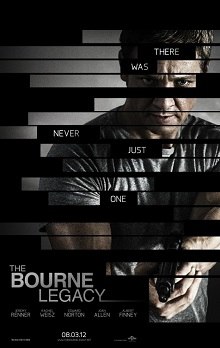
In Review: The Bourne Legacy

The Gist
There is a great drag at the beginning of the Bourne Legacy, and a poor narrative, but everything improves and eventually pays off, leading to one chase scene after another. There might be some narrative flaws and items that beg explanation until after the credits roll, but those aside, Bourne Legacy is a movie that works.

The Good
  • Jeremy Renner
  • Great action pieces
The Bad
  • Annoyingly slow and seemingly paltry narrative in the beginning
  • The resolution may seem like a bit of a fizzle in the end
  • There is the gaping plot hole of using Larx-03 somewhere in the movie
*** Spoilers Begin Here ***

Synopsis
After Jason Bourne exposes Operation Blackbriar and Treadstone Project (both of which I have no idea what they are about), the CIA decides to kill off every Operation Outcome subjects to keep their black ops secret from leaking out of proportion. Desperate to survive this wipeout and retain his enhanced physique, Outcome subject Aaron Cross journeys across the globe to make his enhancements permanent and escape into a peaceful life.

It's More Fun in The Philippines
I think the main draw of Bourne Legacy from where I live (Manila) is how Hollywood portrays the Philippines. Everywhere else, I doubt this is the case. We Filipinos always take pride when our countrymen, our country, or anything Filipino is exposed via international media. Likewise, we take it badly, too, if something is portrayed poorly. I am, however, more curious as to how Manila got into the story. For me, the proper portrayal would be the logical use of Manila within the movie. If it actually makes sense to have used Manila instead of, say, Bangkok or Tirana or New Delhi. And, well, it did make sense. The Philippines is one of the growing economies, and unlike China, has better English speakers and comparatively cheap manual labor for drug companies to put up offices in it. And while the chase scenes were good, my problem with them was that Manila traffic is poorly portrayed. If anything, you can't really do a proper daylight chase scene here as, God would know, the traffic in Manila is perhaps one of the worst in the world.

Hitman Re-Bourne
Bourne Legacy starts slow, and if you, like me, have not seen the previous movies, the first 30 minutes or so will get you lost and disinterested--the starting narrative is clumsy and fails to engage, which can easily lose audiences. But as soon as you've managed to piece the puzzle together at about 30 minutes of setup, it would make sense and it will quickly pick up from there. There are some items that will never be explained like why there is an Outcome operative living in the mountains and why he sends out items via a small auto-pilot plane and those for me are annoying given that they don't really feel like items that can be explored on to the next installment, shall there be one.

Some would blame the clumsy directing, particularly of the first part, to Tony Gilroy, who used to pen the Bourne series before graduating as the director in its first installment, but I don't think the direction was that bad. It just took time to pick itself up. And sadly, not everyone can be as patient as I am.

Jeremy Renner, as always, worked well--not a surprise. Weisz was relatively good. She may not be as large as Renner in this flick, but she worked her part and her scenes well. Was she believable as a doctor? I'm not sure she was given the proper scenes, but she was believable as someone passionate with what she does, and someone passionate to keep breathing. Norton is menacing, but not enough for you to hate him. You'd like Renner, but you won't hate Norton enough because you know Renner will always outsmart him and the perils for both him and Weisz are something that don't really pose any threat.

The chase sequences, albeit truly fictional, are great and exhilarating. Actually, majority of the movie is comprised of chase sequences, with the FBI getting to them as close as they could in Manila. And I have to give it to the producers of this film for shooting that scene in the middle of a sweltering Manila summer.

Then comes my biggest concern with the movie: Larx-03, who was explained as a brainwashed, emotionless, enhanced killer. He flies all the way from Bangkok to go after Aaron Cross on the surprisingly un-busy Manila streets. In a sense, Larx-03 can be excused for not being terminated unlike the other Outcome agents because he is brainwashed. But how about the doctors who attend to him? Or his records, those can be traced by the FBI even if they're remotely linked with the other projects. If Norton's team can do brainwashing, couldn't they have simply brainwashed their Outcome agents rather than killing them and dumping already expensive medical research that have proven results already? And also, why kill the doctors, too? Couldn't they have been simply secured and held against their will somewhere safe? Why the complete whitewash while leaving a Thai speck somewhere in the fabric? The inclusion of Larx-03 to me is the biggest downer to this film; he felt like an unnecessary cornstarch made to thicken the plot, nothing but a nameless instrument.

The ending, though my friends bemoan it, sees Renner and Weisz escaping into the open sea aboard a motor boat into the Palawan sea and the gorgeous beach, this my friends, is impossible given that a motor boat cannot travel all the way from Manila to Palawan without stopping for gas.

My verdict:

Plot holes aside, I felt the Bourne Legacy was a good film, full adrenaline and great chase sequences. Might not be completely logical, but is interesting in its own right. A passing mark of 3.75/5 stars.

Friday, August 3, 2012

Movies I am Excited for this 2012


Life of Pi (November)
Directed by: Ang Lee
Stars: Suraj Sharma, Gerard Depardieu, Tobey Maguire (as Yann Martel???)
Why: I haven't seen an Ang Lee movie in a long while. And it's a bit exciting to know that Ang Lee is directing one of my favorite books. I am also curious as to how Ang Lee is going to approach this book as the book tells Pi's (the main character's) story in two versions. With Ang Lee's track record of making good films, I think this film is in good hands. Just wondering: why the curious casting of Maguire as Yann Martel, the author?


The Great Gatsby (December)
Directed by: Baz Luhrman
Stars: Leonardo DiCaprio, Carrie Mulligan
Why: The earlier adaptation of this film was kind of a bust, amid the good material. Now here comes Luhrman trying his hands on an adaptation. He may not be as prolific as his contemporaries, but when he does make a film, it explodes with color and imagery--something he is known for and something that the material may need--being essentially a period piece. Mulligan and DiCaprio are well-regarded actors who are meticulous with the projects they pick. Seems like a winning combination to me.


The Perks of Being a Wallflower (September)
Directed by: Stephen Chbosky (The very guy who wrote the novel this was adapted from)
Stars: Logan Lerman, Emma Watson
Why: Mmmmmm, looks like a teen movie to me, but wait! The producers of this movie is the same people that brought Juno to life. So this might be good. Plus, Emma Watson. It's her first major effort outside the Harry Potter franchise, so it's interesting to see how this one works for her. Just curious how the director would work this out as this is his directorial debut, and his previous effort, the screenplay to Rent, didn't really work well for the critics


Taken 2 (October)
Directed by: Olivier Megaton
Stars: Liam Neeson, Maggie Grace, Famke Janssen
Why: It's a sequel to Taken, that's why. As much of a popcorn movie the first one was, it was a popcorn movie that worked. Heck, I'd take it any day over Ghost Protocol. The original TAKEN film has suspense, action, and thrills that hopefully is also present in this movie. Liam Neeson sure was kickass the first time around, and I know how cheesy those lines sound in real life, and how improbable those stunts are, but heck, it was entertaining. And hopefully, Megaton does well. His track record is a bit iffy. Remember the flop Hitman and the critic-displeasing Transporter 3? Those are among his directorial credits.


Gangster Squad (September) 
Directed by: Ruben Fleischer
Stars: Ryan Gosling, Sean Penn, Josh Brolin, Emma Stone
Why: Zombieland director returns for gangster film. Warner Bros. went gung-ho on this film only to have it delayed due to cut and reshoot a pivotal scene that's reminiscent of the Colorado shooting. Having Emma Stone and Gosling involved in this project and pairing them up for a second time (first time was the Carell-starrer Crazy Stupid Love) seems a bad idea to me, but can't complain since that's Emma Stone and Gosling. Sean Penn and Josh Brolin further cements the cast into a big movie status, so with all those investments, this movie should be great. Brolin and Gosling have good track record in choosing roles (except perhaps for Brolin's Jonah Hex, blech), so this is possibly a good film. Also, a gangster pic directed by someone who made a comedy of a zombie apocalypse film? Yes, please.
Update: Release date has been moved to January 2013 to reshoot the said scene.


Trouble with the Curve (October)
Directed by: Robert Lorenz
Stars: Clint Eastwood, Amy Adams
Why: Last year, Brad Pitt surprised baseball and non-baseball fans with Moneyball, a sports movie that worked even for the most non-sports person you can ever know (i.e., me). And with the omission of Timberlake whose acting creds are, well, developing, I think this father-and-daughter movie about scouting talents for sports will be another Million Dollar Baby for Eastwood (though I hope it would have a less tragic ending). Robert Lorenz who has worked as a producer with Eastwood on some of his most critically acclaimed films, and has had a hand on being an assistant director, finally takes the seat from Eastwood and takes the directing matters to his own hands. It's interesting to see how this movie shapes up.


Wreck-it Ralph (November)
Directed by: Richard Moore
Animation
Why: Watch the trailer


Cloud Atlas (December)
Directed by: Lana Wachowski (debut) and Tom Twyker (Run Lola Run)
Stars: Tom Hanks, Halle Berry, Jim Sturgess, Hugo Weaving
Why: Its source material is one of the greatest books ever written and a half of the Wachowskis adapted it. Directors include Lana Wachowski and Run Lola Run director Tom Twyker--and while both are quite new to the directorial scene (in terms of international films for Twyker), it's interesting to see how the book translates to film and how 5 storylines are condensed into a 2 hour and something film. Twyker's adventurous Run Lola Run maybe an indication of how great this movie is going to be. And if the trailer is to be believed (mind you, it got me in tears), then this perhaps maybe one of the greatest movies made in this decade.